Skip to content
A comprehensive guide to one of South Asia’s most enduring hand ornaments
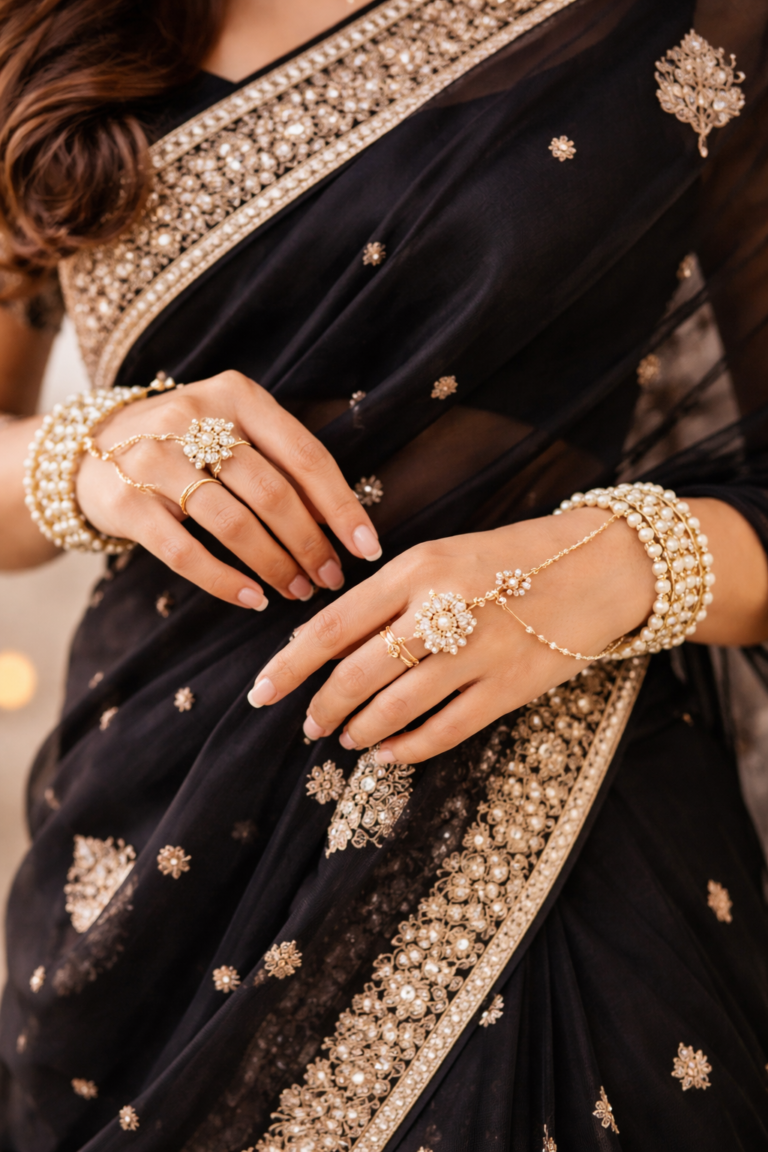
Few pieces of jewellery carry the layered cultural weight of the hath phool. Translating literally from Hindi as ‘flower of the hand,’ this ornate hand accessory drapes elegantly across the dorsal surface of the palm, connecting a wrist bracelet to individual finger rings by means of delicate chains or beaded strands, with a central medallion resting upon the back of the hand. It is simultaneously a work of fine craftsmanship, a marker of ceremonial identity, and, in contemporary fashion, a powerful style statement. To understand the hath phool — also referred to as the haath kamal, haath panja, or hath pan depending on regional dialect — is to trace a fascinating arc from the Persian courts of antiquity to the mood boards of modern South Asian brides.
The resurgence of the hath phool in recent years has been neither accidental nor fleeting. It sits at an intersection of cultural pride, bridal aesthetics, and the global appetite for handcrafted jewellery with genuine provenance. Its presence on the hands of brides from Lahore to London, from Jaipur to Dubai, speaks to a cross-cultural resonance that few accessories in the South Asian tradition have achieved so completely. This guide examines the ornament in full: its documented origins, its role within the sacred bridal canon, the major craft traditions used to produce it, how each variety is best styled, and the cultural forces that have driven its extraordinary contemporary revival.
Origins and Historical Lineage
The hath phool’s origins are traceable to Persia, from where it made its entry into the Indian subcontinent during the Mughal period. Author and historian Cynthia Meera Frederick, a specialist in Indian royalty and jewellery, has noted that the ornament was popular not only across Persia but also in Caucasia, Russia, Arab countries, and even China, making it one of the most geographically dispersed hand ornaments in the ancient world. The Mughals, whose aesthetic was defined by symmetry, floral motifs, and an unwavering pursuit of grandeur, found in the hath phool a natural expression of their jewellery philosophy. The ornament was crafted with motifs drawn from the lotus, from jaali latticework patterns, and from the intricate embroidery traditions of chikankari.
Within the Mughal court, the hath phool was initially the exclusive province of queens and royal consorts. It was, however, the courtesans of the era who are credited with popularising the ornament beyond palace walls, carrying it into the wider Rajput and Nawabi courts where regional artisans adapted the design to their own materials and aesthetic sensibilities. The Rajput women, in particular, became celebrated for their magnificently elaborate versions set in Kundan, Polki, and uncut diamonds. Nawabi culture further elevated the ornament by incorporating pearls — a material closely associated with the cultural refinement of the Awadh region — giving rise to what came to be known as the Pearl Haath Phool.
One of the most distinctive features of the classical hath phool was the inclusion of an arsi ring — a small mirror set into a thumb ring — worn by royal women in the Mughal court to catch a discreet glimpse of their own reflection. This detail speaks to the ornament’s intimate relationship with feminine ritual and self-presentation in courtly life. Traditional bridal versions of the hath phool consisted of eight rings across both hands (excluding thumbs), each connected to a central wrist bangle, with the chains across the backs of the hands bearing a symbolic association with divine protection.
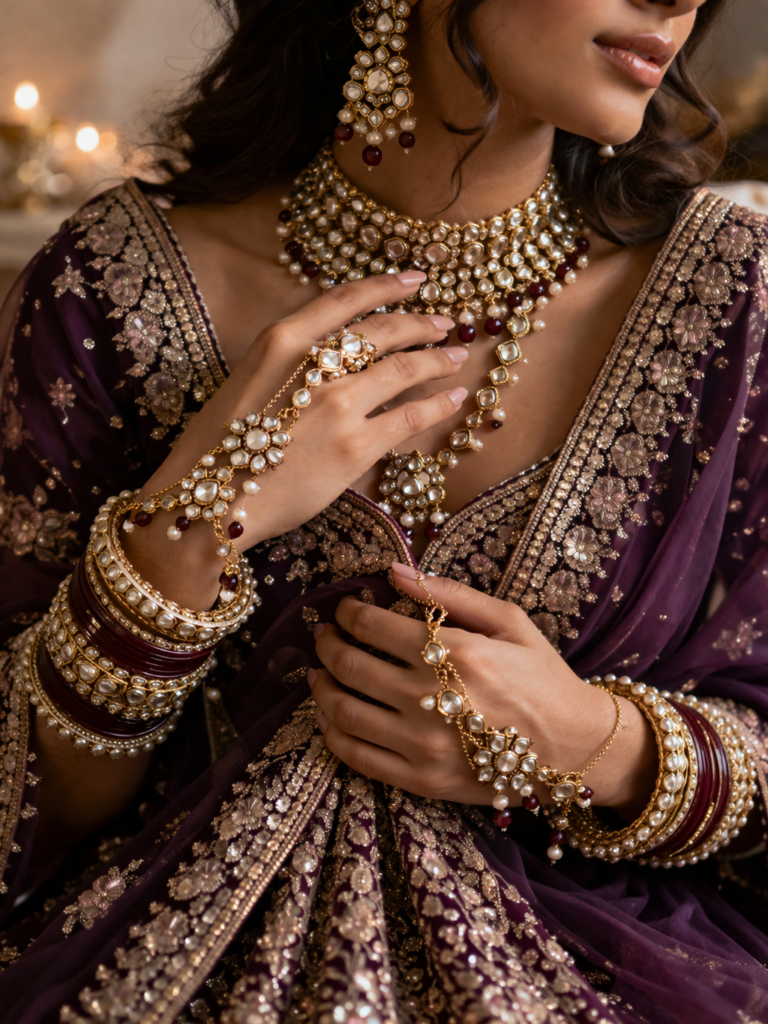
The hath phool is not merely a piece of decorative jewellery within the Hindu bridal tradition; it forms part of the Solah Shringar — the sixteen sacred adornments a bride is expected to wear on her wedding day, a practice rooted in ancient Vedic custom. The ornamentation of the hands was considered a way of honouring their role in sacred ritual, and the hath phool emerged as a poetic and material tribute to that reverence. The practice of decorating the hands, which encompasses both mehndi and jewellery, dates back to the Vedic period and has remained a central feature of South Asian bridal culture across religious communities. Hath phools were historically worn by Hindu, Sikh, and Muslim women alike, a testament to the ornament’s cross-community resonance within the subcontinent.
Types of Hath Phool: Craft Traditions and Their Distinctions
The hath phool exists today in a remarkable range of styles, each rooted in a distinct jewellery-making tradition or material philosophy. Understanding the difference between these types is essential for making an informed choice, whether for a bridal trousseau or a contemporary occasion.
Kundan Hath Phool
Kundan jewellery represents one of the oldest and most technically accomplished traditions in Indian craftsmanship, with origins that have been traced to at least the 3rd century BCE. The word ‘kundan’ in Hindi refers to highly refined, pure gold, and the technique involves setting carefully shaped gemstones — historically uncut diamonds, rubies, emeralds, and sapphires — into an intricate framework of pure gold foil. The city of Jaipur in Rajasthan has traditionally been the pre-eminent centre of Kundan production in India, and it was in the royal courts of Rajasthan and Gujarat that the method reached its most sophisticated expression.
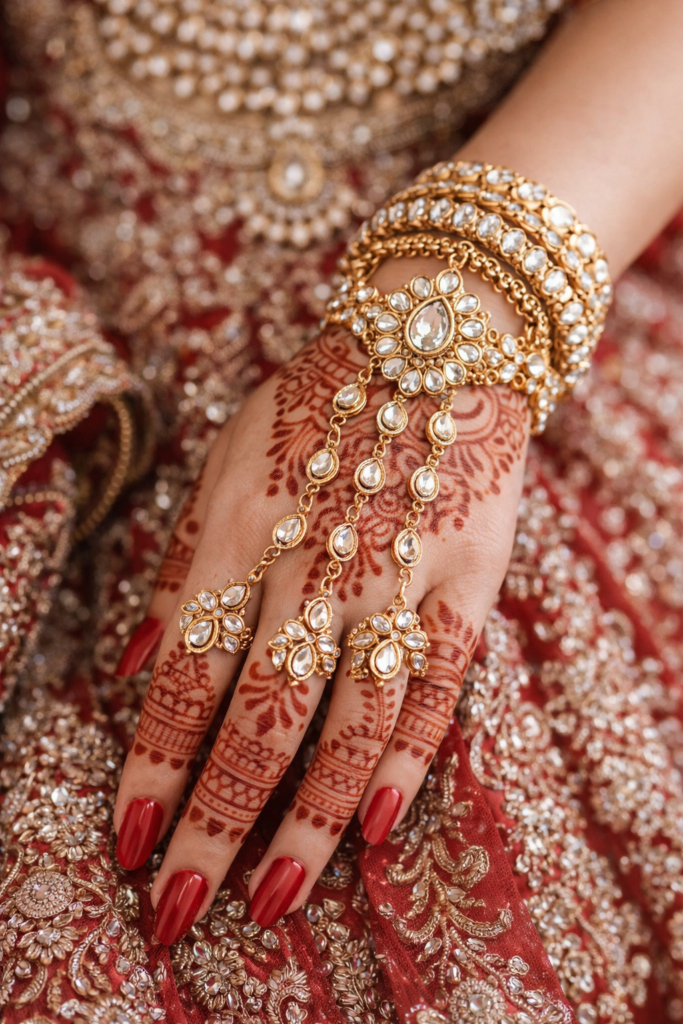
The production of a Kundan hath phool is a multi-stage, labour-intensive process. Skilled artisans — often working in groups with specialised roles covering engraving, stone setting, enamelling, and polishing — begin by creating a skeletal framework known as the Ghaat. Stones are then placed and secured using thin layers of pure gold foil moulded around the base of each gem. A layer of lac, a natural resin, is applied to the reverse, after which a final layer of gold foil is added to seal the setting. The result is a piece of extraordinary weight and visual density, characterised by bold floral motifs and rich, jewel-saturated colour. Kundan hath phools are the quintessential choice for heavy traditional bridal looks, particularly when worn with elaborate lehengas in red, gold, or ivory, and they pair naturally with full sets of matching Kundan bangles and necklaces.
Polki and Jadau Hath Phool
Polki diamonds do not possess the sharp, faceted brilliance of conventionally cut diamonds. Instead, they carry an earthy, opaque luminescence — a raw, old-world quality that has made them among the most coveted materials in Indian bridal jewellery. Within the trade, polki diamonds are graded in three categories: Syndicate (the highest quality, characterised by superior clarity and brilliance), Zimbabwe (mid-grade material from African mines), and Khilwas (the lowest grade, almost always treated to improve appearance). A significant portion of polki stones used in the market are treated with fillers — typically to improve clarity by 30, 60, or 80 percent — and buyers are advised to source from reputable jewellers to ensure transparency about treatment.
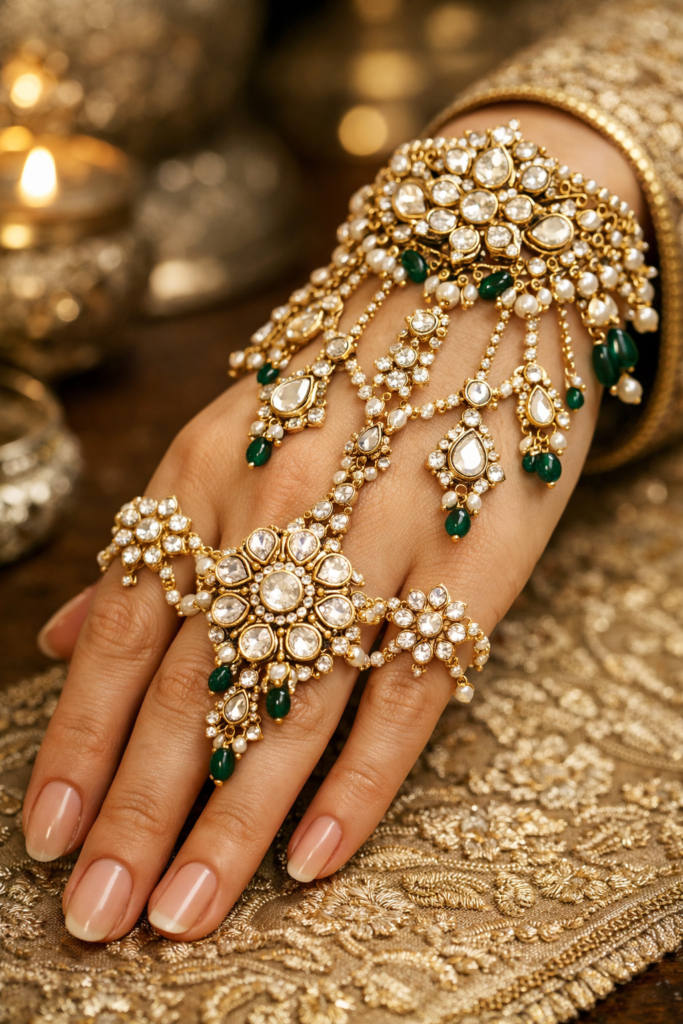
Jadau is not a separate material but rather a collective term for the setting technique used in both Kundan and Polki jewellery. A Jadau piece is defined by the combination of Polki diamonds and the Kundan setting method, often incorporating Meenakari enamel work on the reverse. Because Jadau items are reversible, their backs are themselves works of art, displaying vivid enamel in reds, greens, blues, and pinks. A Jadau hath phool is among the most luxurious and technically demanding expressions of this art form, and such pieces are prized both as wearable jewellery and as collectable objects of cultural heritage.
Pearl Hath Phool
The pearl hath phool is among the most historically documented variants of the ornament, its development attributed to the influence of Nawabi culture in the courts of Awadh. Pearls have held deep symbolic significance in South Asian jewellery for millennia, associated with purity, femininity, and prosperity. In the context of the hath phool, pearls are typically used to construct the chain strands linking the wrist bangle to the rings, often interspersed with gold beads or small gem-set elements, creating a soft, tactile surface that moves with the hand.
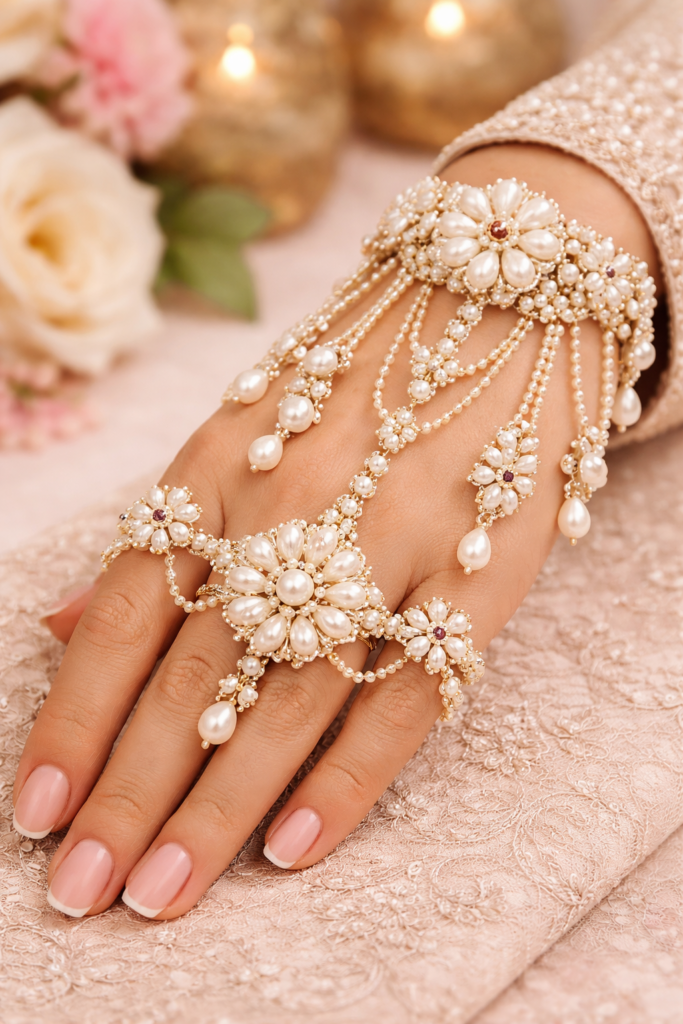
In contemporary bridal and festive styling, the pearl hath phool has experienced a particularly strong revival, driven partly by the broader trend toward softer, more ethereal bridal aesthetics. It complements pastel lehengas and organza sarees with exceptional elegance, and its relatively restrained visual weight makes it suitable for daytime ceremonies such as the nikah or the pheras. The pearl hath phool also pairs naturally with minimal gold or diamond jewellery, making it a versatile choice for brides who prefer an understated yet culturally grounded look.
Meenakari Hath Phool
Meenakari is the ancient Indian art of enamelling metal surfaces, producing vivid, jewel-like colour in intricate floral and geometric patterns. The technique was brought to India — specifically to Rajasthan — by Persian artists during the Mughal era, and Jaipur and Bikaner remain the foremost centres of Meenakari craftsmanship to this day, home to artisans whose skill has been recognised and patronised by some of India’s most prestigious jewellery houses. Meenakari work traditionally appears on the reverse of Kundan pieces, but in the Meenakari hath phool, the enamel takes centre stage, transforming the ornament into a celebration of colour.
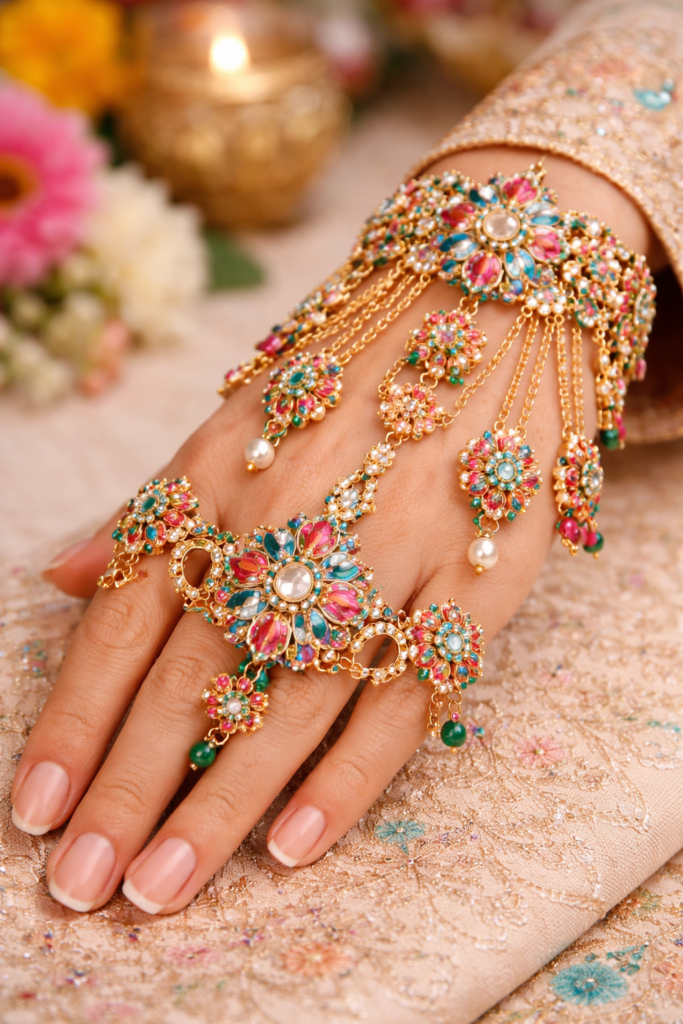
A Meenakari hath phool is characterised by richly coloured enamel motifs — often peacocks, lotus flowers, or paisleys — set against gold-toned metalwork. The palette typically includes deep greens, cobalt blues, vermillion reds, and ivory whites, making these pieces ideally suited to the vibrant colour palette of mehndi and haldi ceremonies, where the bride’s look is anchored in festivity and warmth rather than formal grandeur. The colourful, detailed nature of Meenakari jewellery makes it particularly photogenic in natural light, and these pieces have gained considerable visibility on social media in recent years.
Minimal Chain Hath Phool
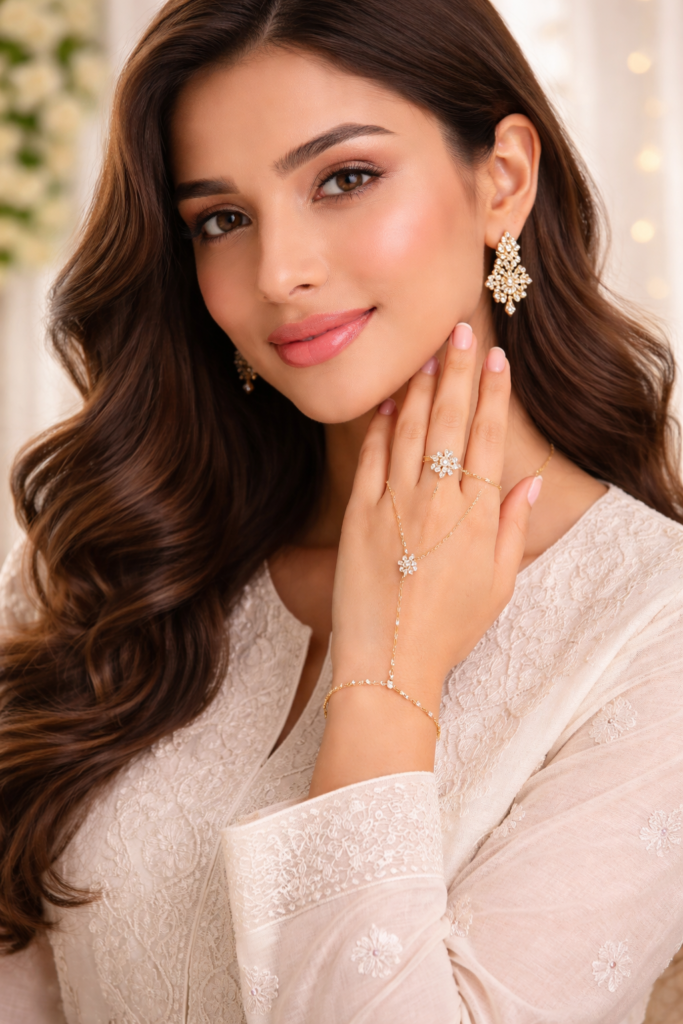
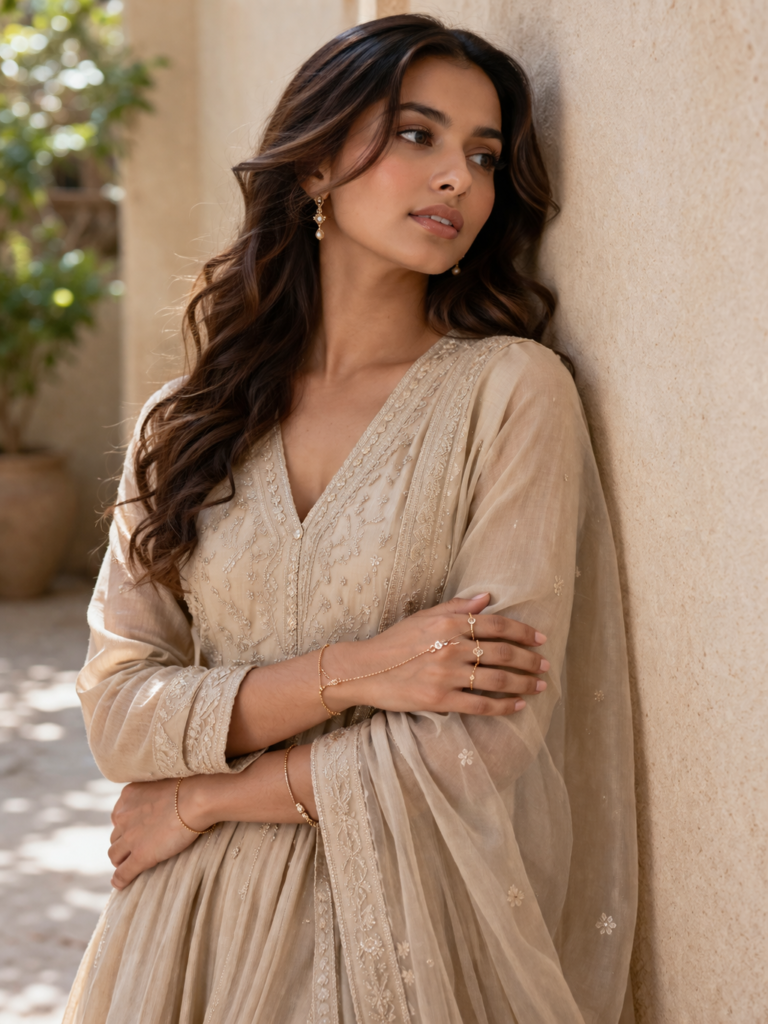
The minimal chain hath phool represents the most significant design departure from the classical ornament, and it is arguably the style most responsible for the accessory’s recent crossover into mainstream and fusion fashion. In its simplest form, it consists of a single delicate chain connecting one ring — typically on the middle or ring finger — to a wrist chain or bracelet, with little or no central medallion. Some versions incorporate small gemstone accents, cubic zirconia settings, or fine gold detailing, but the defining characteristic is restraint: the absence of the visual density that marks traditional Kundan or Polki versions.
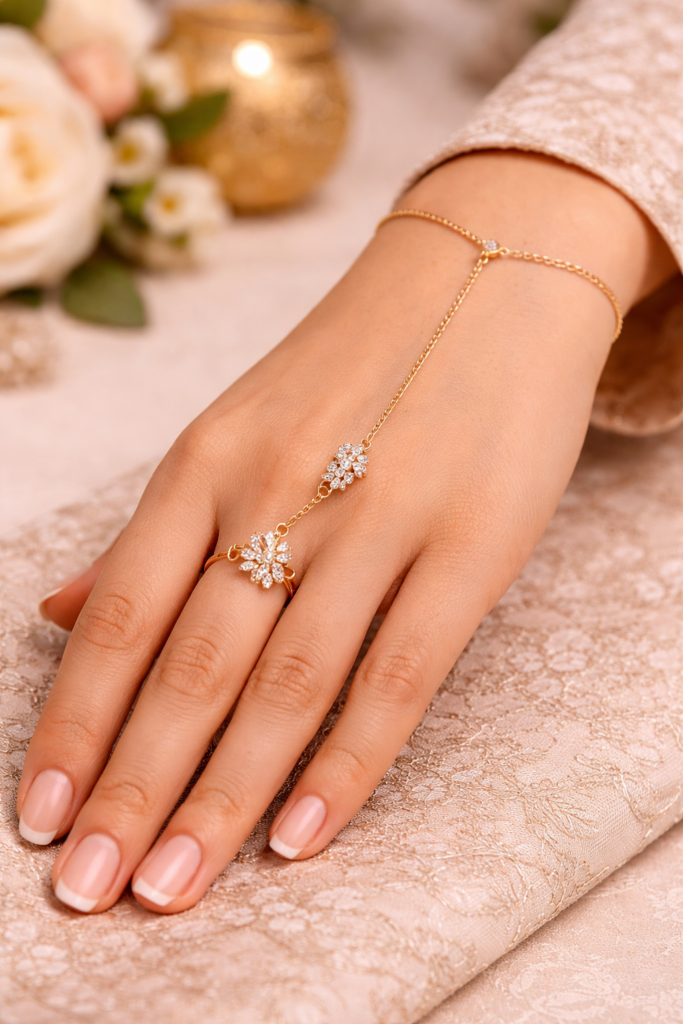
Several contemporary Indian jewellery houses and designers, including Amrapali, have acknowledged the shift in consumer preference toward lighter, more versatile jewellery, developing pieces in which the bracelet and ring can be detached and worn independently. This approach addresses the modern jewellery-wearer’s demand for multifunctionality and has made the minimal chain hath phool a popular choice for fusion styling, office parties, engagement ceremonies, and intimate wedding functions. Materials range from sterling silver and gold-plated brass to platinum and rose gold, offering accessibility across a wide range of price points.
Floral Hath Phool
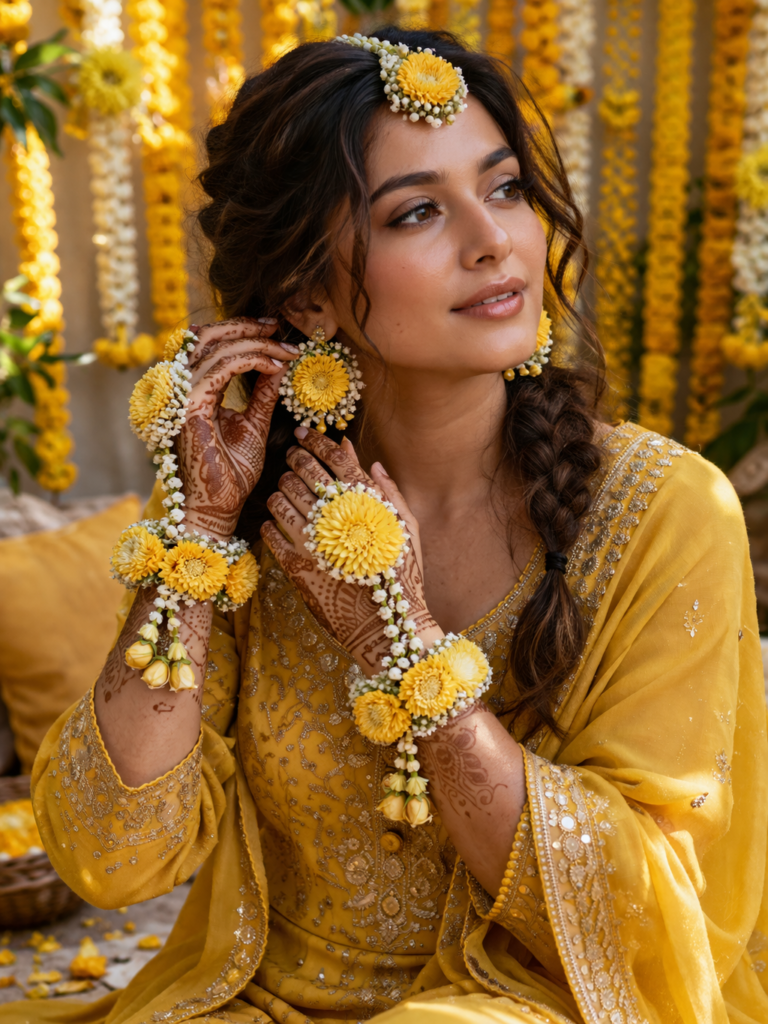
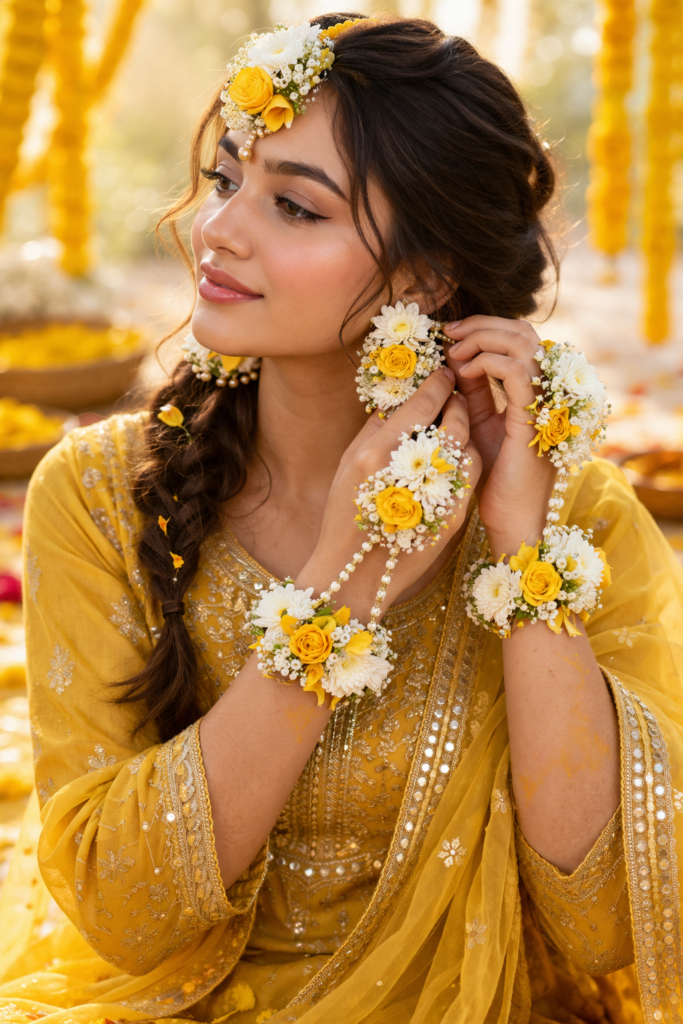
The floral hath phool is most closely associated with the mehndi and haldi ceremonies — the pre-wedding rituals centred on music, colour, and joyful festivity. Rather than metal and stone, the floral variant is constructed from fresh flowers — typically marigolds, roses, jasmine, and mogra — threaded into garland-like arrangements that replicate the structural form of a traditional metal hath phool, with a wrist garland, chains, and finger rings all crafted from blooms. Artificial flower versions have also gained wide popularity, offering greater durability and the ability to co-ordinate precisely with specific colour palettes.
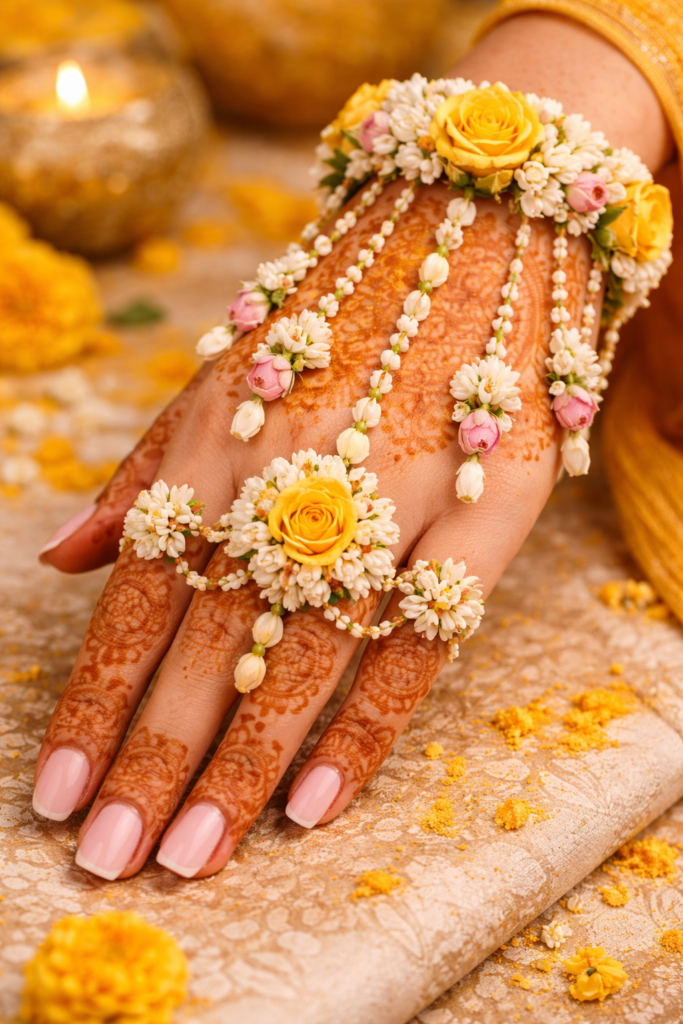
The floral hath phool is intrinsically connected to the aesthetic of naturalistic, bohemian bridal looks that have come to define contemporary South Asian wedding photography. It complements messy braids, flower crowns, and muted or earthy colour palettes, and it photographs with exceptional beauty in natural, outdoor settings. The inherently temporary nature of the fresh floral version also gives it a poignant quality appropriate to the emotional register of pre-wedding rituals.
How to Style the Hath Phool: Occasion and Outfit Pairings
The hath phool’s versatility across occasion types and outfit categories is one of the primary reasons for its sustained relevance. Styling it well, however, requires an understanding of visual balance — specifically, how the ornament’s weight, material, and scale relate to the complexity and formality of the outfit it accompanies.
With a Heavy Bridal Lehenga
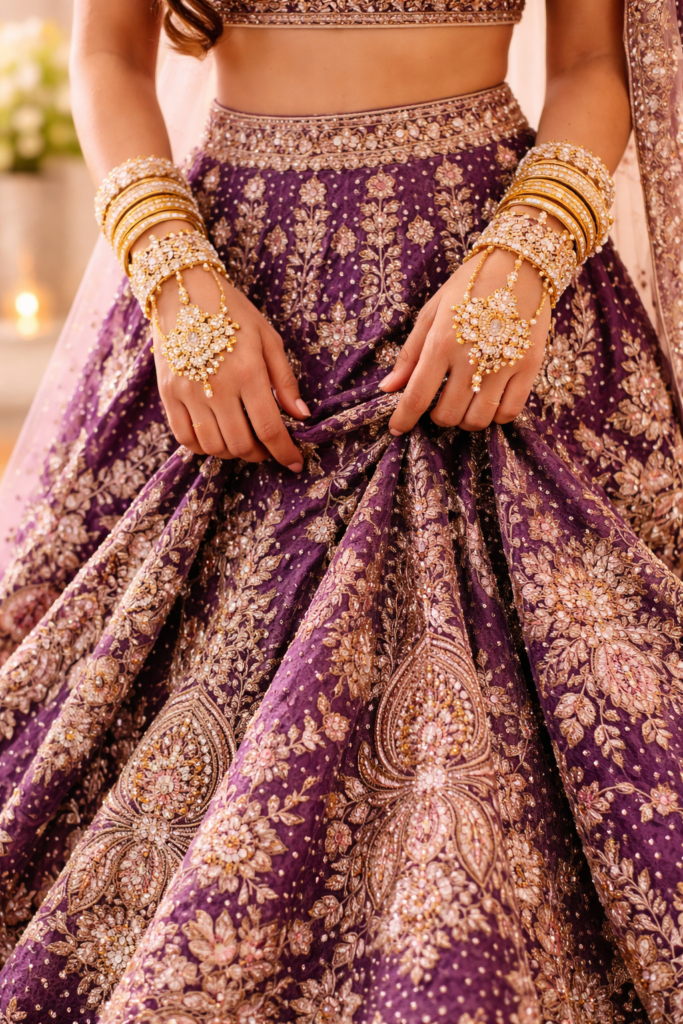
A heavily embroidered or worked bridal lehenga calls for a Kundan or Polki hath phool of commensurate weight and intricacy. In this context, the guiding principle is coherence: the metalwork, stone palette, and motif vocabulary of the hath phool should align with the rest of the bridal set, which typically includes a matching necklace, maang tikka, and earrings. The hath phool should be allowed to function as a statement piece within the composition of the hand — which means avoiding the temptation to over-ring the fingers, as the chains and central medallion already provide sufficient visual complexity. Statement bangles in a complementary material — Kundan, gold, or polki — can be worn on the opposite wrist to balance the composition.
With Sarees — Organza, Silk, and Chiffon
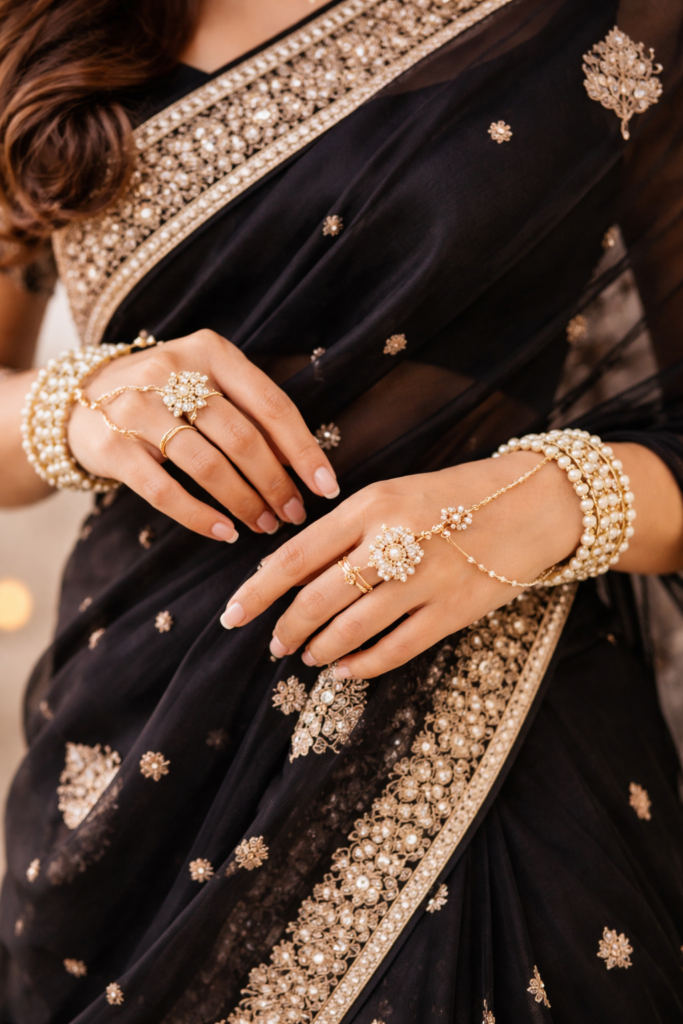
The saree, with its flowing silhouette and varying degrees of embellishment, accommodates a wide range of hath phool styles. For organza or georgette sarees in soft, pastel tones, a pearl hath phool is the natural choice, its tactile softness echoing the fabric’s drape and its warm lustre complementing the subtle sheen of the cloth. For heavily worked Banarasi or Kanjeevaram silk sarees, a Kundan or Polki hath phool can hold its own against the textile’s complexity. In both cases, neutral nail colour — soft nudes, creams, or pale pinks — allows the ornament to read clearly against the skin, and dainty stacking rings on other fingers can be added sparingly without competing with the hath phool’s central visual function.
For Mehndi and Haldi Ceremonies
Pre-wedding rituals call for an entirely different aesthetic register than the formal wedding ceremony. The mehndi look, in particular, is built around the interplay between jewellery and intricate henna patterns on the hands and arms — a composition that demands jewellery with colour, texture, and warmth. A Meenakari hath phool in a palette that harmonises with the outfit’s dominant hues is highly effective in this context, as are floral versions for brides who prefer a more naturalistic, romantic aesthetic. The combination of a floral hath phool, matching flower jewellery in the hair and behind the ears, and a loose, undone braid has become one of the defining visual signatures of the contemporary South Asian mehndi ceremony.
With Kurta Sets and Anarkalis
Not all occasions for wearing a hath phool are formal. For festive gatherings, Eid celebrations, family dinners, or intimate engagement parties, a minimal chain hath phool worn with a well-tailored kurta set or anarkali offers a refined but relaxed aesthetic. In this styling context, simplicity in supporting jewellery is key: delicate earrings and a thin gold or silver bracelet on the opposite wrist, with the hath phool as the sole statement piece in the hand composition. This approach allows the ornament to register fully without overwhelming a look that is intentionally understated.
The Contemporary Revival: Why the Hath Phool is Trending Again
The hath phool had, by the mid-20th century, retreated from mainstream fashion into the domain of formal bridal and ceremonial wear. Its return to broader cultural visibility over the past decade has been driven by a convergence of factors that speak to larger shifts in the way contemporary South Asian women relate to their jewellery heritage.
The rise of visual platforms, particularly Pinterest and Instagram, has had a disproportionate impact on the ornament’s visibility. The hath phool is inherently photogenic: it occupies the area of the hand most foregrounded in close-up photography, it interacts visually with mehndi patterns to create a layered, richly textured composition, and it photographs with clarity and beauty in the natural light favoured by contemporary wedding photographers. In an era in which the bridal portrait has become as carefully curated as any fashion editorial, the hath phool offers precisely the kind of detail-oriented, culturally specific visual richness that resonates with global audiences.
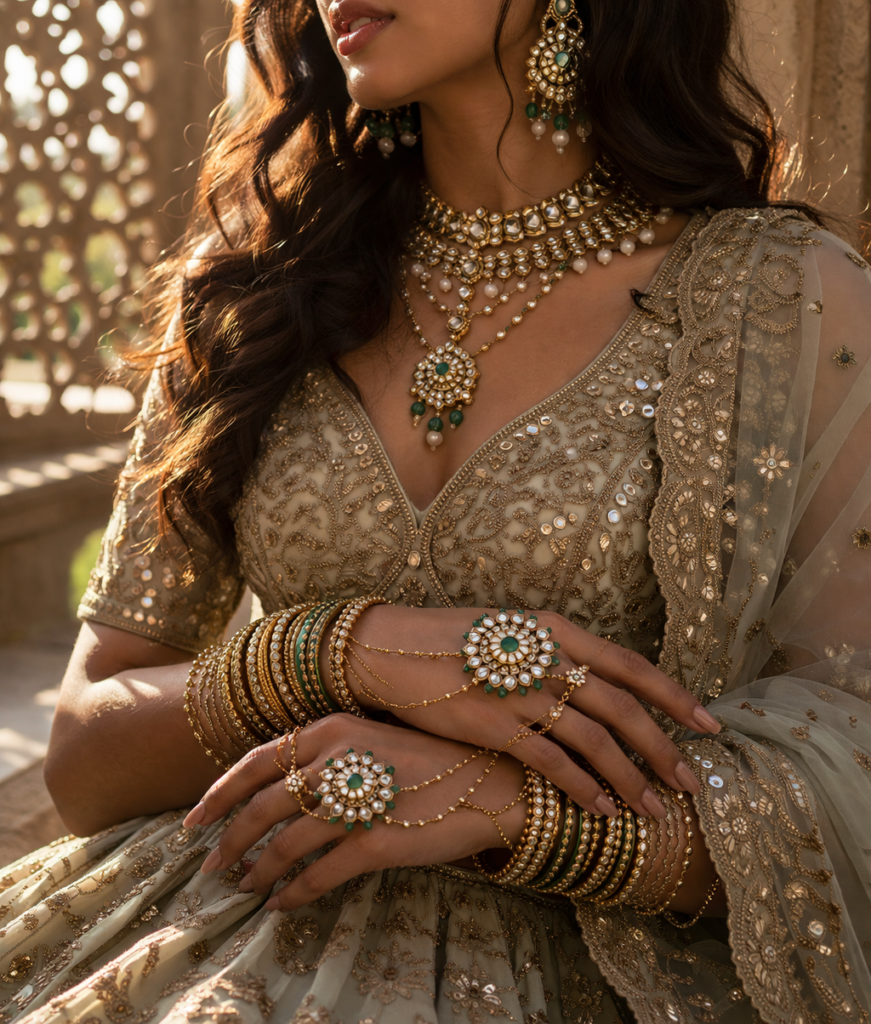
The jewellery industry has responded to this demand with considerable creativity. Designers at houses including Amrapali — one of Jaipur’s most respected jewellery ateliers — have developed lightweight iterations of the hath phool using rose-cut diamonds and smaller gemstones, preserving the ornament’s visual language while making it more comfortable for extended wear. Detachable versions, in which the bracelet and ring components can be separated and worn independently, have further expanded the accessory’s functional range. The result is an ornament that now exists on a full spectrum from museum-quality heirloom pieces to accessible fashion jewellery, with something genuinely compelling to offer at every point along that range.
The hath phool also carries a cross-community and cross-border relevance that few South Asian ornaments can claim. It has been worn for centuries by Hindu, Sikh, and Muslim women across the subcontinent, and its contemporary versions have found admirers far beyond South Asia, appearing on red carpets and in fashion editorials in contexts that would have seemed improbable a generation ago. The ornament’s journey from the Persian court to the global spotlight is, in miniature, the story of how traditional craft survives and flourishes — not by remaining unchanged, but by continuously finding new audiences while remaining rooted in its original integrity of material and meaning.
Caring for Your Hath Phool
Given the intricate craftsmanship involved in producing a quality hath phool — particularly those set in Kundan, Polki, or Jadau — proper care is essential to preserve both the structural integrity and aesthetic beauty of the piece. All variants should be stored separately from other jewellery to prevent chains from tangling and stones from being scratched or dislodged. Storage in a cool, dry environment, away from humidity and direct sunlight, helps prevent oxidation of metal components and deterioration of lac-based settings in traditional Kundan pieces.
Cleaning should be undertaken gently, using a soft, dry cloth for routine maintenance. Harsh chemicals, ultrasonic cleaners, and steam cleaning are not appropriate for hath phools set with natural stones or enamel, as these methods can damage the lac backing of Kundan settings, strip Meenakari enamel, or destabilise the foil settings used in Polki pieces. For precious heirlooms or high-value pieces, periodic professional restoration by a jeweller familiar with traditional Indian craftsmanship is advisable. The hath phool, properly maintained, is an ornament built to be inherited — a physical link between generations that carries, in its chains and stones, something of the long and layered history from which it came.
The hath phool is, ultimately, far more than a fashion accessory. It is a document of aesthetic exchange across civilisations, a record of the extraordinary skill of South Asian artisans across centuries, and, for the women who wear it, an intimate connection to a tradition of adornment that honours the hand as a site of both beauty and meaning. Its revival in contemporary fashion is not a trend in the conventional sense. It is a recognition — increasingly global in its reach — that some things are worth keeping.