Skip to content
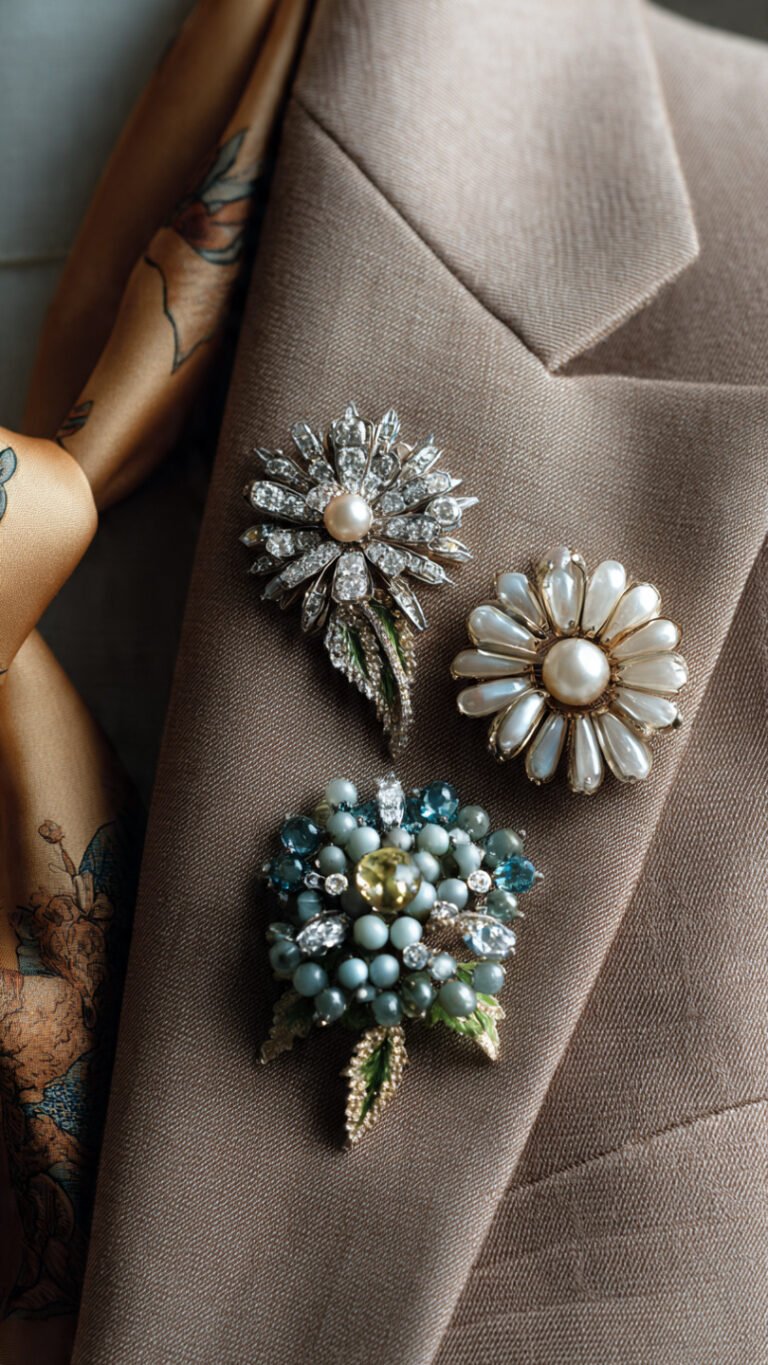
Vintage and antique-style brooches occupy a unique position in modern fashion. They are not simply accessories; they function as narrative objects, often carrying historical references, artisanal craftsmanship, and a sense of permanence that contrasts sharply with fast-moving trends. What defines their current appeal is not nostalgia alone, but the way they are being reinterpreted in contemporary wardrobes—worn with tailoring, layered across textures, and used as focal points rather than afterthoughts.
Below is a comprehensive guide to the most relevant types of vintage-inspired brooches today, along with thoughtful, editorial-level guidance on how each can be styled with intention and sophistication.
Art Deco Brooches
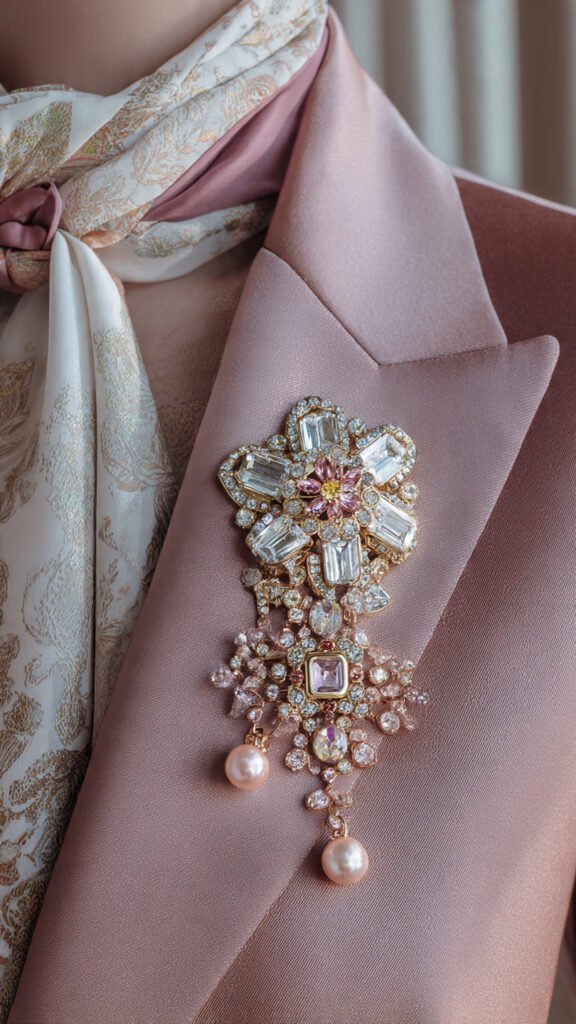
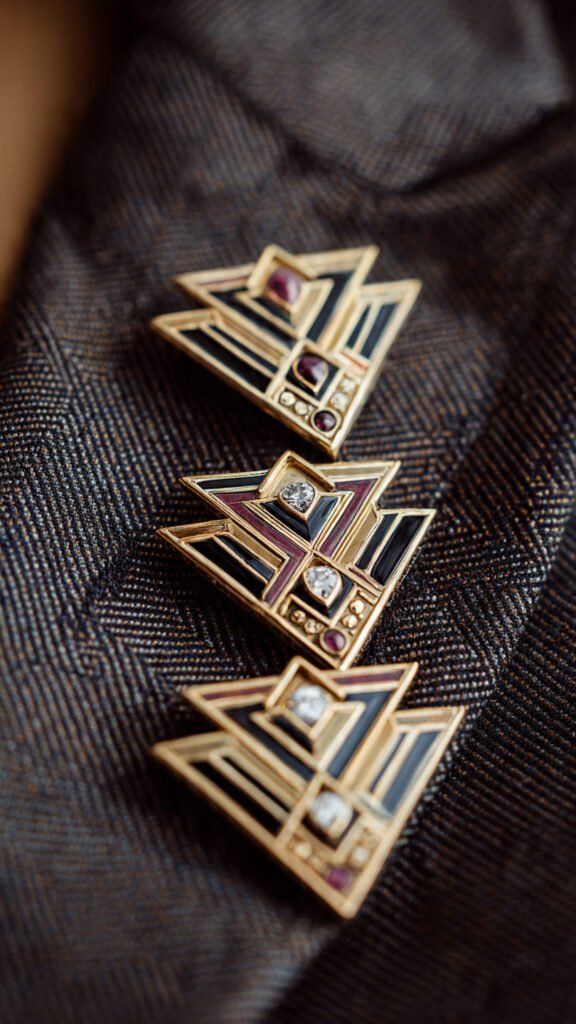
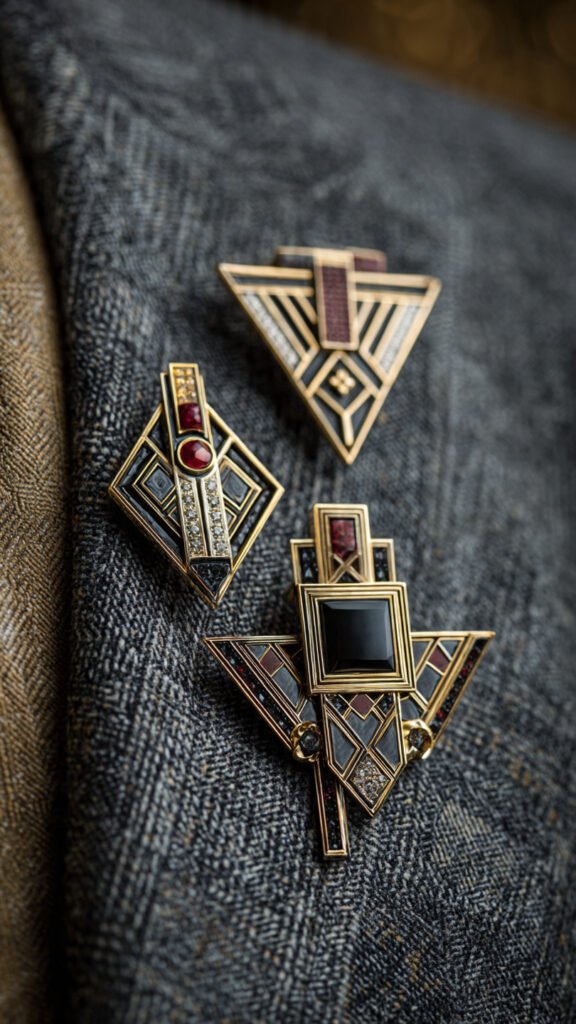
Art Deco brooches are defined by their geometry, symmetry, and architectural precision. Originating in the 1920s and 1930s, they often feature linear patterns, stepped forms, and contrasting materials such as onyx, diamonds, and platinum. The aesthetic is structured, confident, and inherently modern despite its age.
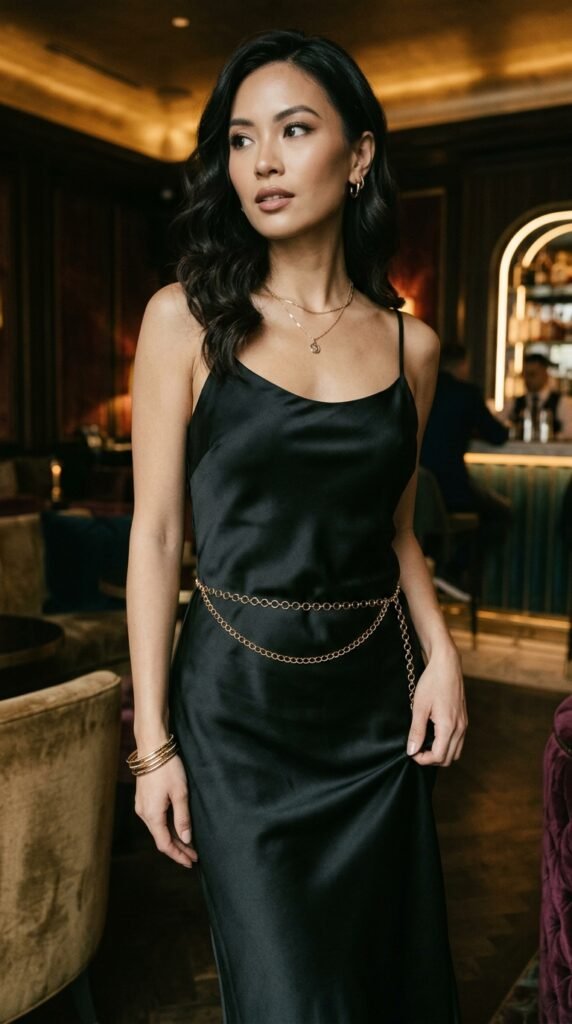
In styling, Art Deco brooches work exceptionally well with sharp tailoring. A structured blazer, particularly in monochrome tones such as black, ivory, or charcoal, provides the ideal canvas. Placement matters: positioning the brooch slightly above the natural lapel line creates a deliberate, editorial effect. These pieces also integrate seamlessly into eveningwear, especially when paired with satin or silk fabrics that echo the polished surfaces of the brooch itself.
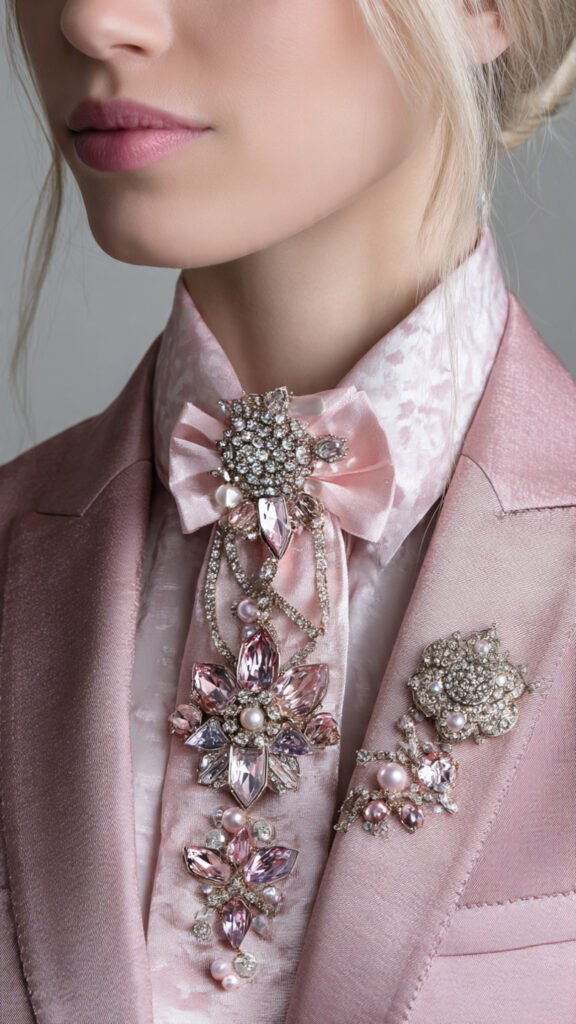
For a more directional approach, consider using an Art Deco brooch as a fastening mechanism at the neckline of a blouse or dress. This transforms the accessory into a functional design element, reinforcing the era’s emphasis on form meeting function.
Victorian Brooches
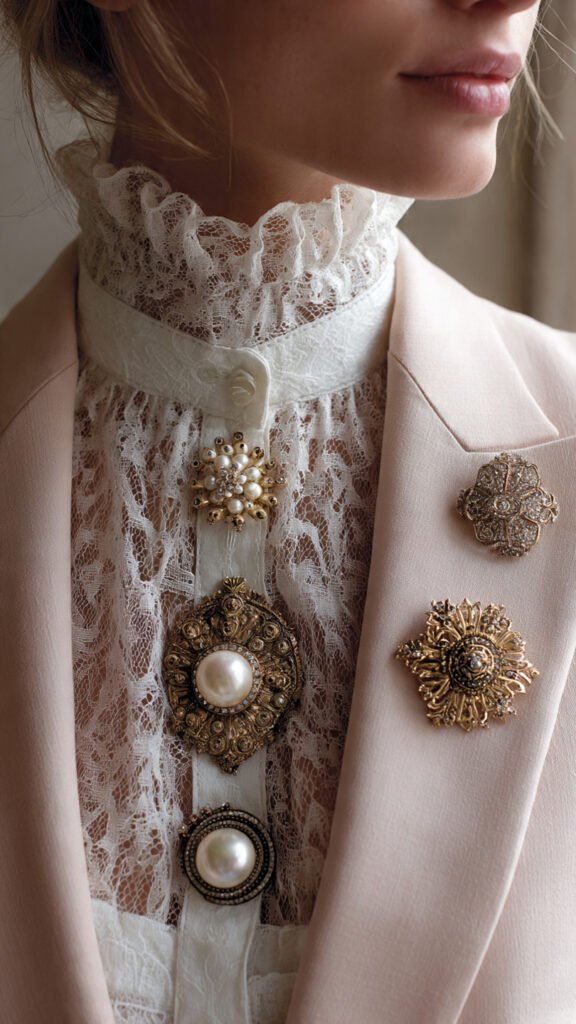
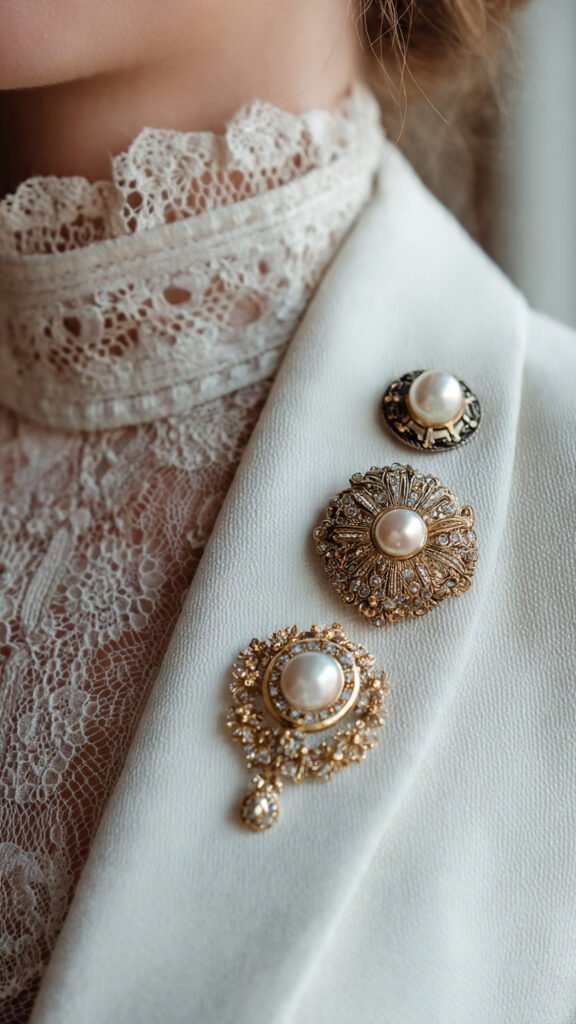
Victorian brooches are characterized by intricate detailing, symbolic motifs, and a romantic sensibility. Common elements include cameos, lockets, floral engravings, and the use of warm-toned gold. These pieces often feel deeply personal, as many were historically used to commemorate relationships or moments in time.
Styling Victorian brooches requires a sensitivity to texture and softness. ისინი pair naturally with flowing fabrics such as chiffon, lace, and fine wool. A high-neck blouse or a softly draped dress provides an ideal setting, allowing the brooch to sit at the collarbone or throat as a focal point.
Modern interpretation comes from contrast. Wearing a Victorian brooch on a sharply cut blazer or even a minimalist knit introduces tension between ornate and understated elements. This contrast prevents the look from feeling costume-like and instead positions the brooch as a curated accent within a contemporary wardrobe.
Edwardian Brooches
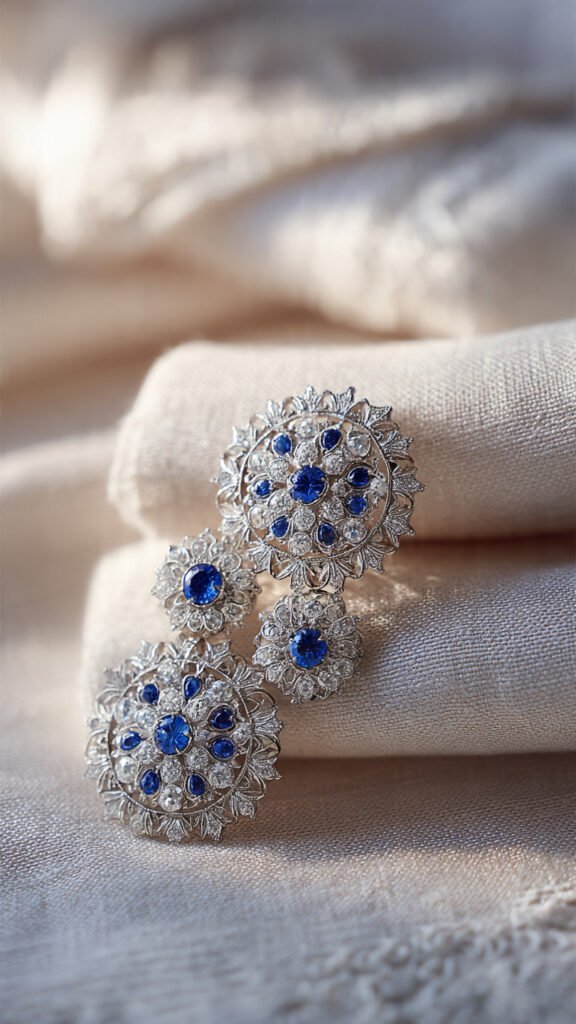
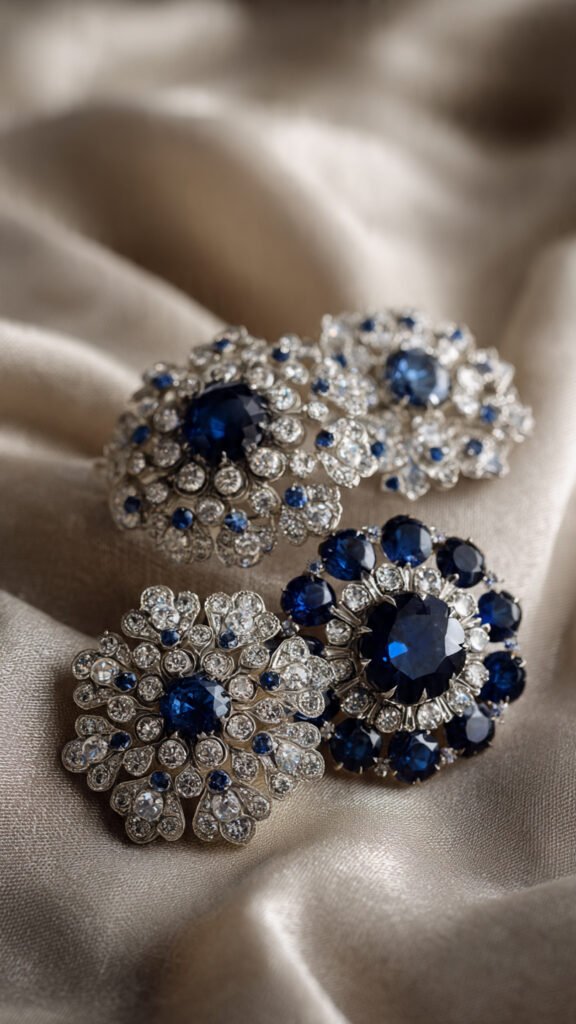
Edwardian brooches are known for their delicacy and refinement. Often crafted in platinum and set with diamonds, they feature lace-like patterns and an almost weightless visual quality. The craftsmanship emphasizes lightness, making these brooches appear intricate yet subtle.
In styling, Edwardian pieces excel when paired with equally refined garments. Silk blouses, fine knits, and tailored dresses in neutral tones allow the brooch’s detail to be appreciated without competition. Placement should feel intentional but not heavy; a centered position near the neckline or a subtle placement on the shoulder works particularly well.
These brooches also lend themselves to layered jewelry looks. Unlike heavier styles, they can coexist with delicate chains or earrings without overwhelming the overall composition. The result is an elegant, cohesive aesthetic that feels polished rather than ornate.
Mid-Century Modern Brooches
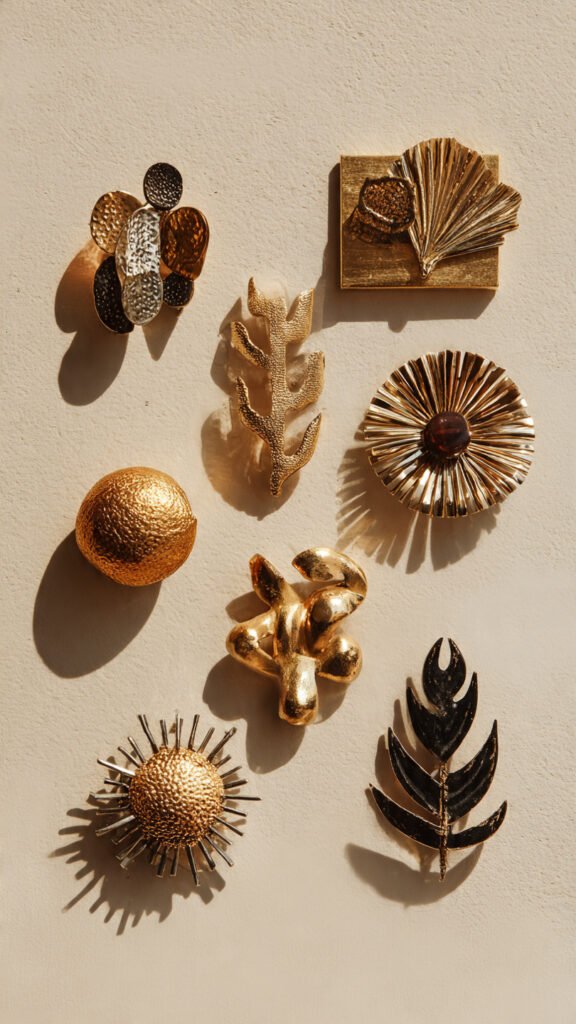
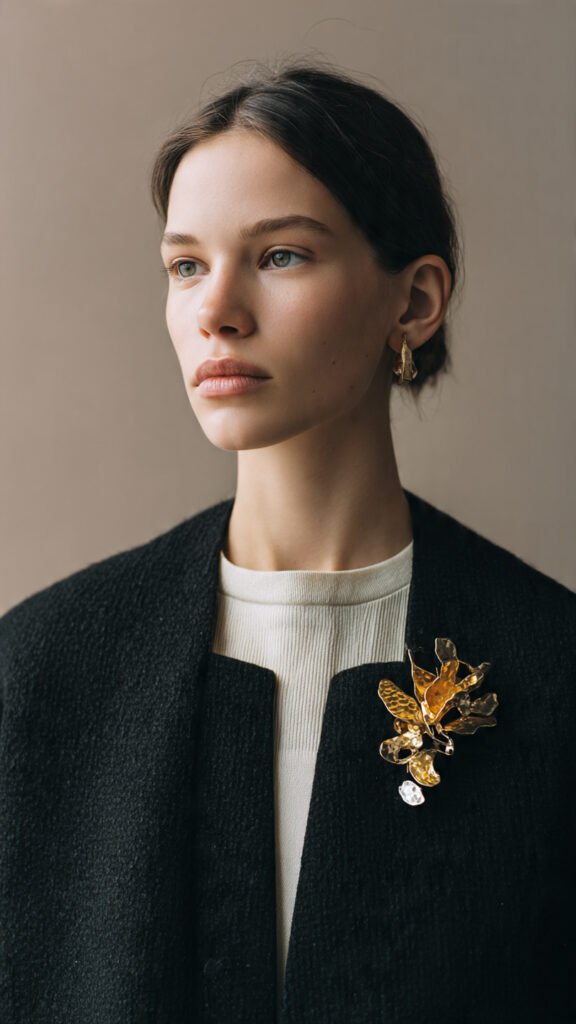
Mid-century brooches, particularly from the 1950s and 1960s, embrace abstraction and sculptural form. Unlike earlier eras, these designs often move away from strict symmetry, favoring organic shapes, textured gold, and experimental compositions.
Styling these brooches involves leaning into their artistic quality. They pair well with minimalist outfits, where their sculptural nature can stand out. A simple wool coat, a monochrome dress, or a clean-lined suit creates the necessary negative space.
Placement can be more experimental with this category. Instead of the traditional lapel position, consider placing the brooch off-center, along the waistline, or even on accessories such as belts or structured bags. This approach aligns with the modernist ethos of rethinking conventional forms and placements.
Baroque Revival Brooches
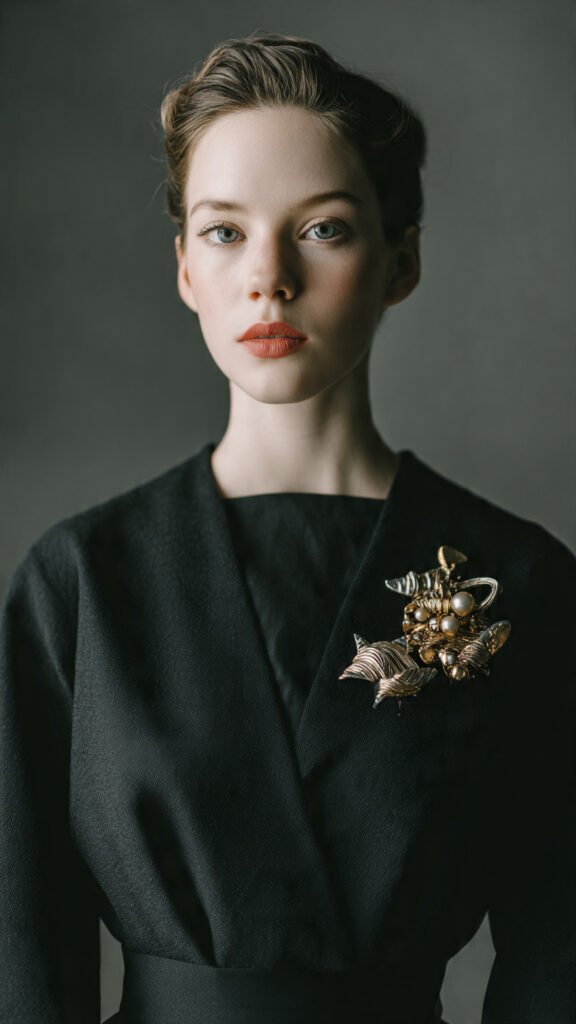
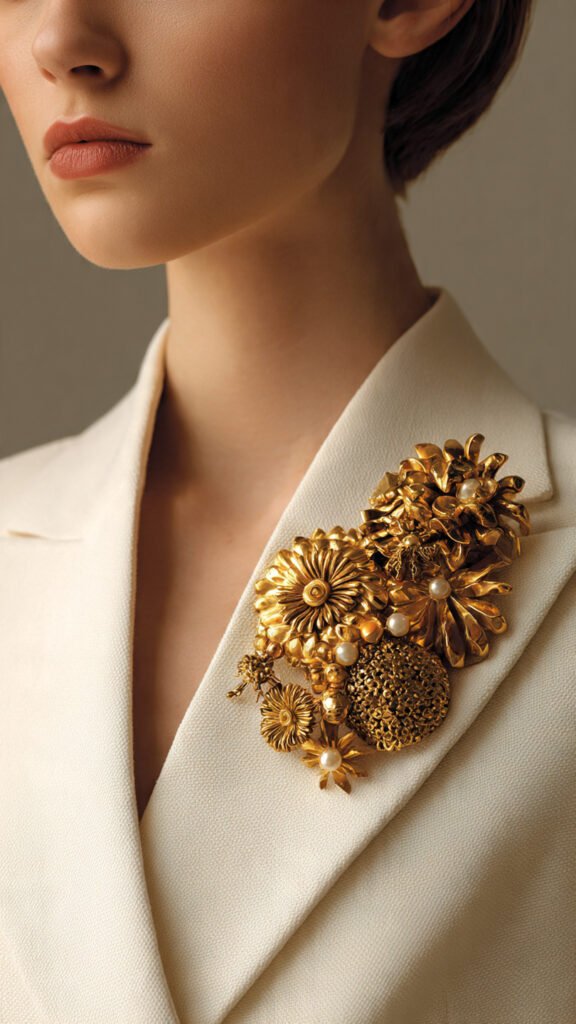
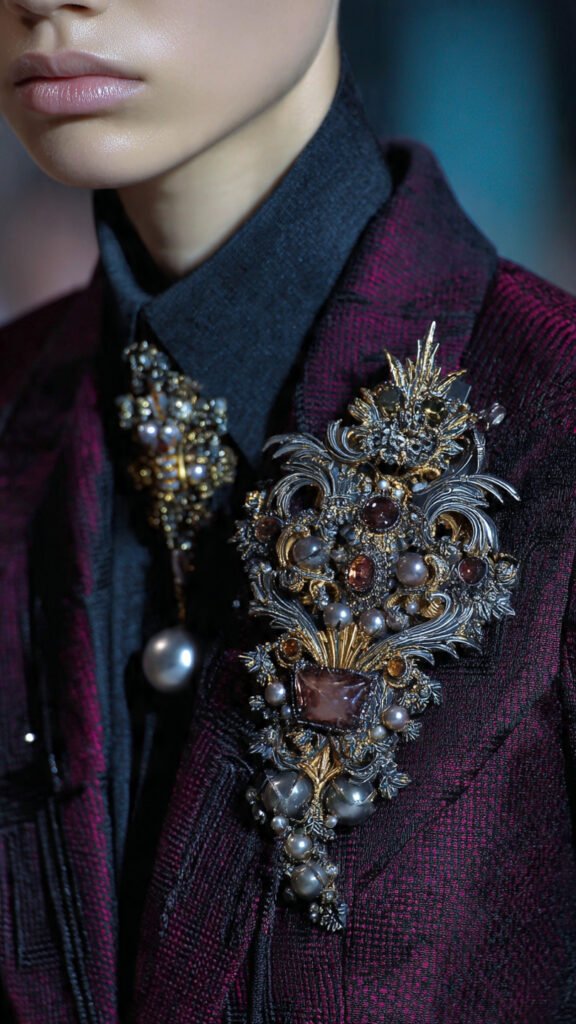
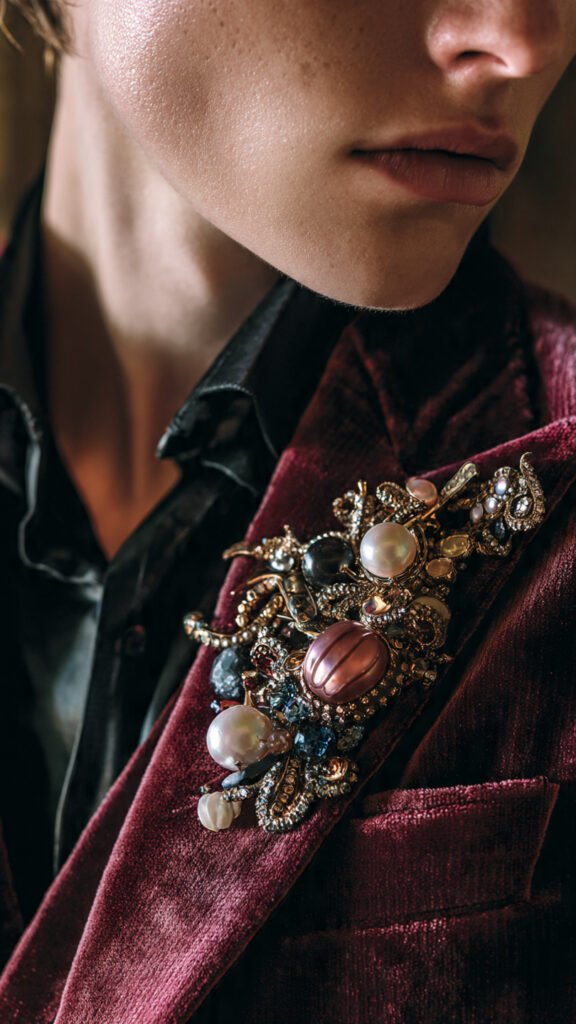
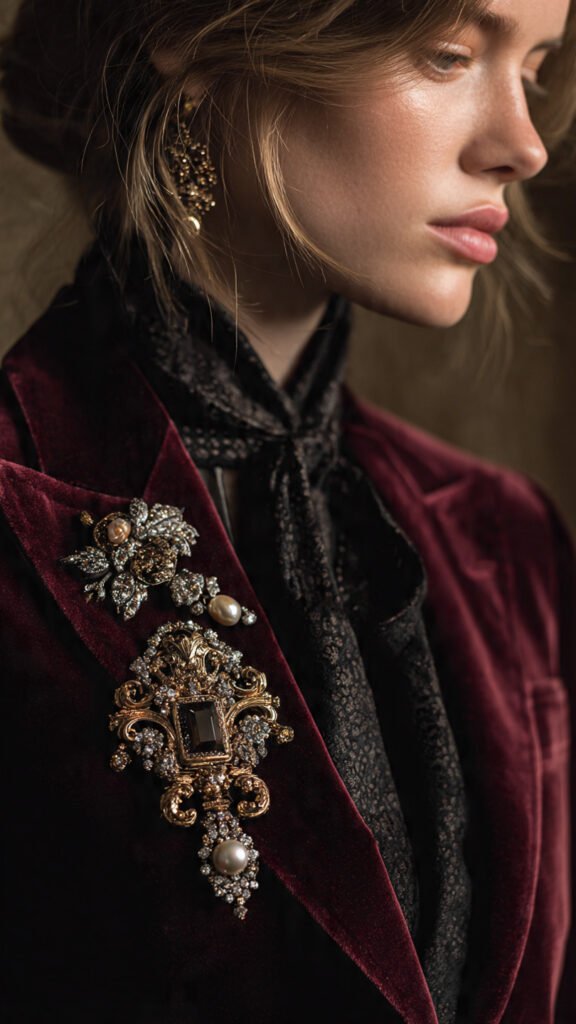
Baroque Revival brooches are unapologetically dramatic. Featuring ornate scrollwork, pearls, and elaborate metalwork, they draw inspiration from the grandeur of 17th-century design. These pieces are inherently expressive and command attention.
Styling should embrace this sense of drama while maintaining balance. A structured coat or blazer in a rich fabric such as wool or velvet provides an appropriate backdrop. Neutral or deep tones—navy, burgundy, black—allow the brooch to stand out without visual conflict.
Rather than layering multiple bold elements, it is often more effective to let a single Baroque brooch serve as the centerpiece. Its scale and detail are sufficient to carry the look, and restraint in other areas ensures that the styling remains sophisticated rather than overwhelming.
Cameo Brooches
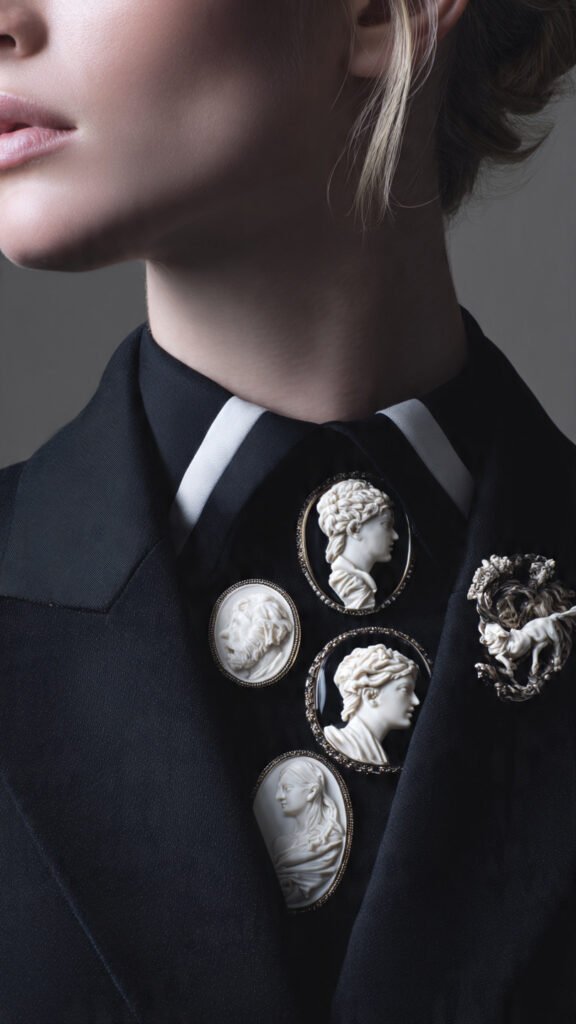
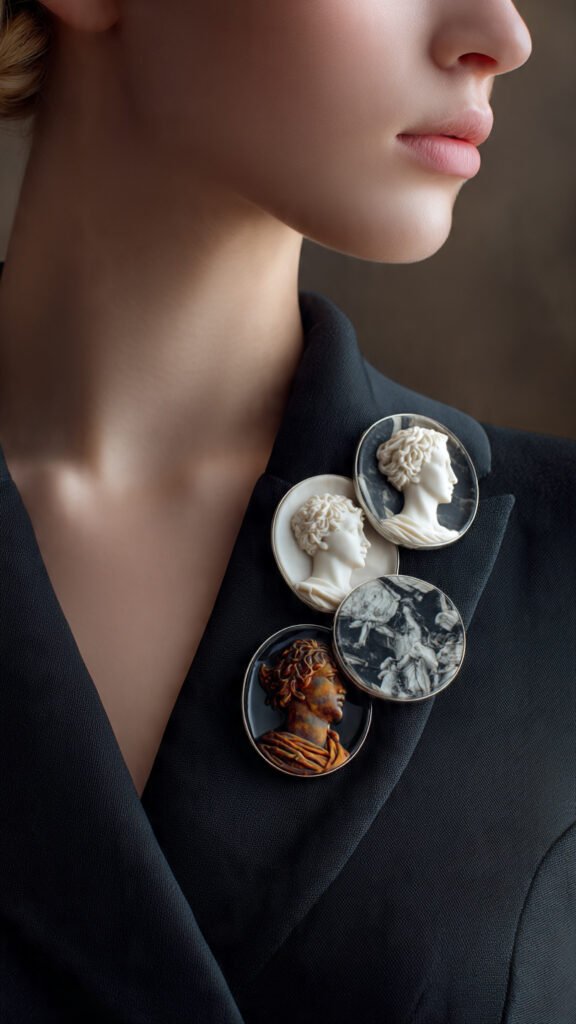
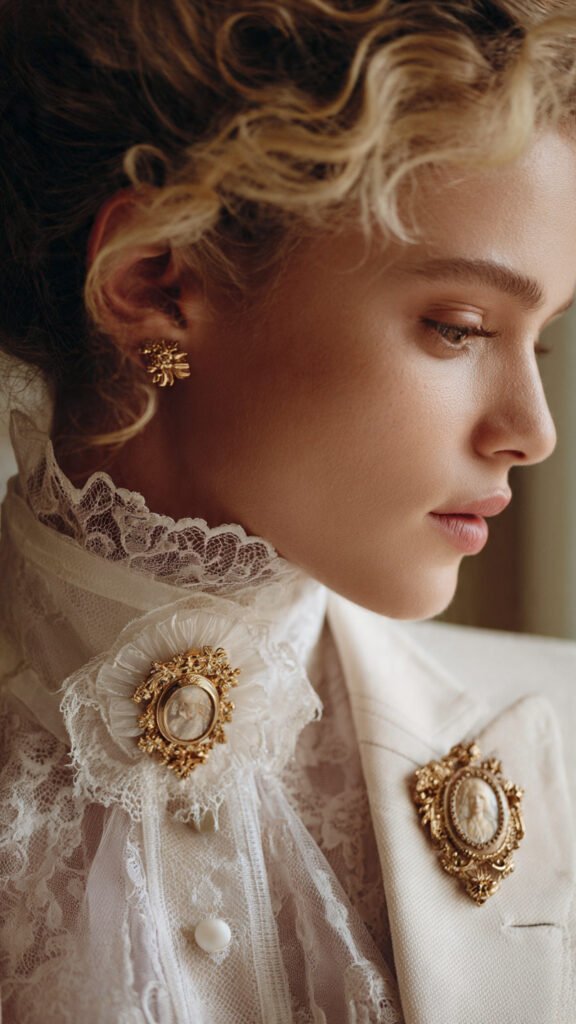
Cameo brooches are among the most recognizable vintage styles, featuring carved profiles set against contrasting backgrounds. Traditionally depicting figures or mythological scenes, they offer a distinctly classical aesthetic.
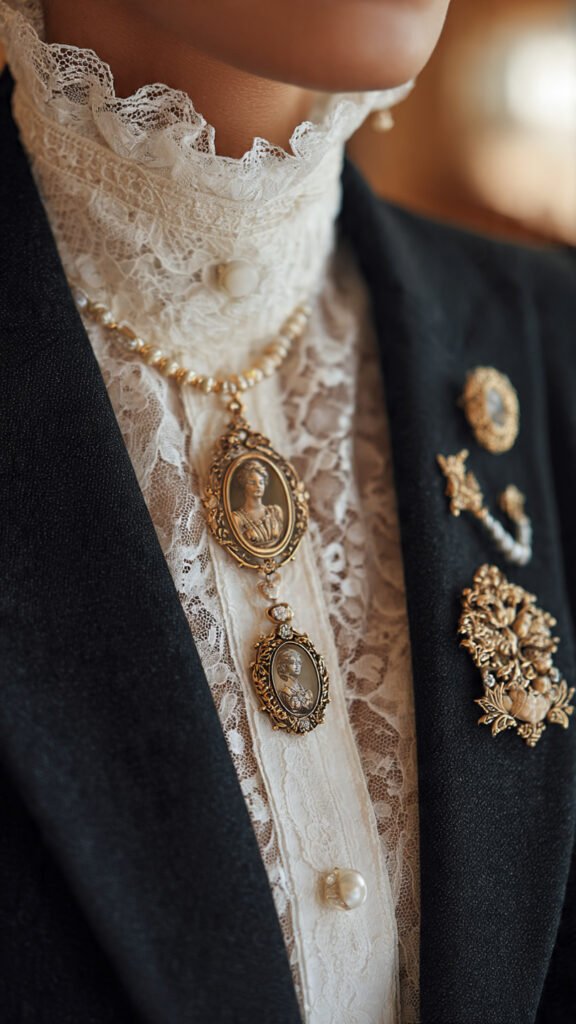
Styling cameo brooches involves highlighting their narrative quality. They work particularly well when worn at the center of the neckline, almost as a statement pendant. Alternatively, they can be attached to a ribbon or chain to create a hybrid necklace, expanding their versatility.
In modern wardrobes, cameo brooches benefit from being paired with clean, contemporary silhouettes. A simple dress or tailored jacket allows the intricacy of the carving to take focus, ensuring the piece feels intentional rather than nostalgic.
Floral Antique Brooches
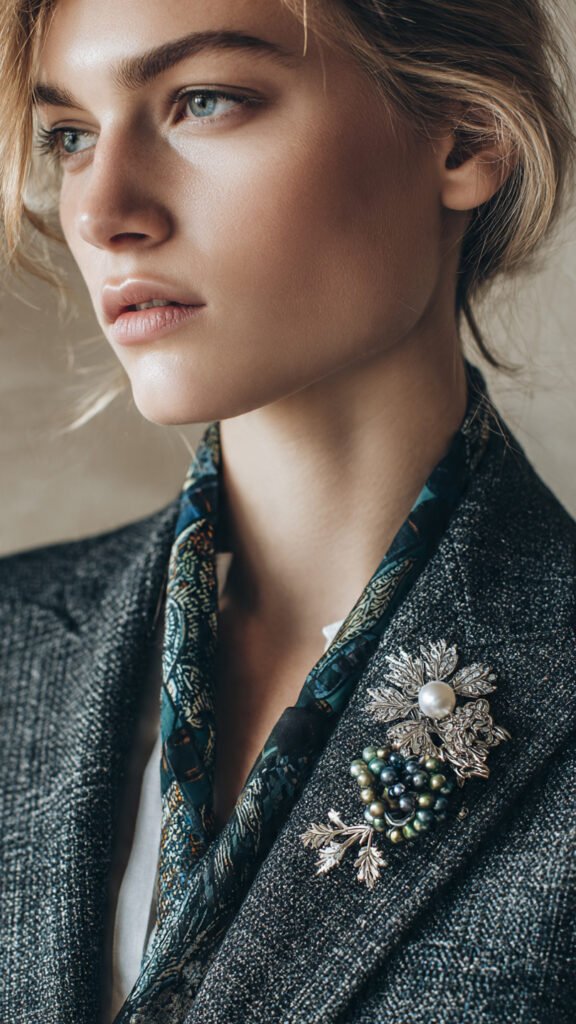
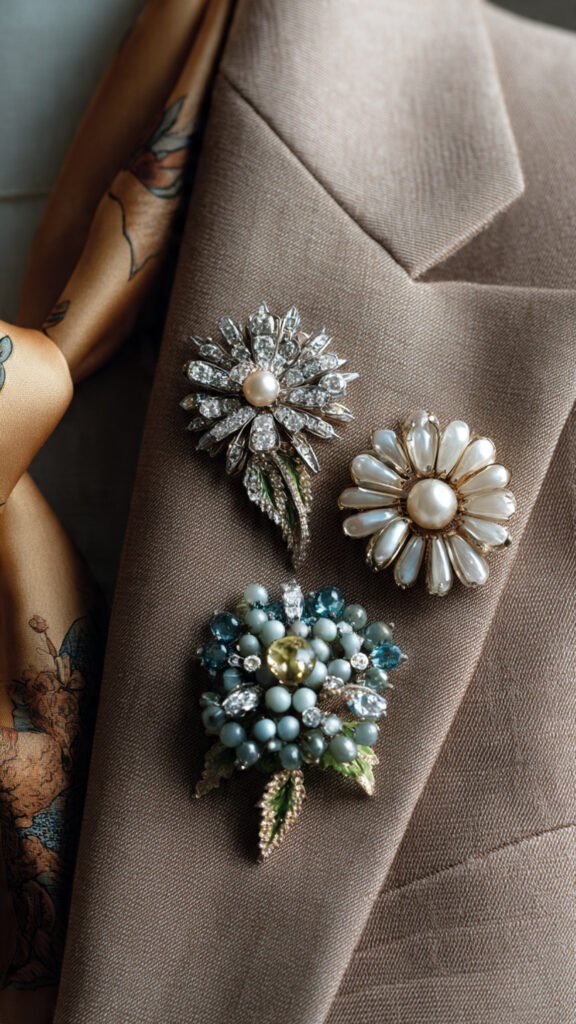
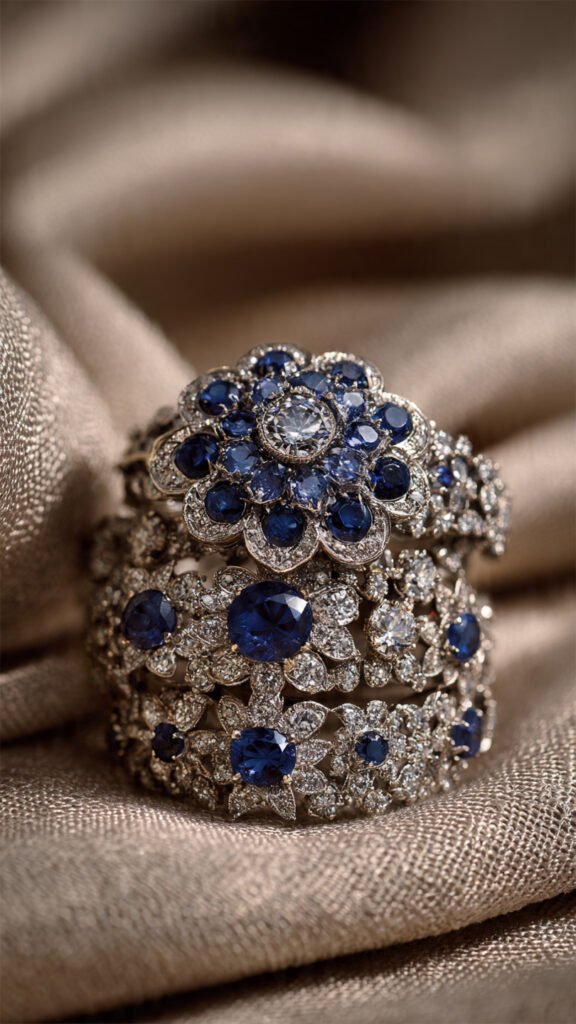
Floral brooches span multiple eras but remain a consistent presence in antique jewelry. Whether rendered in diamonds, enamel, or carved materials, they capture organic forms with varying degrees of realism.
These brooches are highly versatile in styling. They can soften structured garments, adding a sense of movement and natural form to otherwise rigid silhouettes. A tailored blazer, for example, gains a more approachable quality when paired with a floral brooch.
They also integrate seamlessly into seasonal dressing. In warmer months, they complement lighter fabrics and color palettes, while in colder seasons, they provide contrast against heavier textures. Placement can vary from lapels to scarves, offering flexibility in how they are incorporated.
Cluster and Multi-Stone Antique Brooches
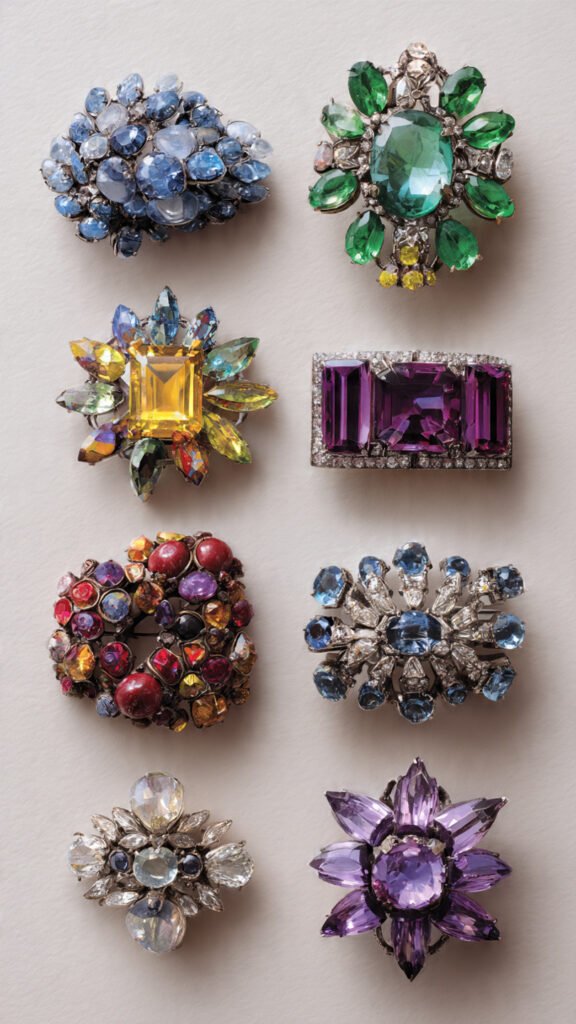
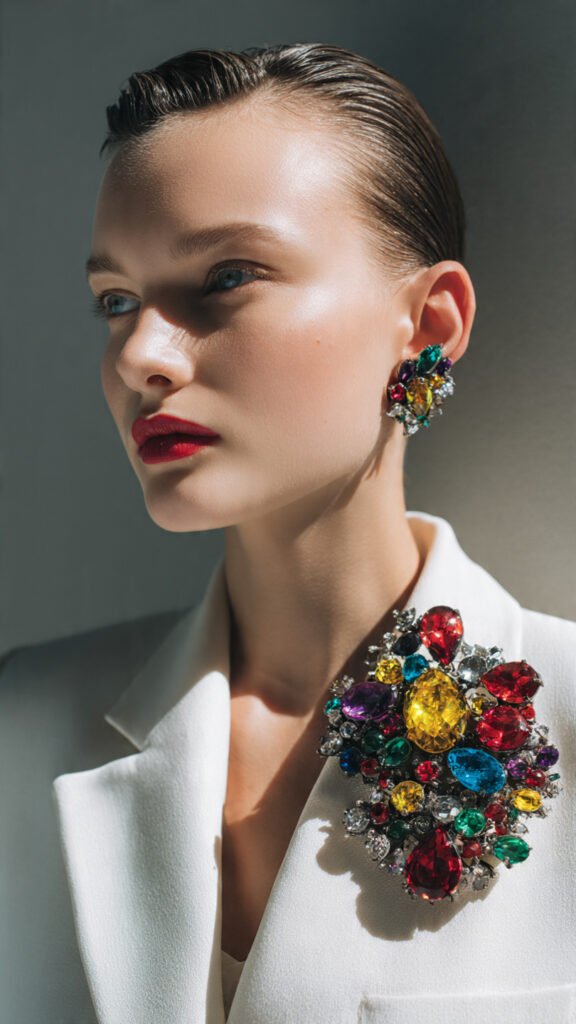
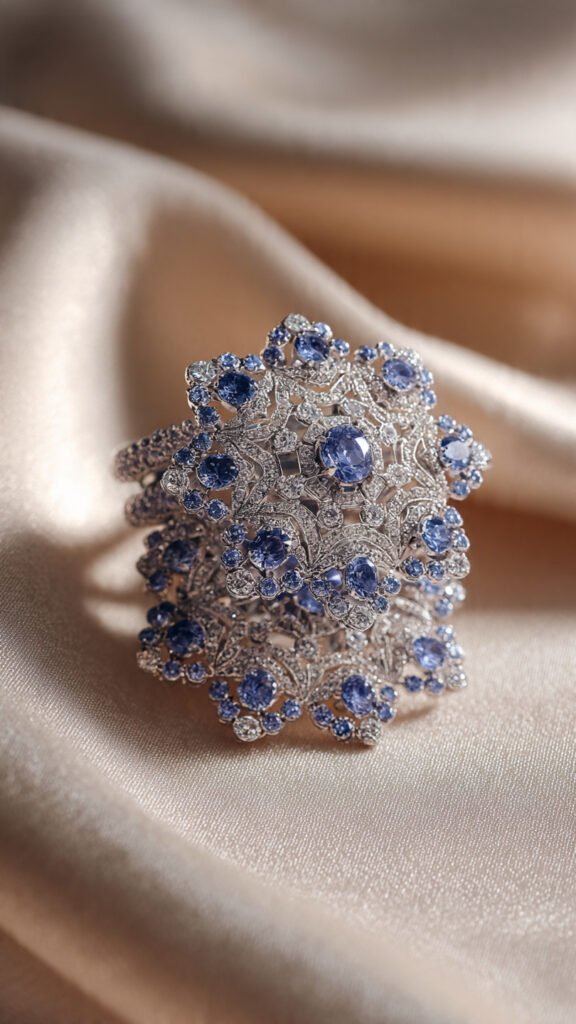
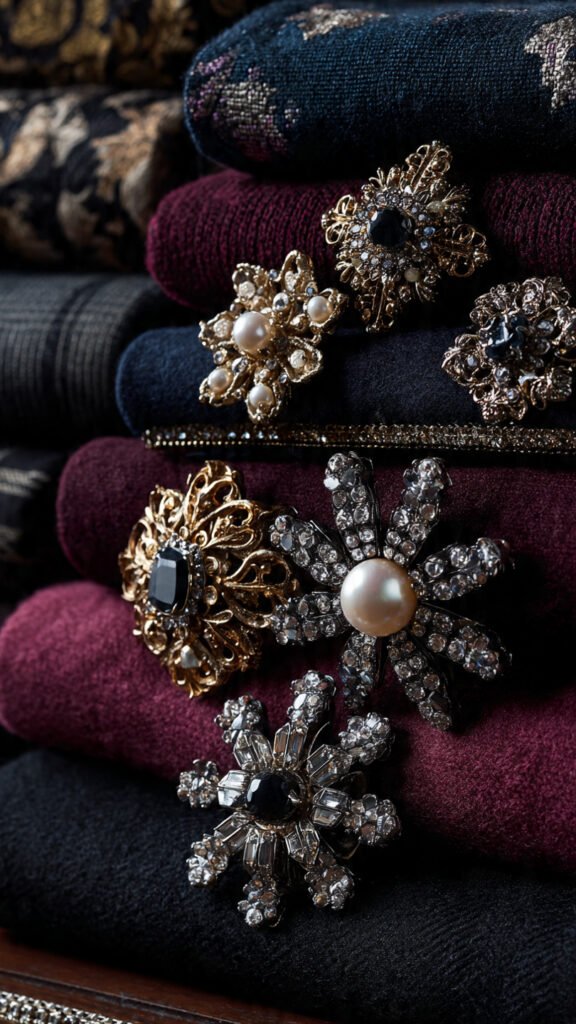
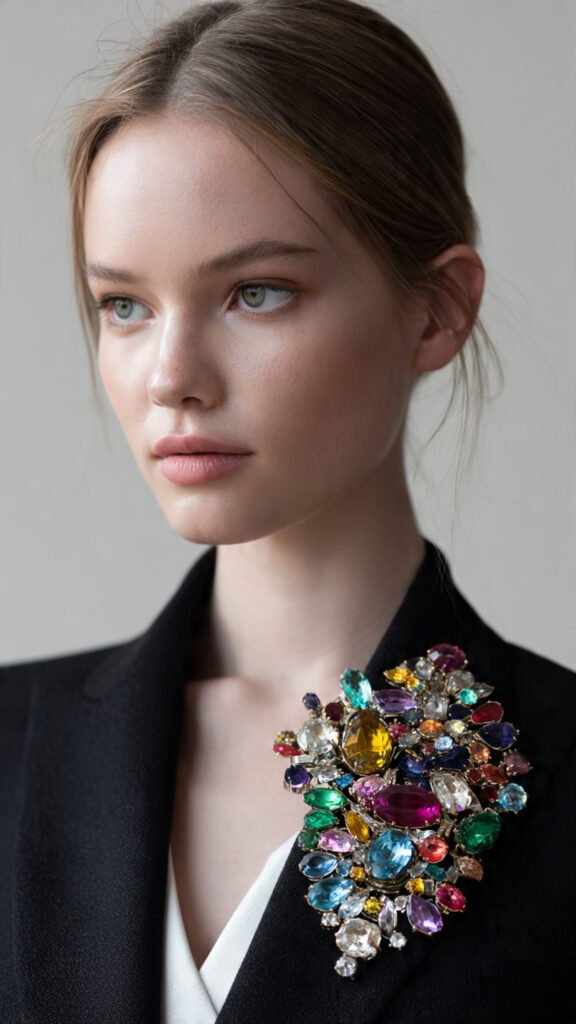
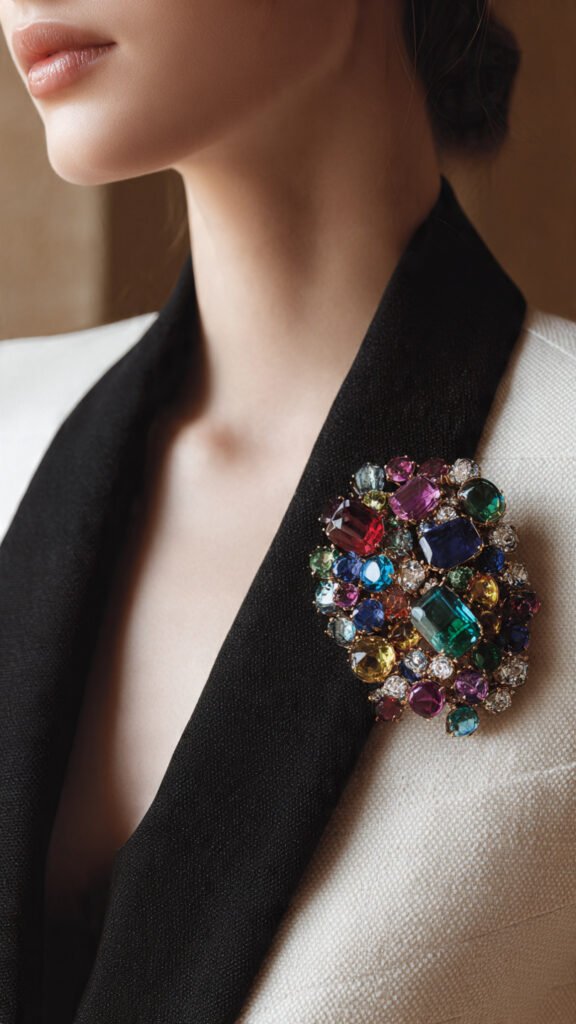
Cluster brooches are defined by their density of stones, often arranged to create a single, cohesive form. They can range from tightly packed diamond clusters to more varied gemstone compositions, each offering a different visual effect.
Styling these brooches requires an understanding of balance. Because they are inherently detailed and reflective, they function best as focal points. A simple garment—whether a coat, blazer, or dress—allows the brooch to provide texture and light without competition.
They are particularly effective in evening contexts, where their reflective qualities interact with low lighting. Positioned near the face or upper torso, they draw attention upward, enhancing the overall composition of the look.
Closing Perspective
Vintage and antique-style brooches are not confined to a single aesthetic or era. Their relevance lies in their adaptability—the ability to move between formal and casual contexts, to bridge historical references with contemporary styling, and to serve as both decorative and functional elements within a wardrobe.
What distinguishes effective use is not the piece itself, but the intention behind its placement and pairing. When approached thoughtfully, a brooch becomes more than an accessory; it becomes a point of view, a detail that transforms an outfit into something considered, layered, and complete.