Skip to content
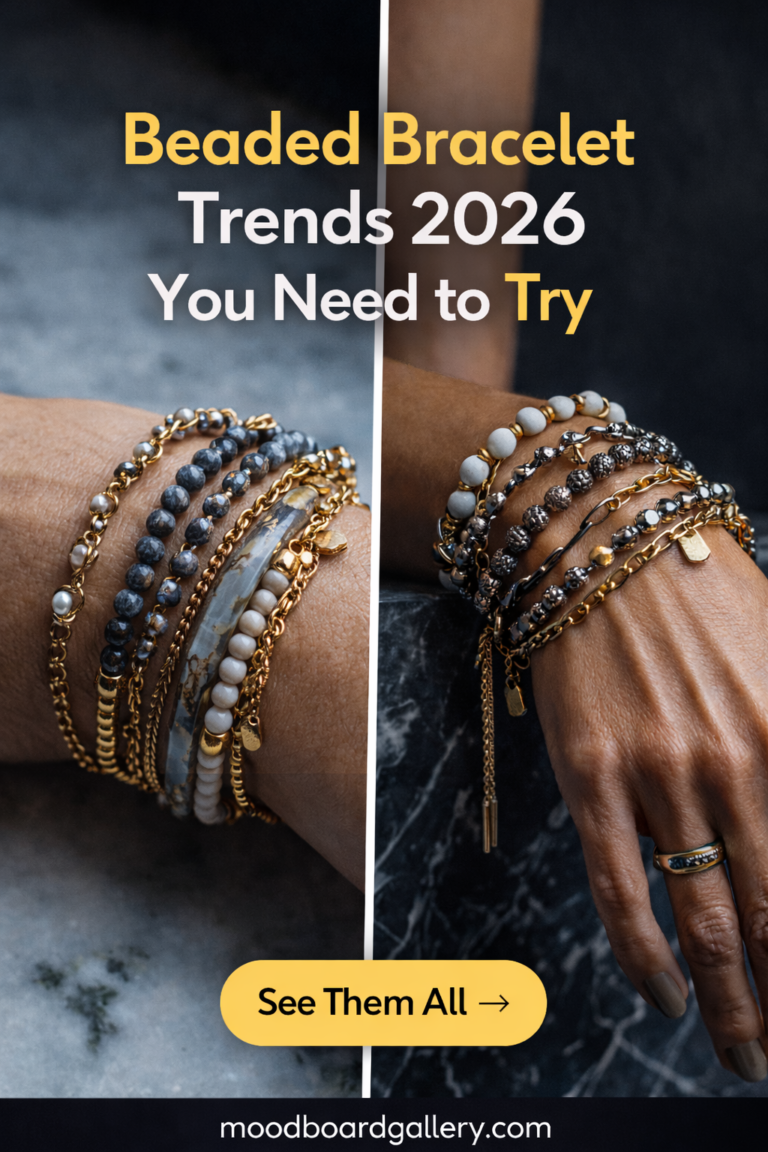
Beaded bracelets have shifted from simple handmade accessories into a central element of modern jewelry styling. What was once associated with DIY crafts or casual wear is now seen across luxury fashion, streetwear, and everyday styling. The appeal comes from their versatility: they can be minimal or bold, meaningful or purely aesthetic, affordable or premium. In 2026, beaded bracelets are not worn alone—they are styled, layered, and curated into full wrist compositions that reflect personal identity.
Structure and Core Materials
At a structural level, a beaded bracelet consists of beads strung onto elastic, wire, or cord. While this sounds simple, the variation in bead material, size, finish, and arrangement creates an enormous range of styles. Glass beads offer color and uniformity, gemstone beads introduce texture and perceived meaning, wooden beads create an organic feel, and metal beads elevate the piece into a more premium category. The construction method also affects durability and positioning on the wrist, with elastic designs dominating for ease of wear and wire-based designs often appearing in higher-end pieces.
Minimalist Beaded Bracelets
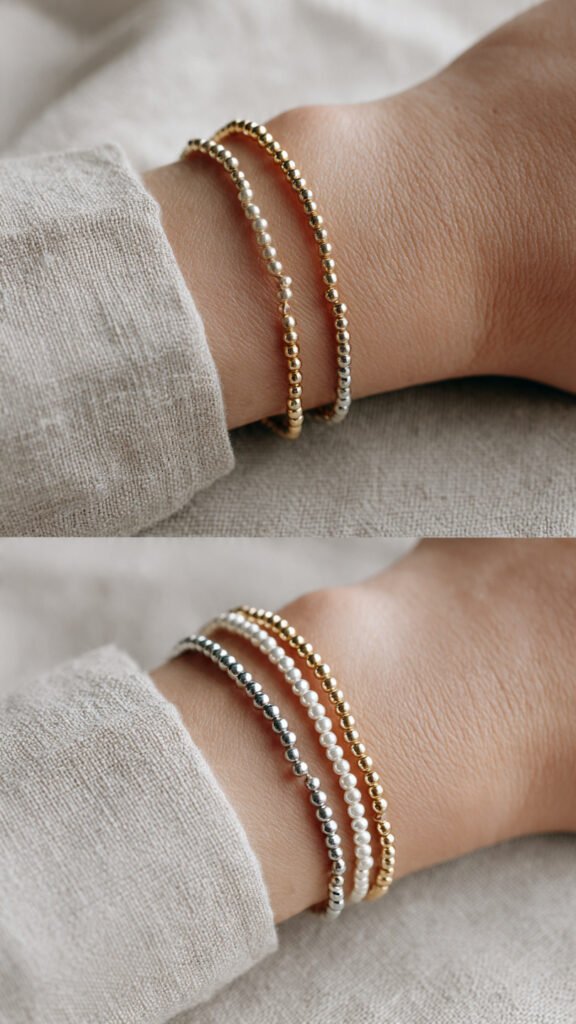
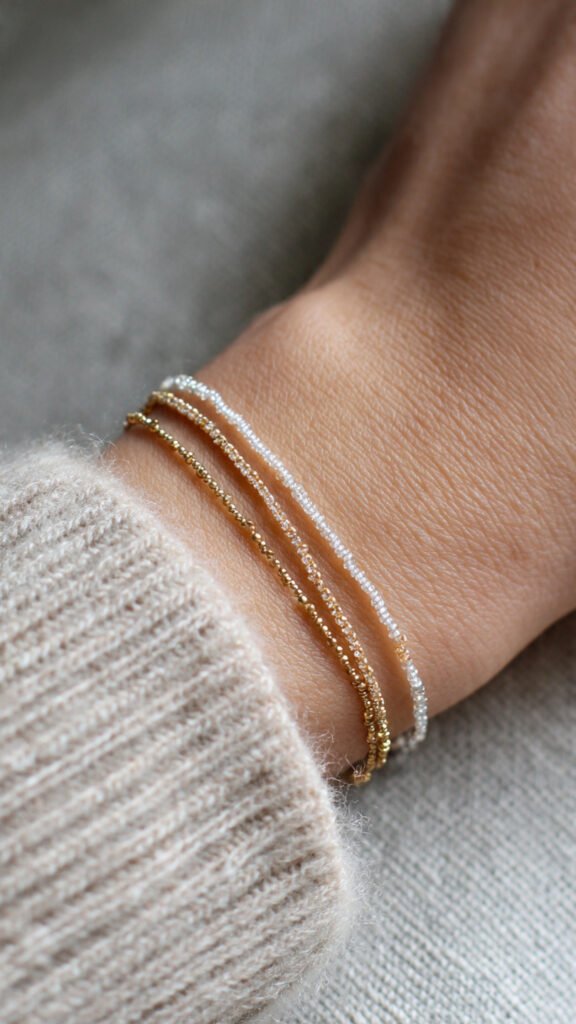
Minimalist beaded bracelets represent the most accessible entry point into the category. These designs use very small beads, often in gold, silver, or neutral tones, and are intended to be subtle rather than attention-grabbing. Their real strength lies in how easily they layer with other pieces. A single minimalist bracelet may appear understated, but when combined with two or three similar designs, it creates a refined, intentional look. This style aligns with everyday wear and works across formal and casual settings, making it one of the most commercially stable segments of the market.
Gemstone Beaded Bracelets
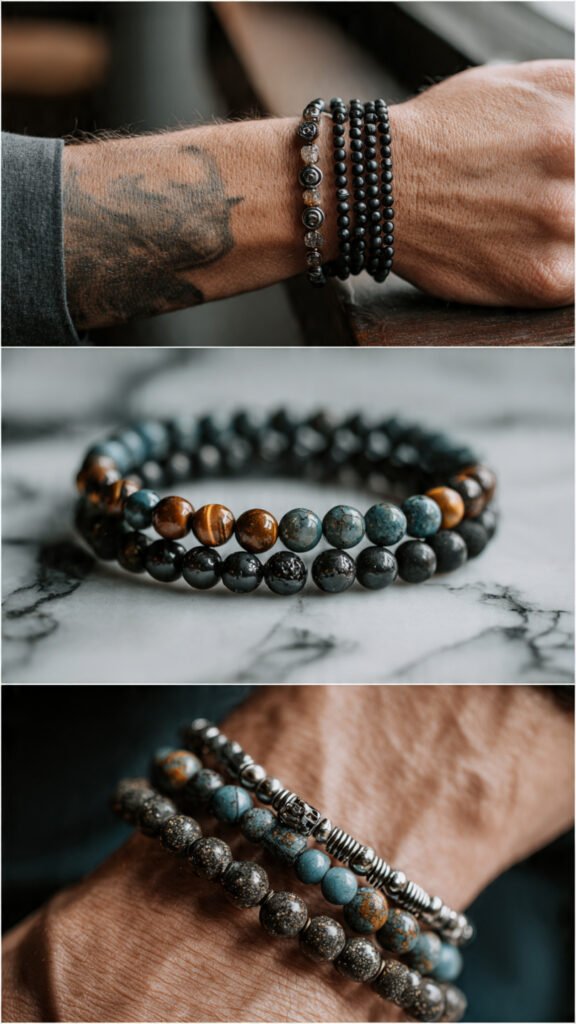
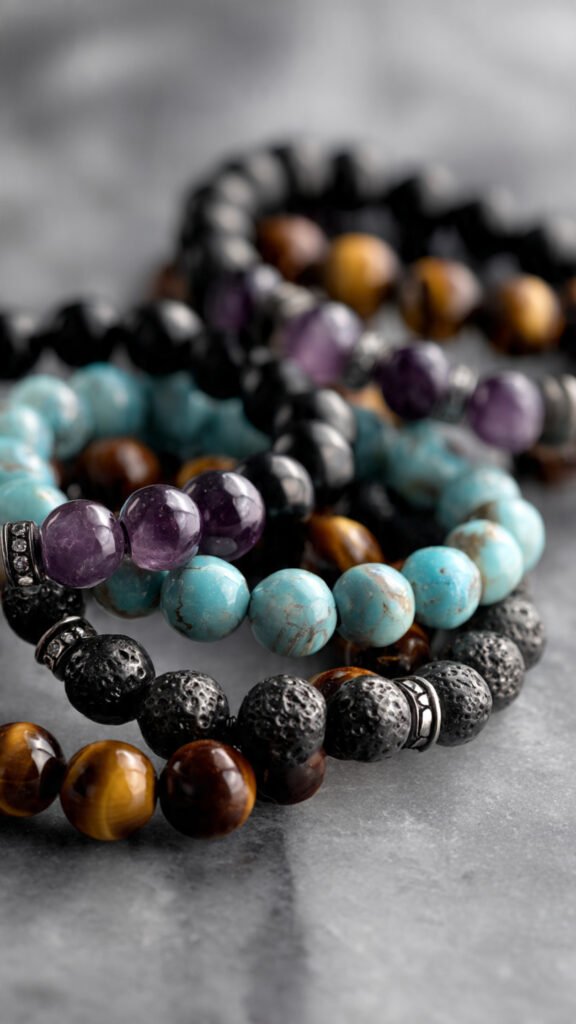
Gemstone beaded bracelets introduce a different dimension by combining aesthetics with perceived meaning. Stones such as onyx, tiger’s eye, amethyst, and turquoise are commonly used not only for their visual appeal but also for the associations people attach to them, such as protection, focus, or calmness. This category performs especially well in the men’s market, where darker tones and matte finishes create a more grounded, masculine look. At the same time, lighter stones and polished finishes are widely used in women’s designs, often integrated into mixed-material stacks that include metal accents.
Chunky and Statement Styles
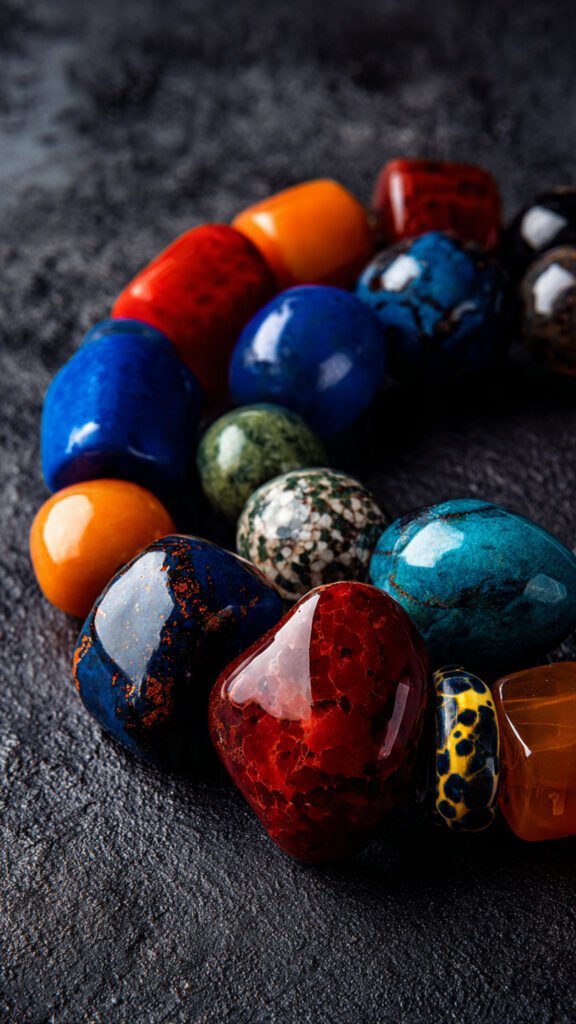
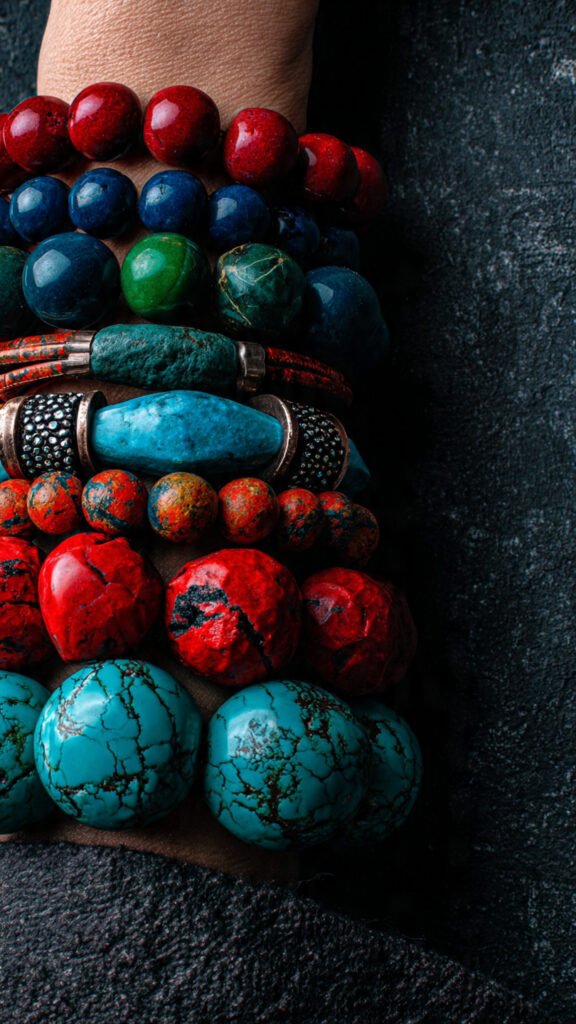
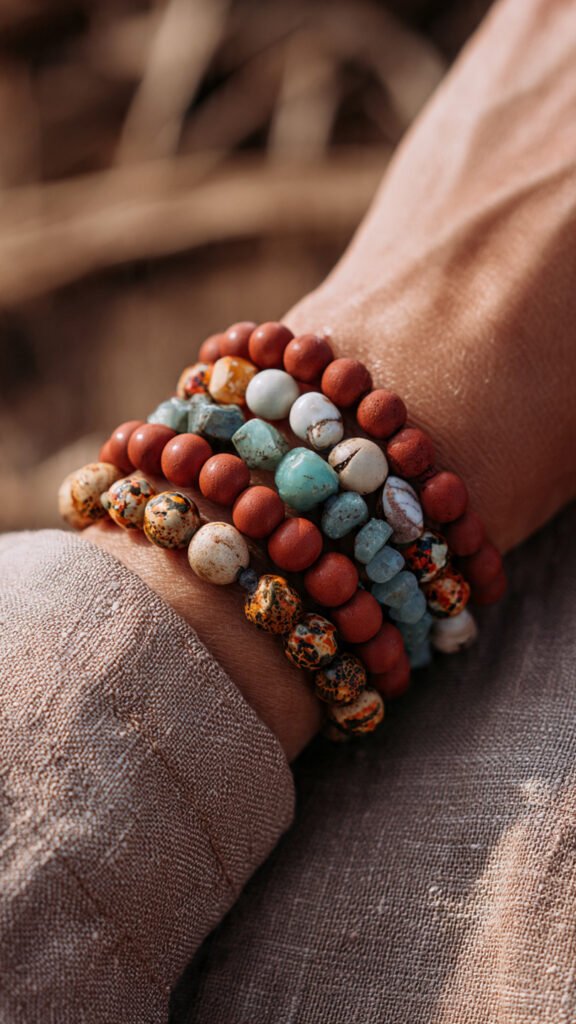
The rise of chunky and statement beaded bracelets reflects a broader shift in fashion away from minimalism toward expressive styling. Larger beads, irregular shapes, and bold colors are being used to create pieces that act as focal points within a stack. Rather than blending in, these bracelets are designed to stand out and anchor the entire wrist composition. This trend is closely tied to the return of maximalism, where jewelry is no longer subtle but intentionally visible and impactful.
Boho and Handmade Aesthetics
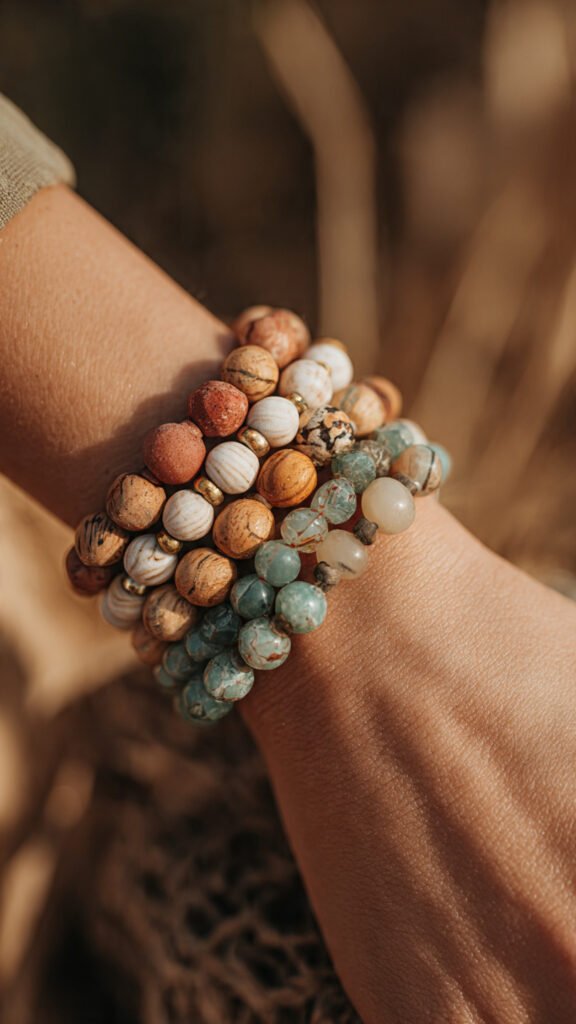
Boho and handmade beaded bracelets continue to hold strong relevance due to their connection with craftsmanship and individuality. These pieces often incorporate mixed materials such as wood, clay, shell, and irregular glass beads, resulting in designs that feel less manufactured and more personal. The slight imperfections in shape and color variation contribute to their appeal, especially among audiences looking for authenticity or alignment with handmade and sustainable aesthetics. This segment also overlaps heavily with platforms like Etsy, where uniqueness and storytelling play a major role in purchasing decisions.
Mixed-Material and Hybrid Designs
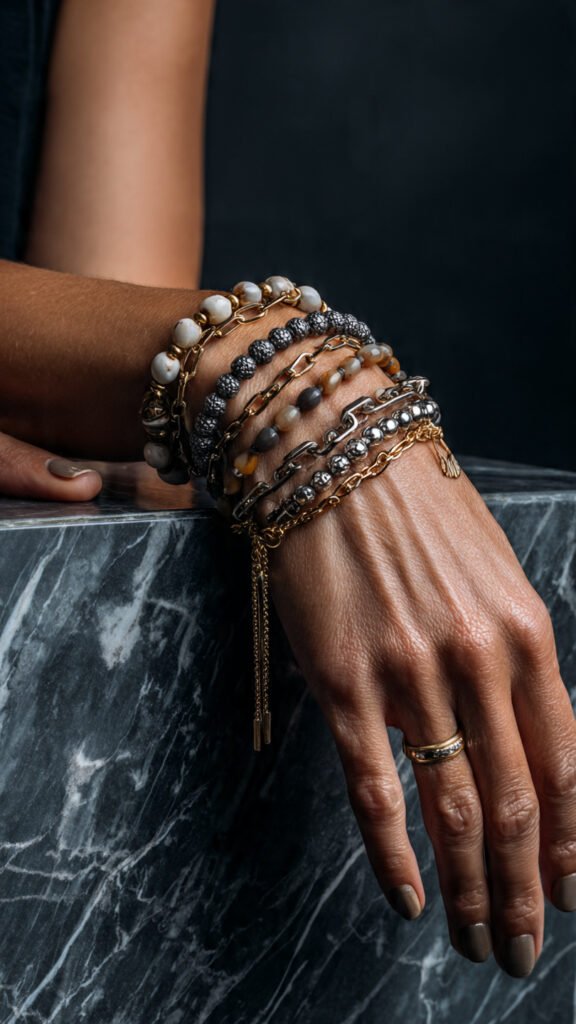
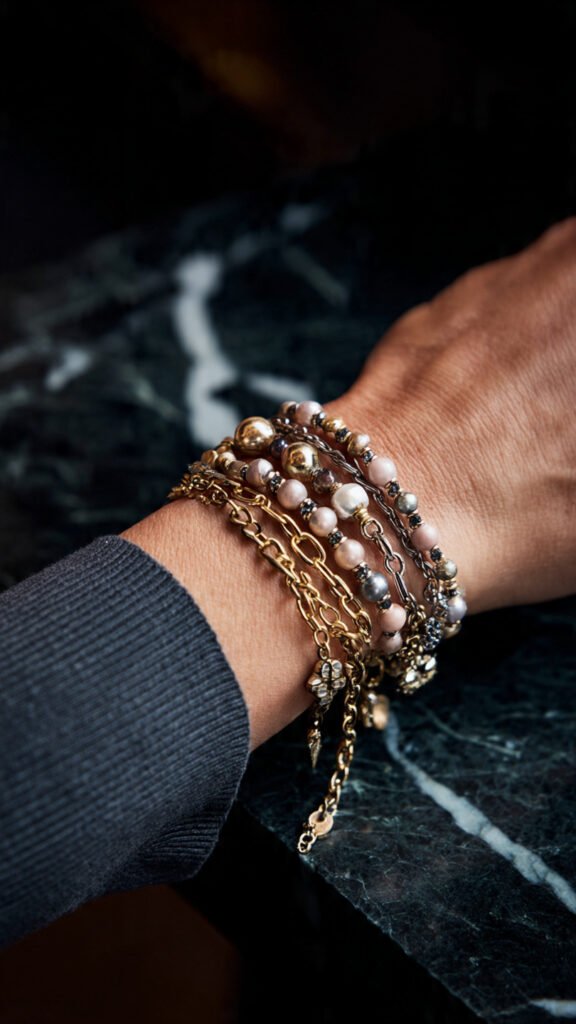
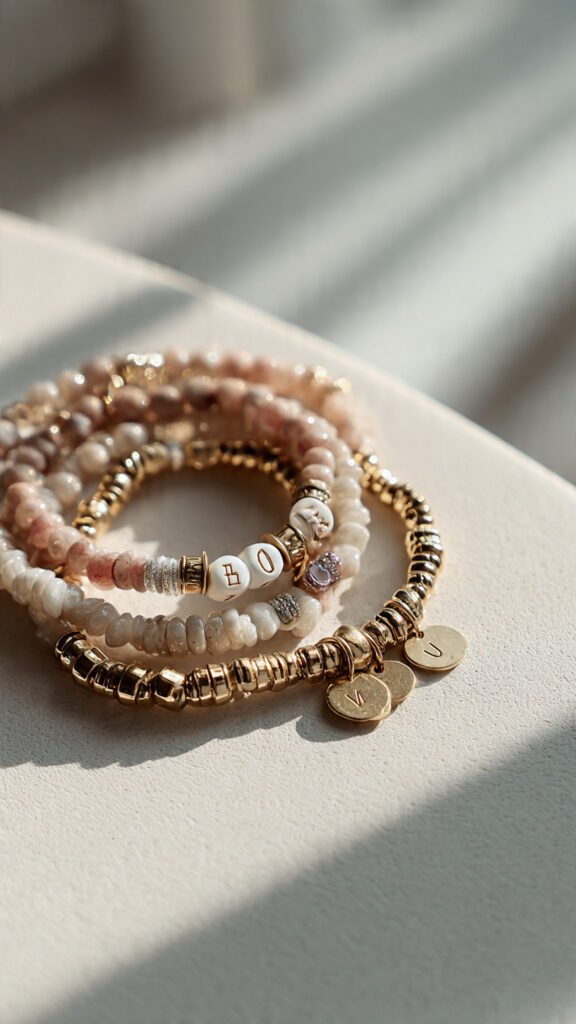
Another important evolution in the category is the integration of beads with other jewelry elements, particularly in mixed-material designs. Beaded bracelets are increasingly combined with chains, metal links, and small charms to create hybrid pieces that sit between traditional beadwork and fine jewelry. This blending of materials allows brands to position beaded bracelets at higher price points while maintaining the relaxed, wearable feel that defines the category. It also aligns with the broader trend of mixing metals, where gold and silver are no longer treated as separate styling choices but combined within the same look.
Personalization and Meaning
Personalization has become a key driver of demand, especially in the gifting market. Beaded bracelets featuring initials, names, zodiac symbols, or birthstones offer a sense of individuality that mass-produced jewelry often lacks. However, the trend has matured beyond overt customization. Instead of loud, brightly colored letter beads, there is a shift toward more refined personalization, where meaning is embedded subtly through material choice or small design elements. This makes the bracelets feel more timeless and less trend-dependent.
The Rise of Stacking
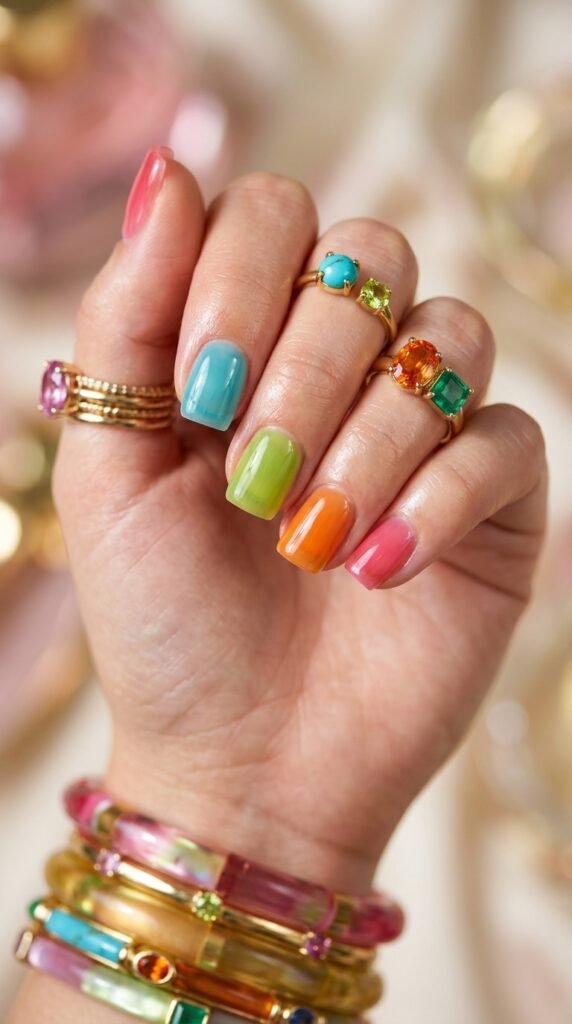
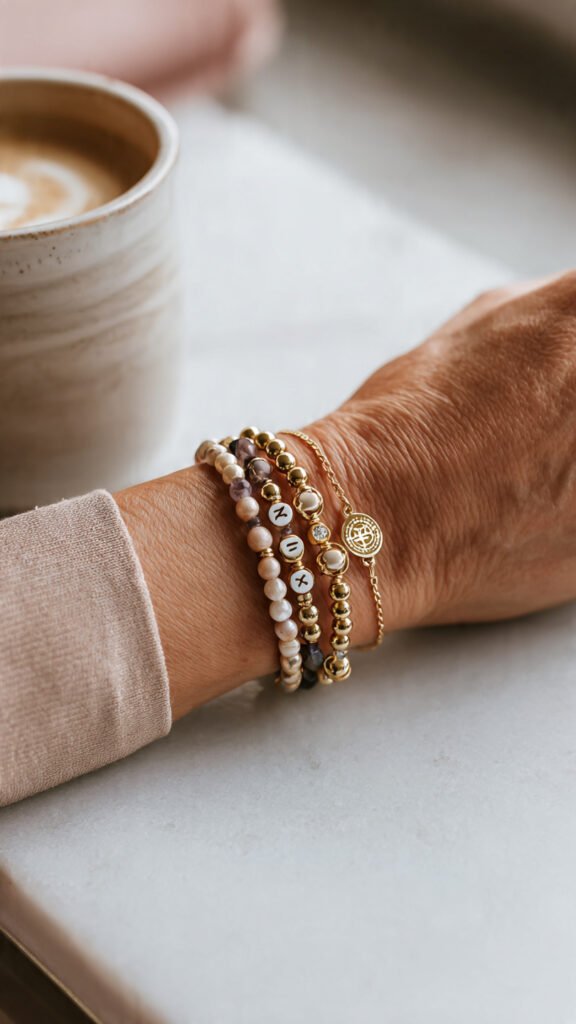
The most defining trend in 2026 is stacking. Beaded bracelets are rarely worn as standalone pieces; instead, they are layered in combinations that create depth, contrast, and movement. A well-constructed stack typically includes variation in bead size, material, and finish. Thin minimalist bracelets may sit alongside one or two gemstone pieces, with a chunkier bracelet acting as the focal point. The goal is not symmetry but balance, allowing each piece to contribute without overwhelming the overall look.
Texture, Color, and Balance
Texture plays a crucial role in stacking. Smooth, polished beads can be paired with rough or matte stones to create contrast. Similarly, mixing organic materials like wood or shell with refined elements like gold beads introduces visual tension that makes the stack more interesting. Color coordination also matters, but it does not require exact matching. Neutral bases combined with one or two accent colors tend to create the most cohesive result.
Styling Directions and Aesthetic Variations
Different styling directions emerge depending on the intended aesthetic. A clean, minimal stack might consist of several thin gold bead bracelets with a single neutral gemstone piece, creating a polished and understated look suitable for everyday wear. A more masculine stack often relies on darker tones, combining black onyx, lava stone, and subtle metallic accents to achieve a strong, grounded appearance. In contrast, a bohemian-inspired stack embraces color, mixing various bead types, textures, and sizes to produce a more relaxed and expressive feel. For a more elevated or luxury-oriented look, combining gemstone beads with gold chain bracelets creates a layered effect that feels both refined and modern.
Why Beaded Bracelets Dominate the Market
The dominance of beaded bracelets in the current market can be explained by several factors. They offer a lower price point compared to fine jewelry while still delivering strong visual impact. They are highly adaptable, allowing consumers to build and modify their collection over time rather than committing to a single piece. They also align perfectly with social media aesthetics, where layered, textured jewelry photographs well and communicates personal style instantly.
Conclusion: More Than Just Accessories
From a broader perspective, beaded bracelets sit at the intersection of fashion, identity, and accessibility. They allow for experimentation without significant financial risk, making them appealing to a wide audience. At the same time, the category has enough depth to support premium variations, particularly when higher-quality materials or more intricate designs are introduced.
In 2026, the significance of beaded bracelets lies not just in their individual designs but in how they are worn together. The shift from single accessories to curated stacks reflects a larger change in how people approach styling. Jewelry is no longer just an addition to an outfit; it is a key component of self-expression. Beaded bracelets, with their flexibility and range, have become one of the most effective ways to achieve that expressio