Skip to content
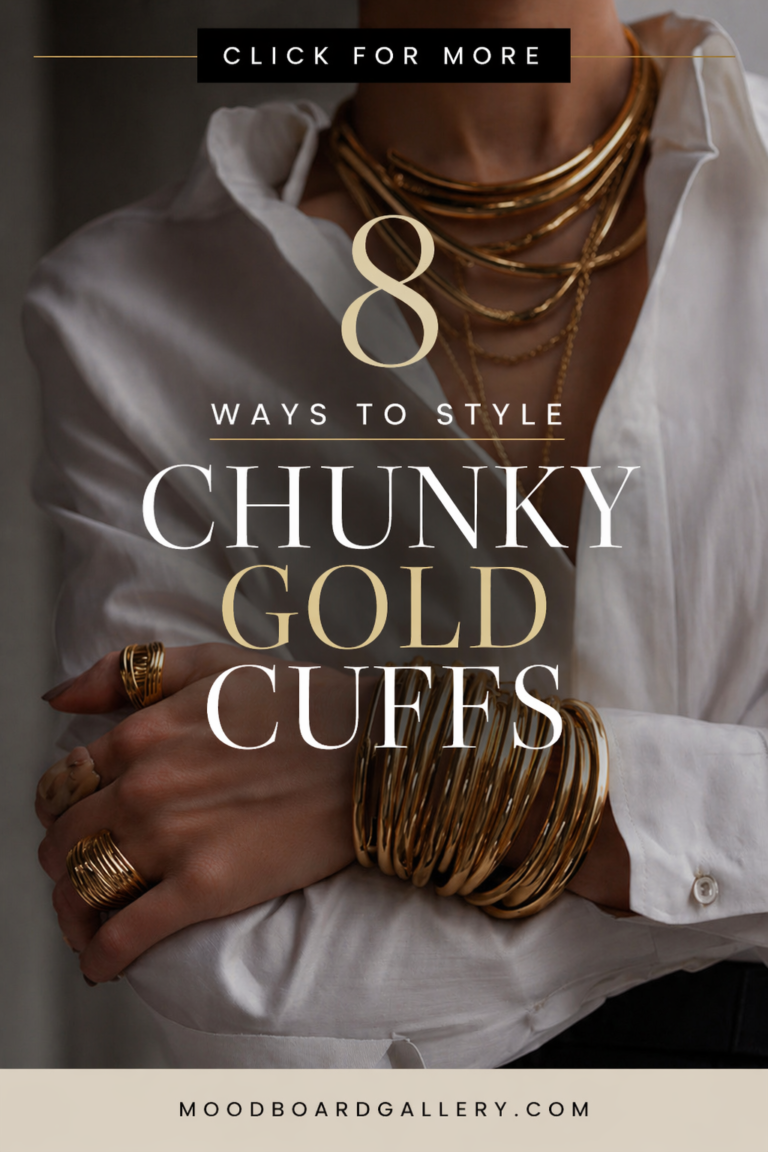
There is a distinct shift underway in the language of accessories. Where jewelry once leaned toward delicacy and restraint, the current mood favors presence, weight, and intention. At the center of this movement is the chunky gold cuff—an object that feels less like an accessory and more like a defining element of personal style. It carries with it a sense of authority, a quiet opulence that does not rely on logos or excess embellishment, but instead on form, finish, and proportion.
What makes the cuff particularly compelling now is its ability to transform even the most understated wardrobe. A simple white shirt or a sharply tailored blazer becomes something far more deliberate when anchored by a bold piece of gold at the wrist. The effect is immediate and unmistakable. It is not about adding more, but about choosing better.
The Evolution of Gold: From Delicate to Decisive
For years, the prevailing aesthetic favored fine chains and barely-there details. That sensibility has gradually given way to something more assertive. The modern approach to gold is sculptural, often exaggerated in scale, and designed to be seen rather than discovered.
This evolution is not simply about size. It reflects a broader desire for clarity in styling. The cuff, with its clean lines and architectural presence, answers that desire with precision.
Styling the Chunky Gold Cuff
The strength of the cuff lies in its versatility. It can move between minimalism and maximalism, daywear and evening, structure and ease. The following approaches offer a range of ways to incorporate it into a wardrobe, each with its own distinct tone and intention.
Minimal Tailoring with a Single Cuff
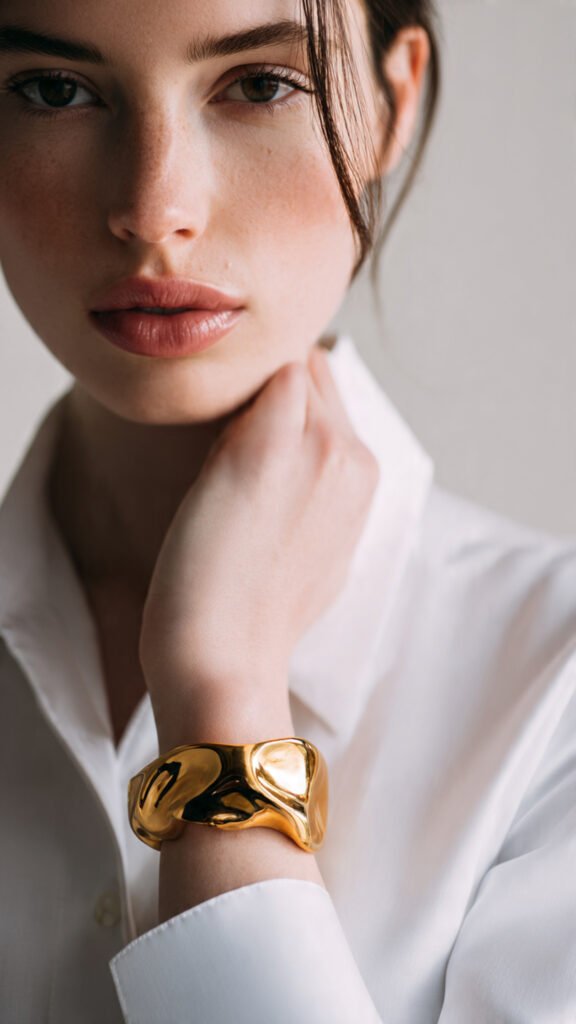
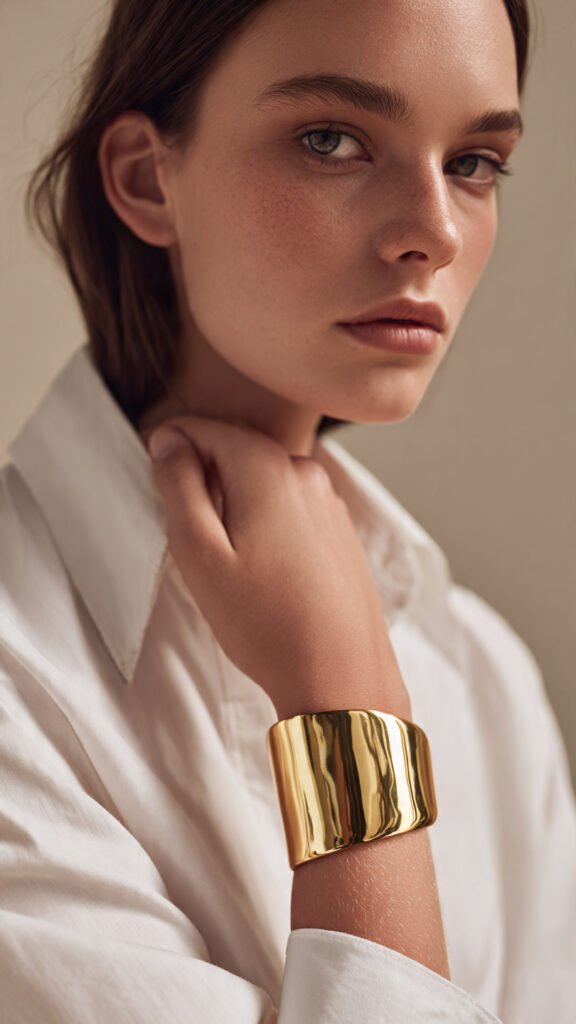
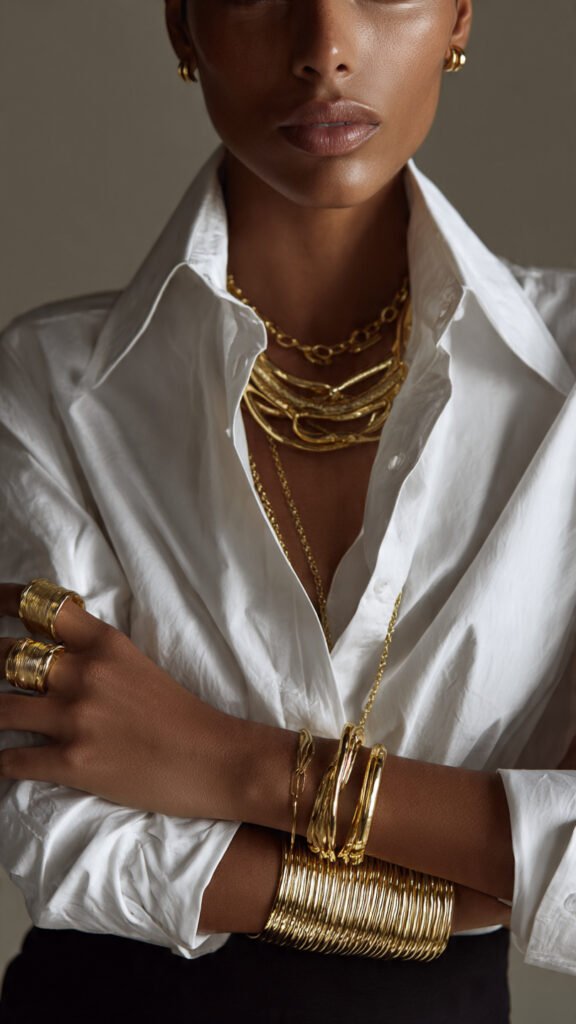
The most refined approach begins with restraint. A crisp white shirt, a black column dress, or a neutral-toned co-ord provides the perfect backdrop for a single, sculptural cuff. In this setting, the jewelry becomes the focal point, uninterrupted by excess detail. The simplicity of the clothing allows the gold to stand out with clarity, creating a look that feels composed and quietly luxurious.
Double Cuff Symmetry
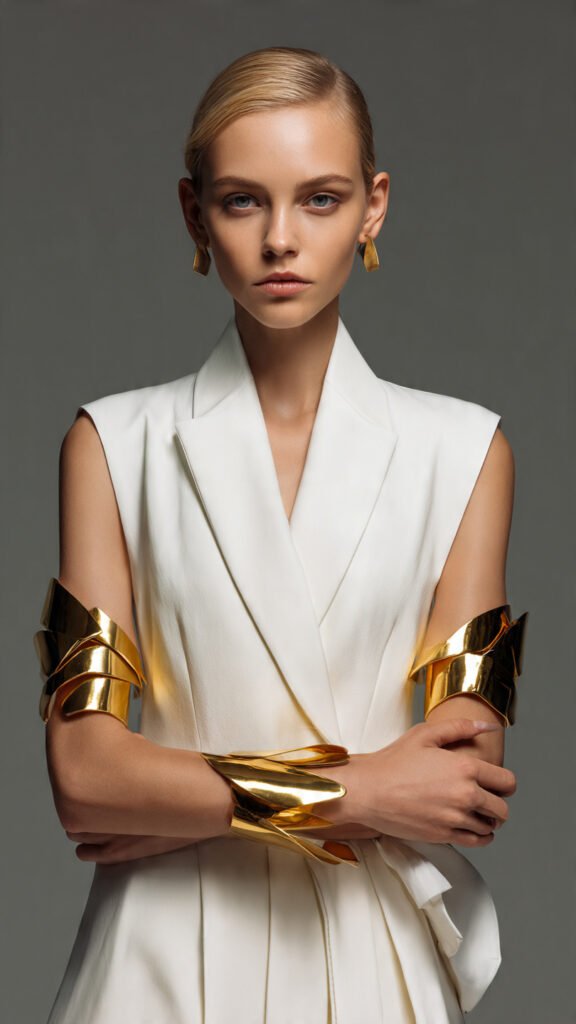
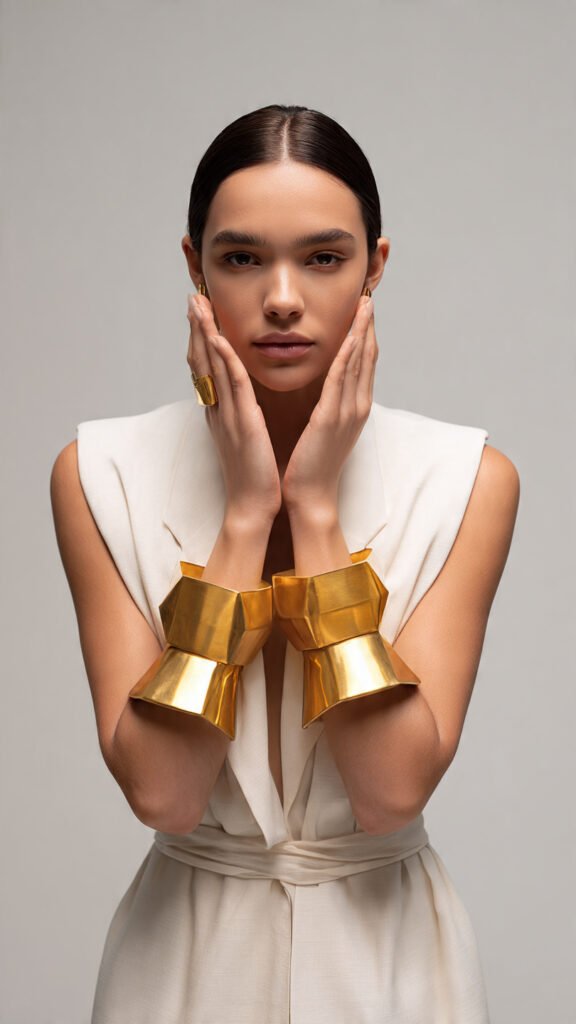
Wearing a cuff on each wrist introduces a sense of balance that feels both deliberate and striking. This approach works particularly well with sleeveless silhouettes or sharply tailored blazers with pushed-up sleeves. The symmetry creates structure, giving the overall look a strong, almost architectural quality. It leans toward a more editorial sensibility, where proportion and repetition define the aesthetic.
Layered Gold with Controlled Depth
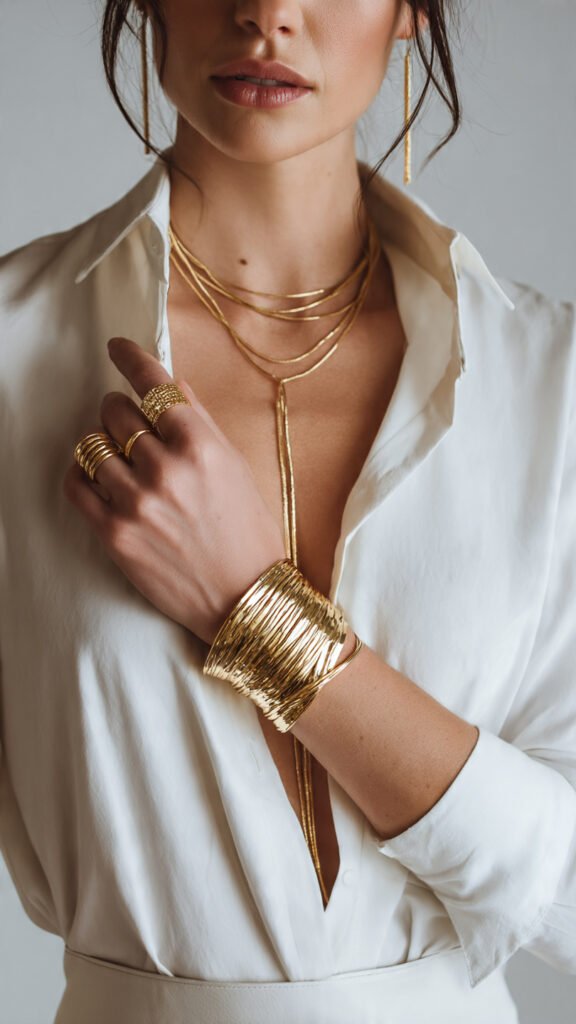
For those who prefer a richer composition, the cuff can be integrated into a broader arrangement of gold jewelry. The key lies in maintaining cohesion. A chunky cuff paired with slimmer bangles, a few sculptural rings, or a single chain necklace creates dimension without overwhelming the look. The emphasis remains on tonal consistency and intentional placement, ensuring that the layering feels curated rather than excessive.
Styling the Cuff Over Sleeves
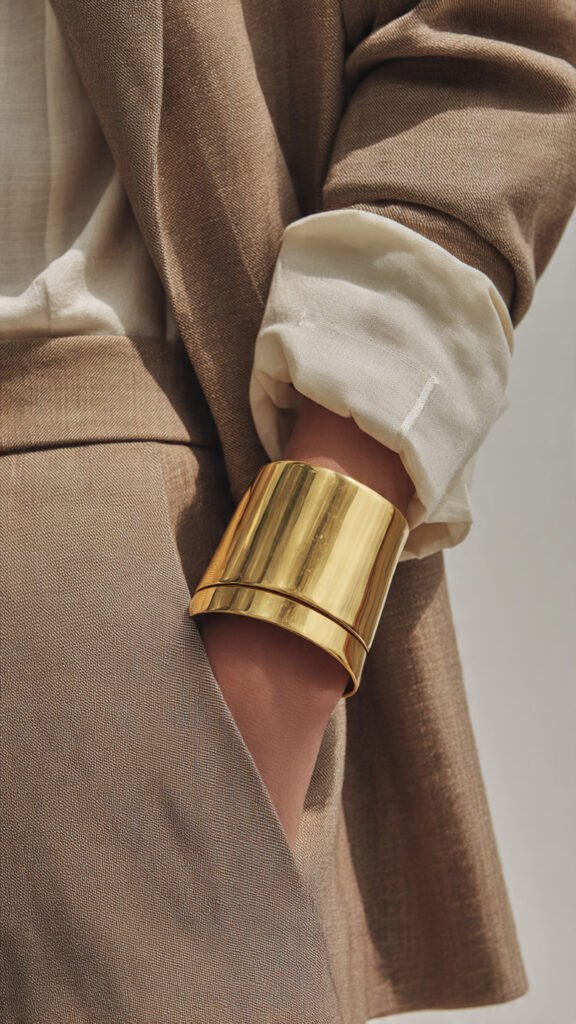
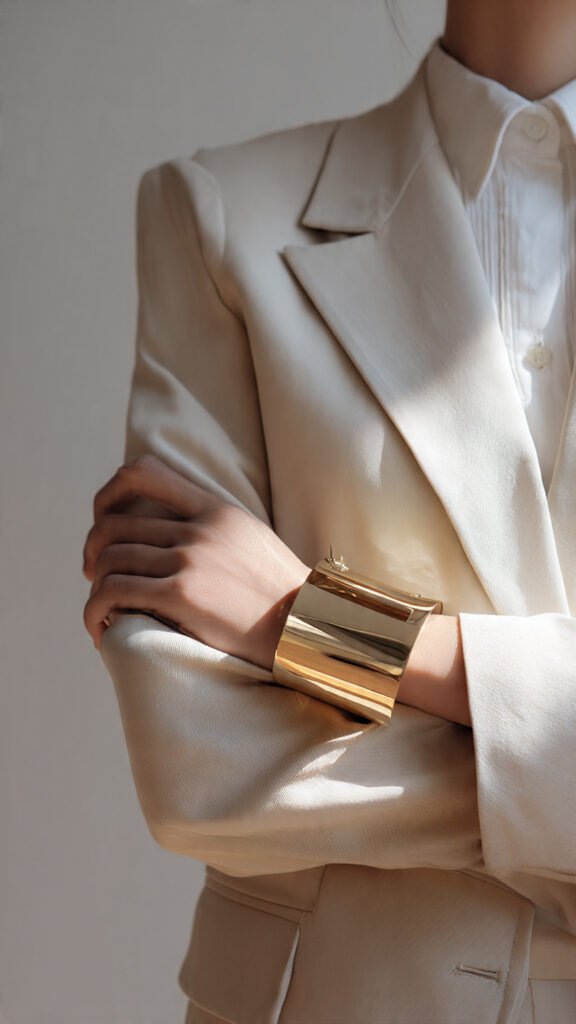
Positioning the cuff over fabric introduces a subtle yet impactful variation. Placed over the sleeve of a blazer, a shirt, or even a fine knit, the piece takes on a new role within the outfit. The contrast between structured metal and soft fabric creates visual interest, while also drawing attention to the wrist in an unexpected way. This technique feels modern and directional, offering a fresh perspective on a classic accessory.
Casual Foundations with Elevated Detail
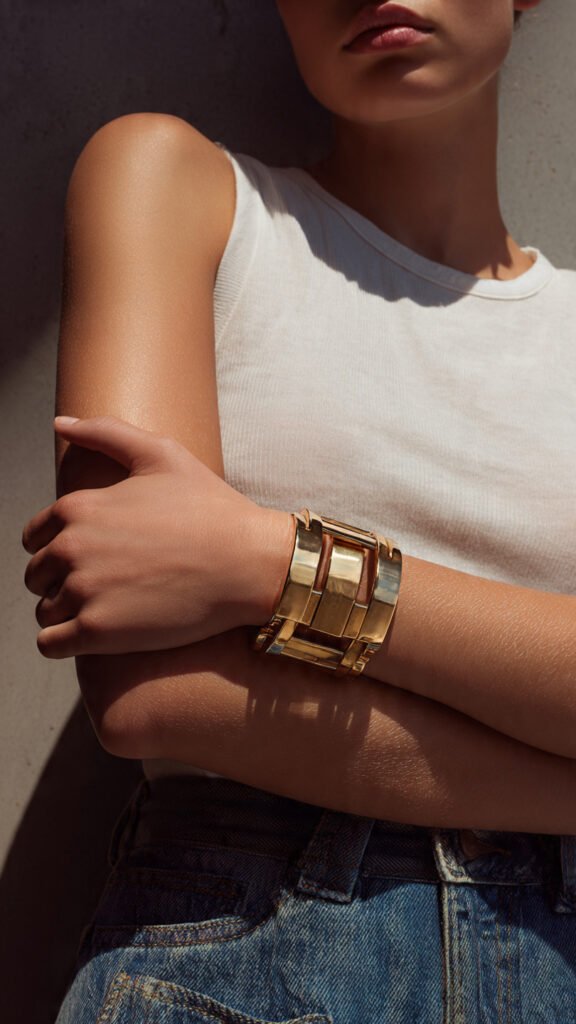
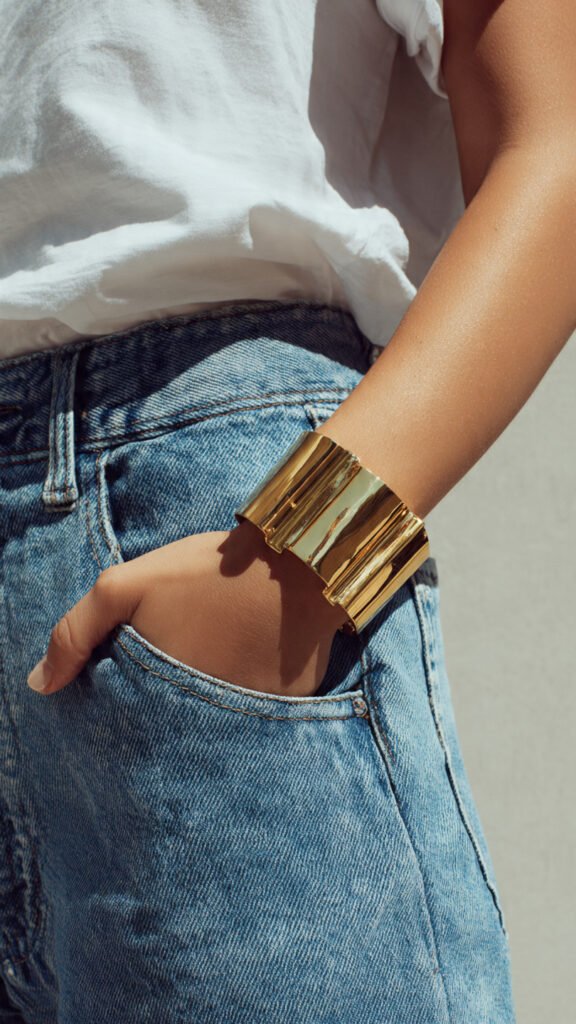
The cuff has the ability to transform everyday clothing into something more considered. Worn with denim and a simple T-shirt or tank, it introduces a sense of intention that might otherwise be absent. The juxtaposition of relaxed garments with a bold, polished accessory creates balance, allowing the outfit to feel effortless yet refined.
Eveningwear with Sculptural Emphasis
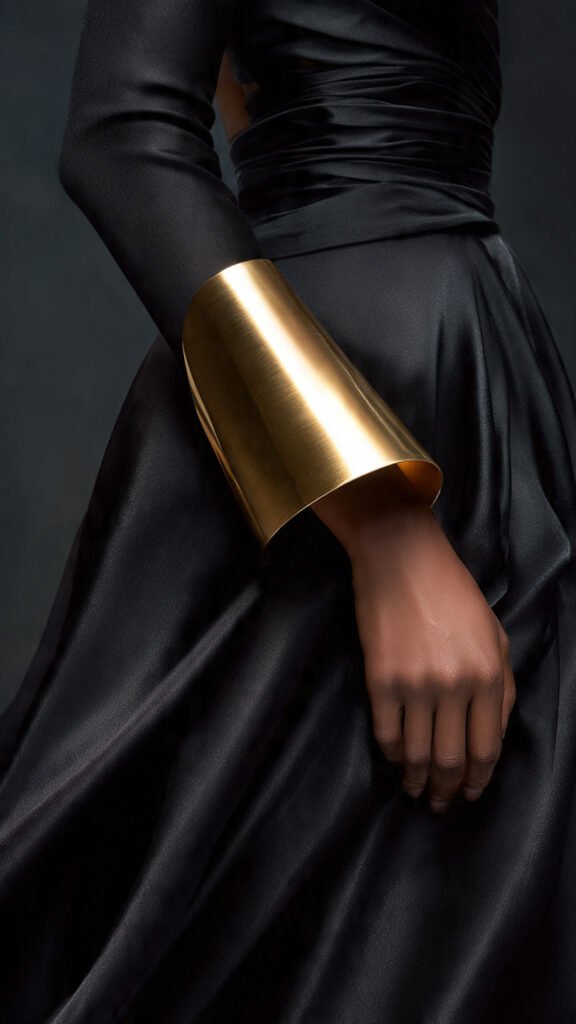
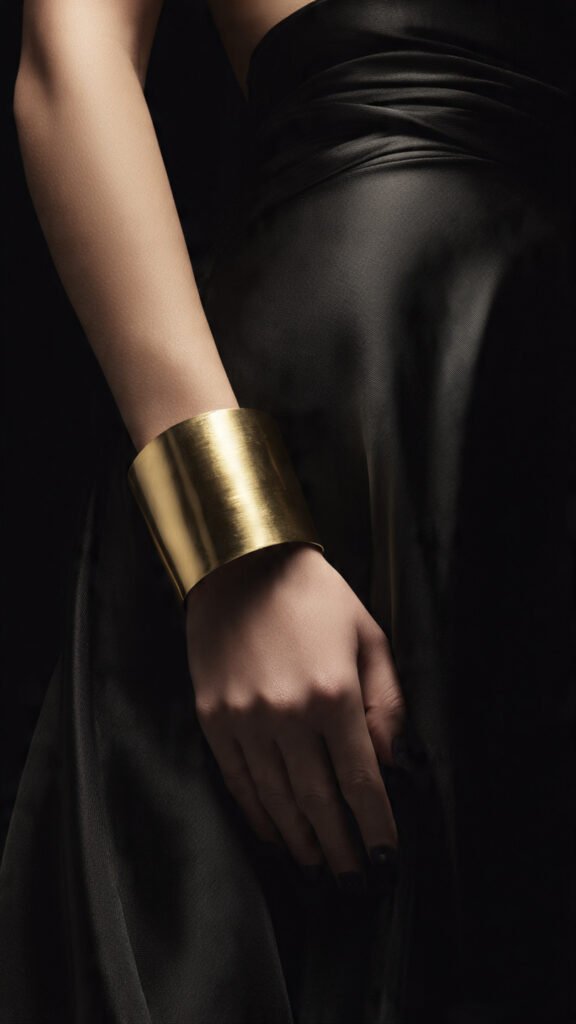
In evening settings, the cuff takes on a more dramatic role. Paired with a sleek black dress, satin textures, or fluid silhouettes, it becomes an extension of the overall composition. Here, the focus shifts to how the piece interacts with light and movement. A polished gold surface catches and reflects, adding depth without the need for additional embellishment.
Monochrome Dressing with Gold Contrast
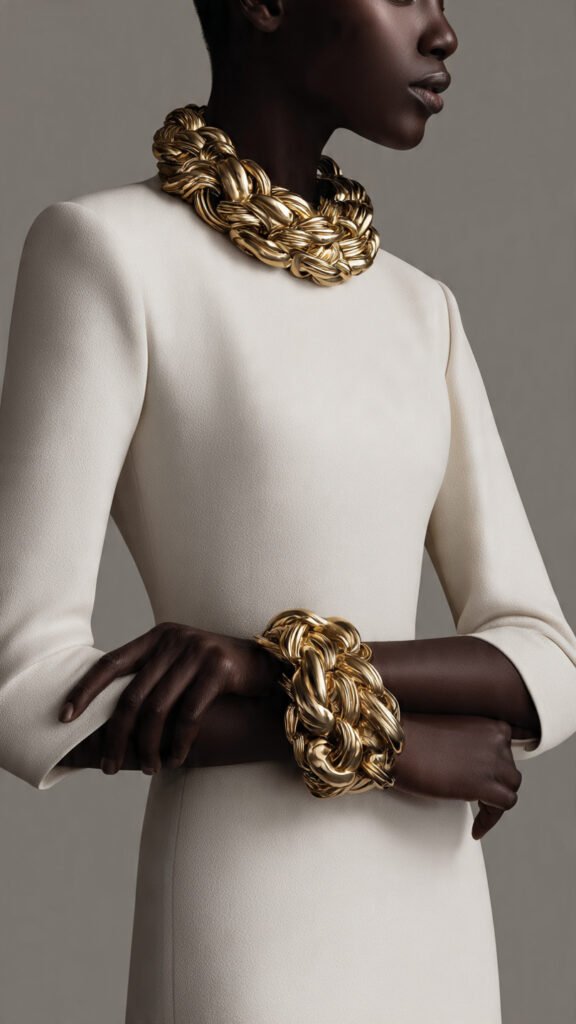
A monochromatic outfit—whether entirely black, ivory, or tonal beige—creates the ideal canvas for a statement cuff. The uniformity of color allows the gold to interrupt the palette in a controlled and elegant way. This contrast is what gives the look its impact. The cuff does not blend in; it defines the visual rhythm of the outfit.

Structured Outerwear and Strong Lines
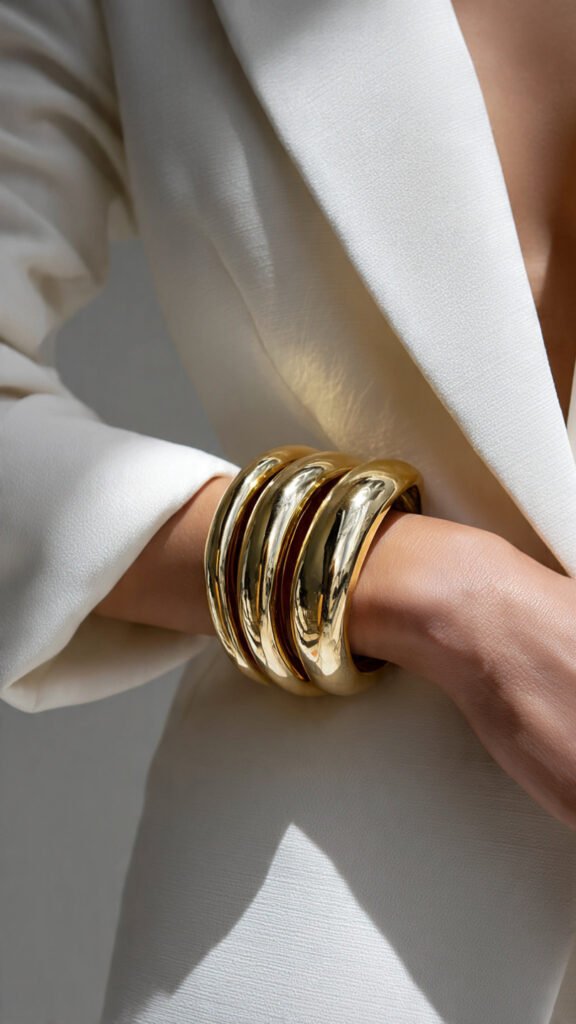
When paired with structured coats or blazers, the cuff reinforces the geometry of the outfit. Sharp shoulders, clean lapels, and defined tailoring all benefit from the addition of a bold wrist piece. The result is cohesive, with each element contributing to a unified sense of strength and clarity.
Soft Silhouettes with Hard Contrast
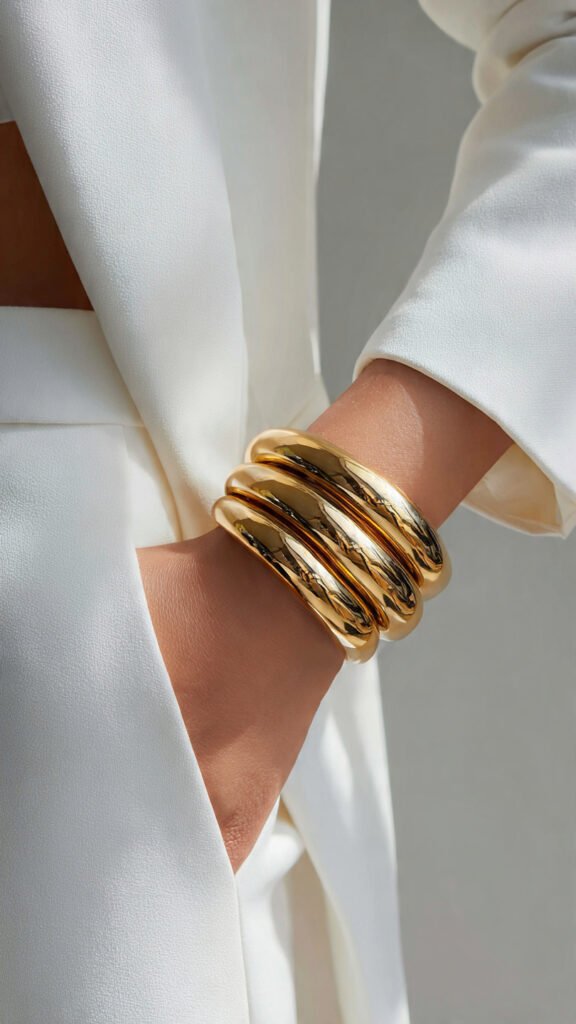
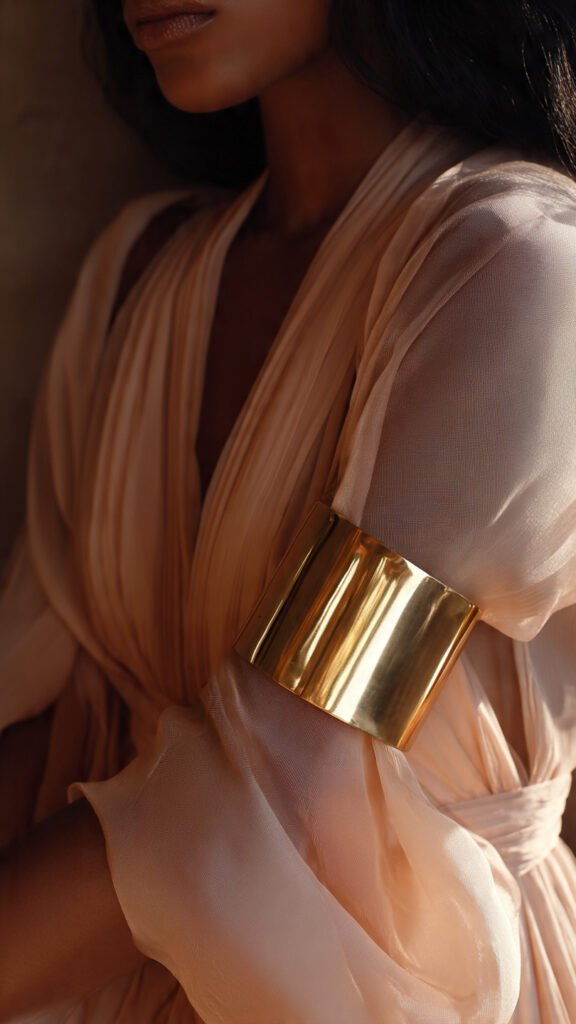
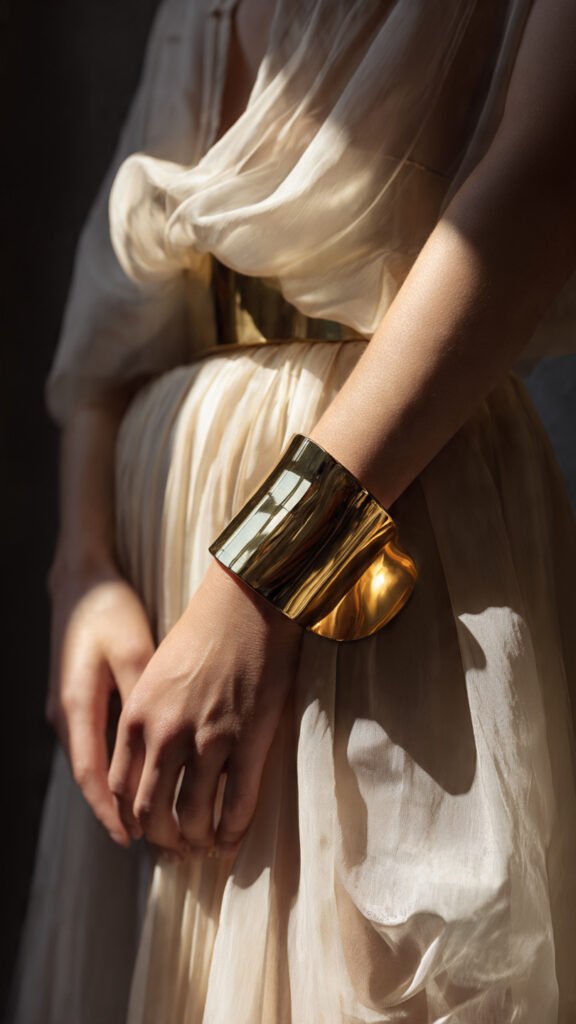
There is a particular elegance in pairing the rigidity of a cuff with softer garments. Flowing dresses, draped fabrics, and relaxed silhouettes gain definition when contrasted with structured gold. The tension between softness and strength creates a layered visual effect, adding depth to otherwise fluid looks.
Day-to-Night Transitions
One of the cuff’s most practical qualities is its adaptability. An outfit worn during the day can be shifted into evening simply by introducing or emphasizing the cuff. It acts as a bridge between contexts, requiring minimal adjustment while still altering the overall tone. This makes it an essential element for wardrobes that prioritize versatility.
Proportion and Placement
Proportion plays a defining role in how the cuff is perceived. A well-chosen piece follows the natural curve of the wrist, neither overpowering nor disappearing. Its width and weight should complement the wearer, creating balance rather than tension.
Placement also influences the overall effect. A cuff worn closer to the hand feels sharper and more structured, while positioning it slightly higher on the wrist introduces a more relaxed sensibility. These subtle differences shape the final impression.
The Language of Modern Luxury
What distinguishes the current approach to chunky gold is its relationship with luxury. It is less about overt display and more about material and form. The finish of the metal, the weight of the piece, and the precision of its design all contribute to its presence.
This is a kind of luxury that communicates through detail rather than decoration. It suggests confidence and clarity, a sense of knowing exactly what is needed and nothing more. The cuff, in this context, becomes a quiet statement—one that resonates without excess.
A Lasting Perspective
While trends inevitably evolve, the return of bold gold feels grounded in something more enduring. Its appeal lies in its simplicity and strength. The cuff, in particular, embodies these qualities with clarity.
Incorporating it into a wardrobe does not require excess. It asks only for intention. A single, well-chosen piece has the ability to define an entire look, offering a sense of balance that feels both modern and timeless.