Skip to content
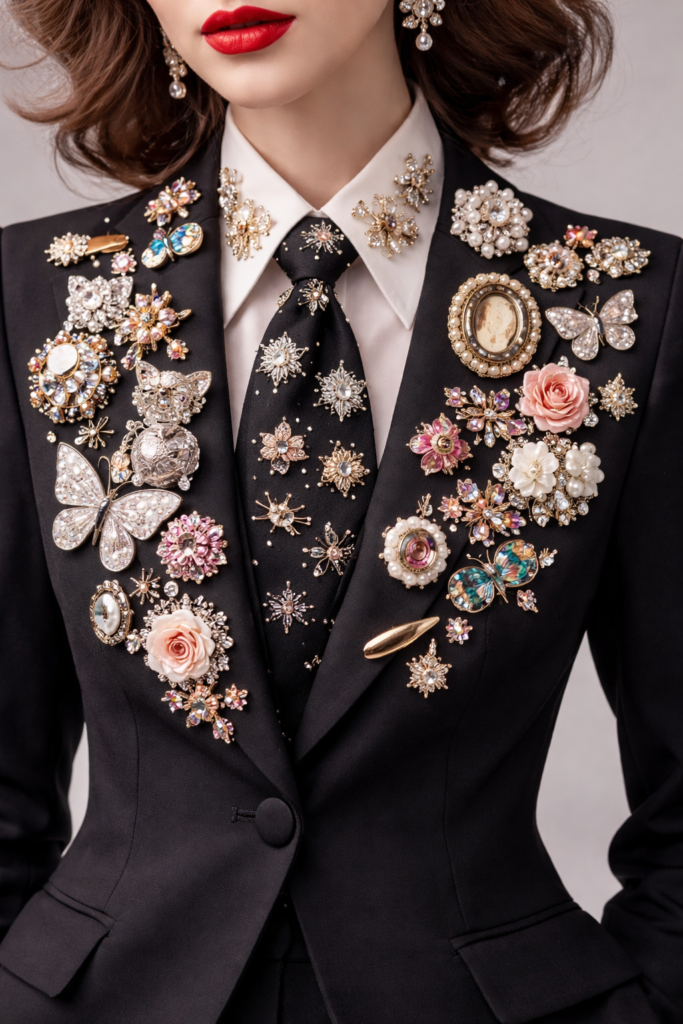
Floral and nature-inspired brooches occupy a distinct space within jewelry design, where ornamentation meets symbolism. Rooted in centuries of decorative arts, these pieces draw from botanical studies, natural forms, and the enduring human inclination to interpret nature through craftsmanship. Their continued relevance lies in their versatility. They can appear delicate or bold, romantic or structured, depending on how they are designed and, more importantly, how they are styled.
What distinguishes this category is its breadth. From finely enameled petals to sculptural metal leaves and gemstone-set insects, each variation offers a different visual language. The following guide explores the most significant types of floral and nature brooches, along with detailed, editorial-level insights into how they can be integrated into a modern wardrobe with intention and refinement.
Rose and Botanical Flower Brooches
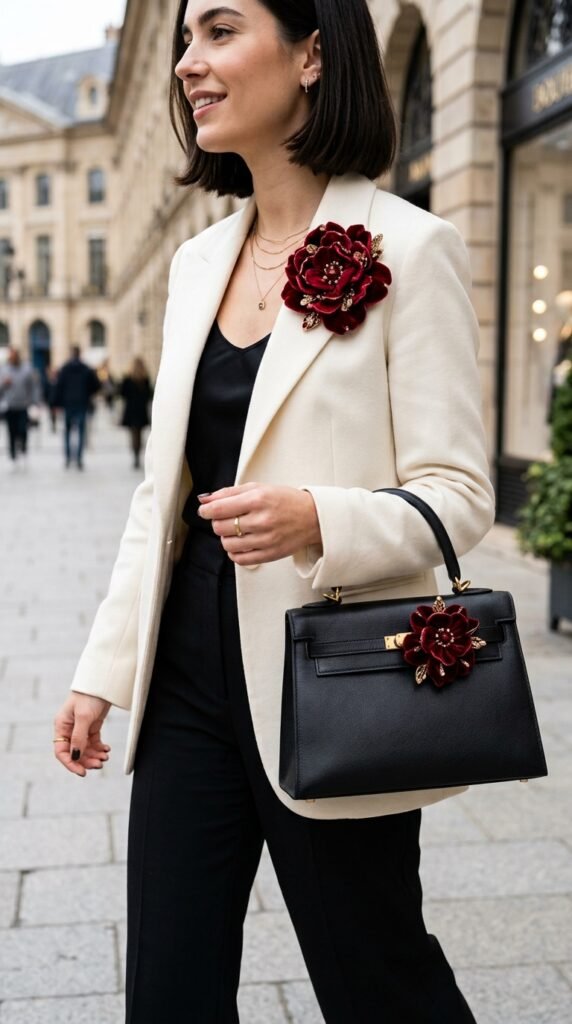
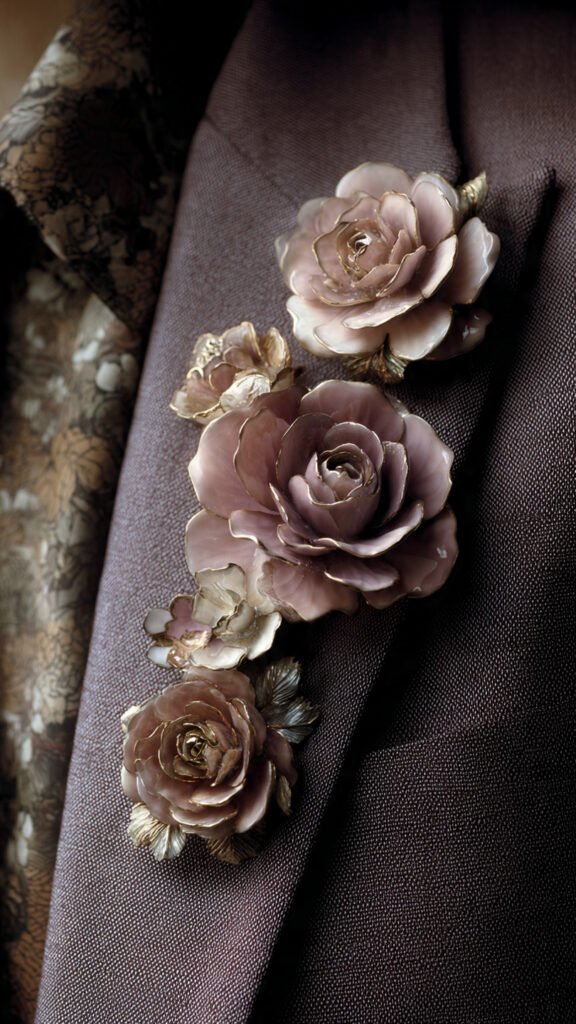
Rose brooches and broader botanical flower designs are among the most enduring interpretations of nature in jewelry. Often crafted with remarkable attention to detail, these pieces may feature layered petals, engraved textures, and subtle color variations achieved through enamel or gemstone settings. The aesthetic leans toward realism, capturing the organic softness and complexity of natural blooms.
In styling, these brooches lend themselves to garments that echo their inherent fluidity. Soft tailoring, such as lightly structured blazers or draped dresses, provides a balanced foundation. When placed along the lapel or just below the shoulder line, a rose brooch introduces a focal point that feels both intentional and effortless.
For a more contemporary approach, contrast becomes essential. Pairing a detailed botanical brooch with a monochromatic outfit allows the intricacy of the piece to stand out without visual competition. Neutral palettes, particularly in ivory, beige, or muted pastels, enhance the naturalistic quality of the brooch while maintaining a refined overall composition.
Leaf and Foliage Brooches
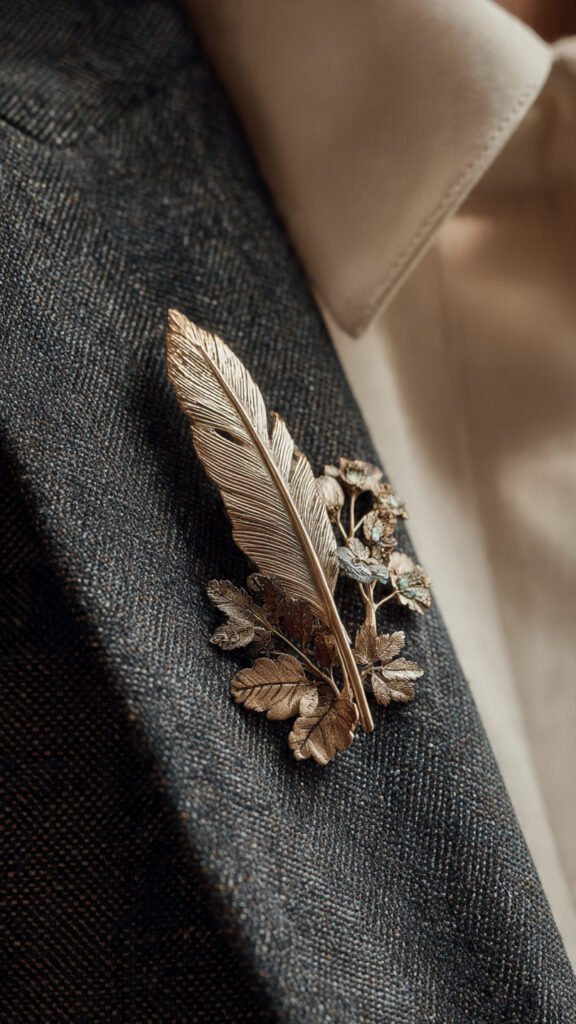
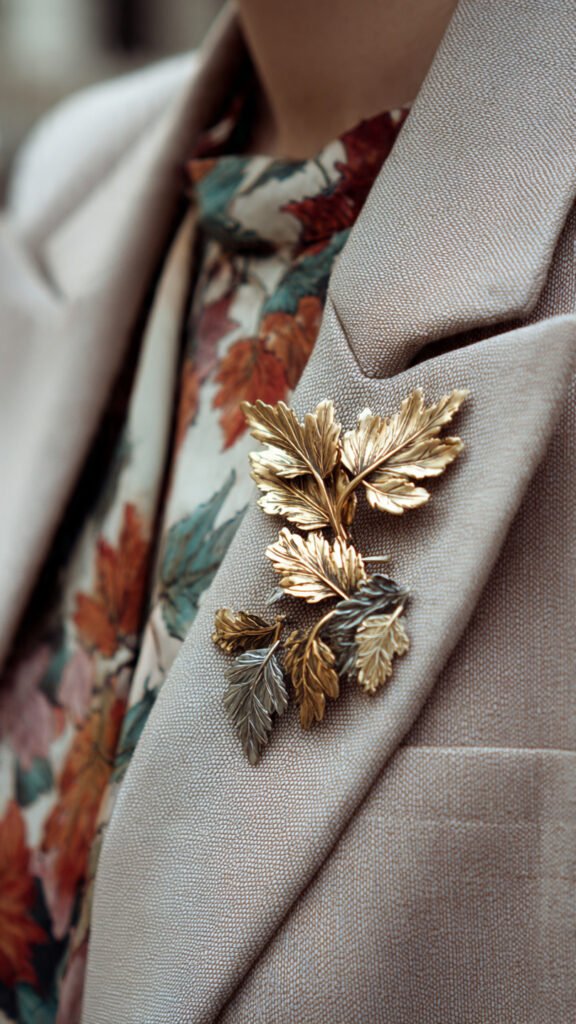
Leaf and foliage brooches translate the structural elegance of plants into wearable form. These designs often emphasize line and texture, with veins, curves, and asymmetry playing a central role. Materials range from polished gold and silver to oxidized metals that highlight depth and shadow.
Their strength lies in their adaptability. Unlike more ornate floral designs, leaf brooches can shift between understated and expressive depending on scale and finish. A single, elongated leaf brooch placed along the lapel of a tailored coat creates a clean, directional look. Alternatively, smaller foliage pieces can be grouped subtly to introduce dimension without overwhelming the garment.
Textural harmony is particularly important when styling these brooches. Wool, tweed, and structured cotton fabrics provide an ideal contrast to the metallic surfaces, allowing the organic shapes to emerge with clarity. The result is a composition that feels grounded, balanced, and quietly sophisticated.
Butterfly Brooches
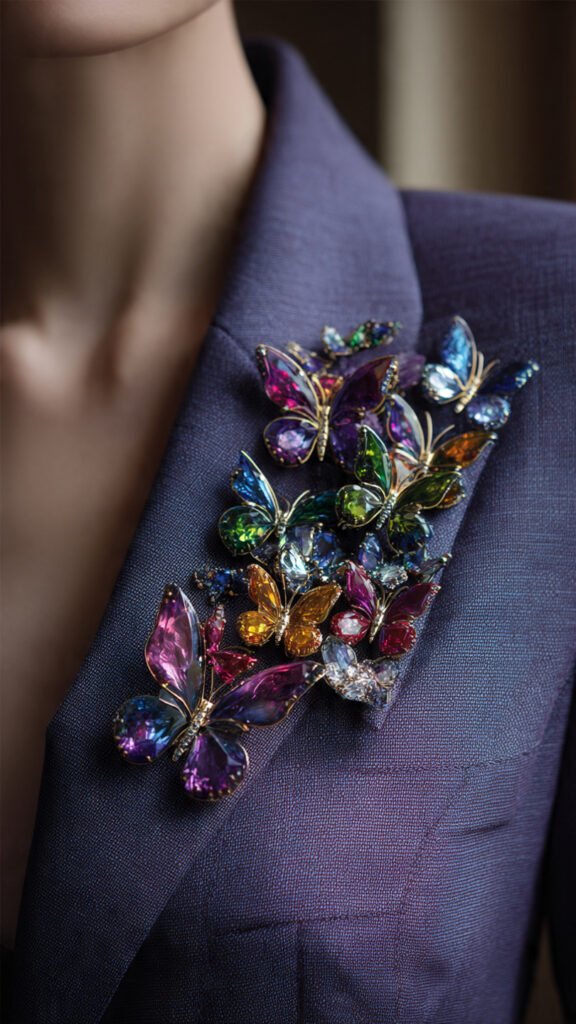
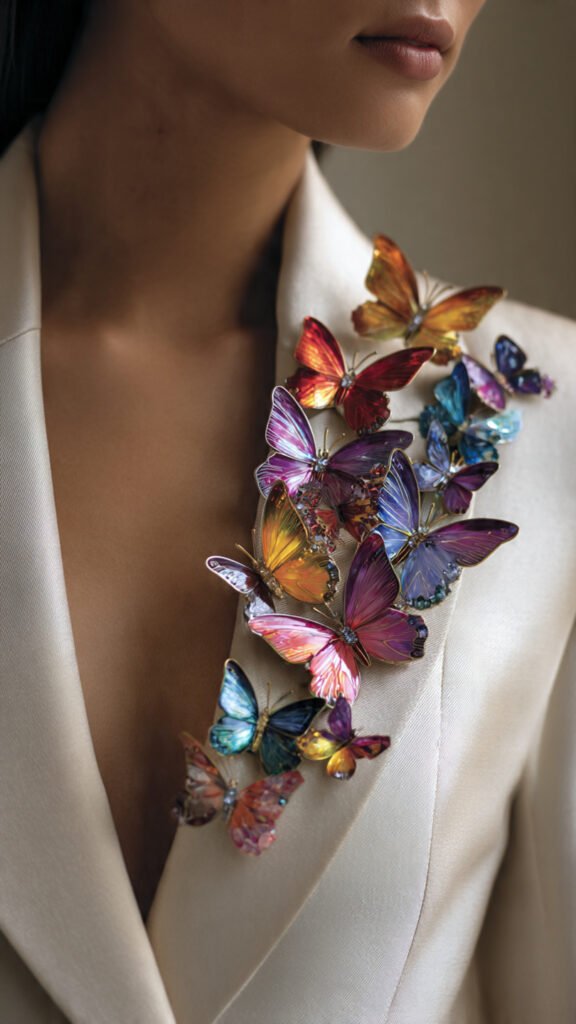
Butterfly brooches introduce movement and lightness into jewelry design. Characterized by their symmetrical wings and often vibrant coloration, they are frequently crafted using enamel or a combination of gemstones that mimic the iridescence found in nature.
Styling butterfly brooches requires an understanding of proportion and placement. Due to their visual dynamism, they function best when given space to breathe. A single butterfly brooch positioned near the shoulder or collarbone creates a sense of lift, drawing the eye upward and adding a subtle sense of motion to the overall look.
These pieces pair particularly well with softer silhouettes. Flowing dresses, silk blouses, and lightweight knits complement the delicacy of the design. However, introducing contrast through structured garments can produce a more modern effect. A sharply tailored blazer paired with a colorful butterfly brooch creates a dialogue between precision and fluidity, resulting in a balanced yet visually engaging composition.
Bird Motif Brooches
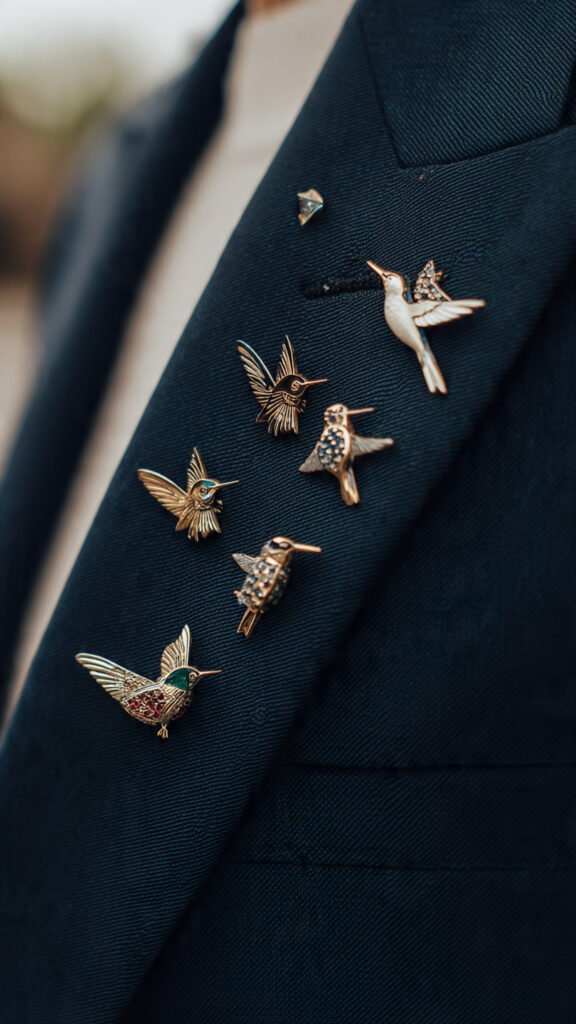
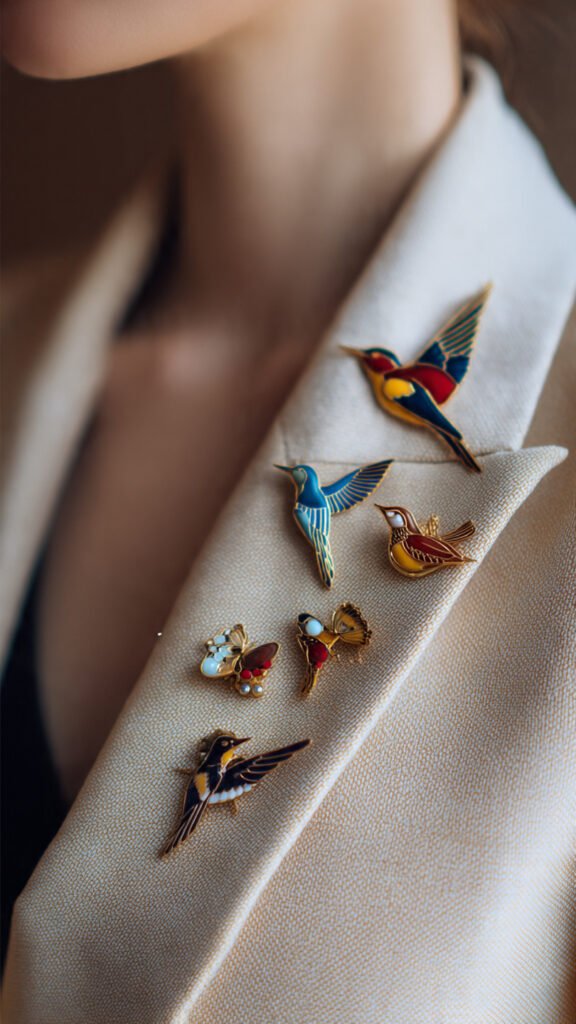
Bird brooches often carry symbolic meaning, representing freedom, movement, and perspective. Designs range from highly detailed, lifelike depictions to more stylized interpretations that emphasize form over realism. Gemstones and enamel are commonly used to define plumage and add visual depth.
In styling, bird brooches benefit from thoughtful placement that reinforces their inherent sense of direction. Positioning the brooch so that the bird appears to “move” along the line of the garment—such as along a lapel or across the chest—creates a narrative effect that feels deliberate.
These brooches integrate well into both formal and casual contexts. On tailored outerwear, they introduce an element of individuality, while on softer garments, they enhance the overall sense of fluidity. The key lies in allowing the piece to guide the composition, rather than treating it as a secondary detail.
Insect-Inspired Brooches
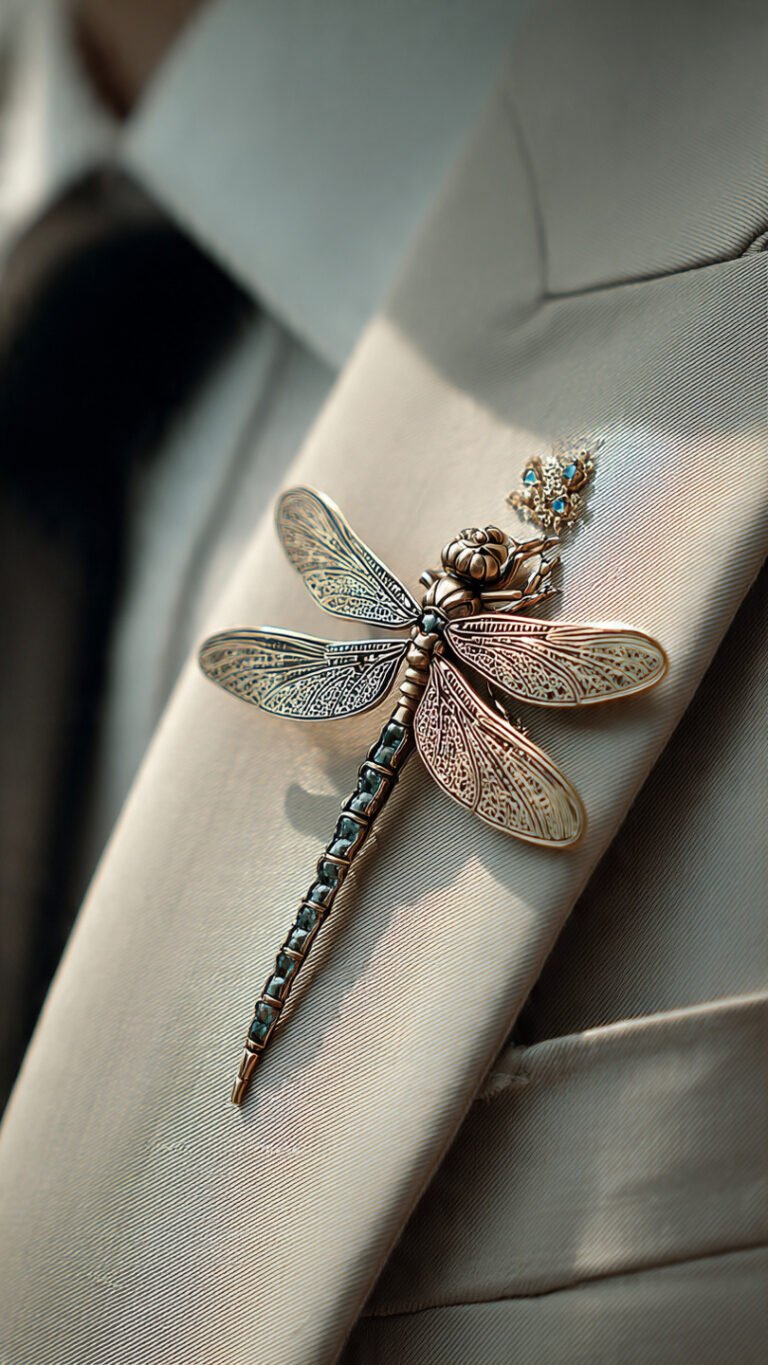
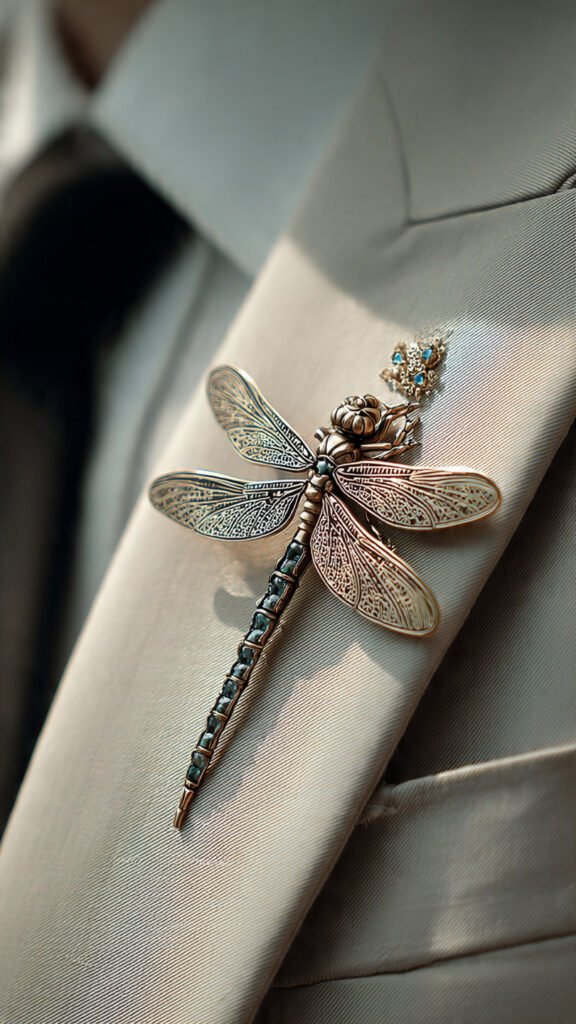
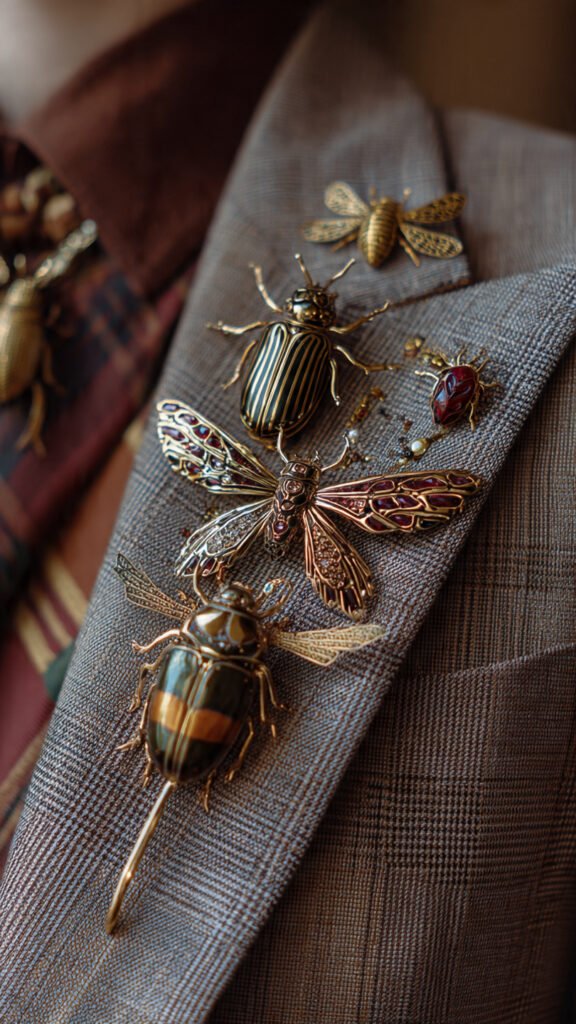
Insect-inspired brooches, including beetles and dragonflies, occupy a more unconventional space within nature jewelry. Their appeal lies in their intricacy and, at times, their boldness. These pieces often feature detailed craftsmanship, with articulated wings or bodies that emphasize structure and symmetry.
Styling insect brooches involves embracing their distinctiveness. Rather than attempting to soften their impact, it is often more effective to position them as focal points within a restrained outfit. A simple coat or dress provides the necessary backdrop, allowing the brooch to command attention without distraction.
Placement can be slightly more experimental with this category. Off-center positioning or unexpected locations, such as near the waistline or on a structured accessory, can enhance the artistic quality of the piece. This approach aligns with a more contemporary understanding of brooch styling as an integral part of the garment’s composition.
Floral Cluster and Bouquet Brooches
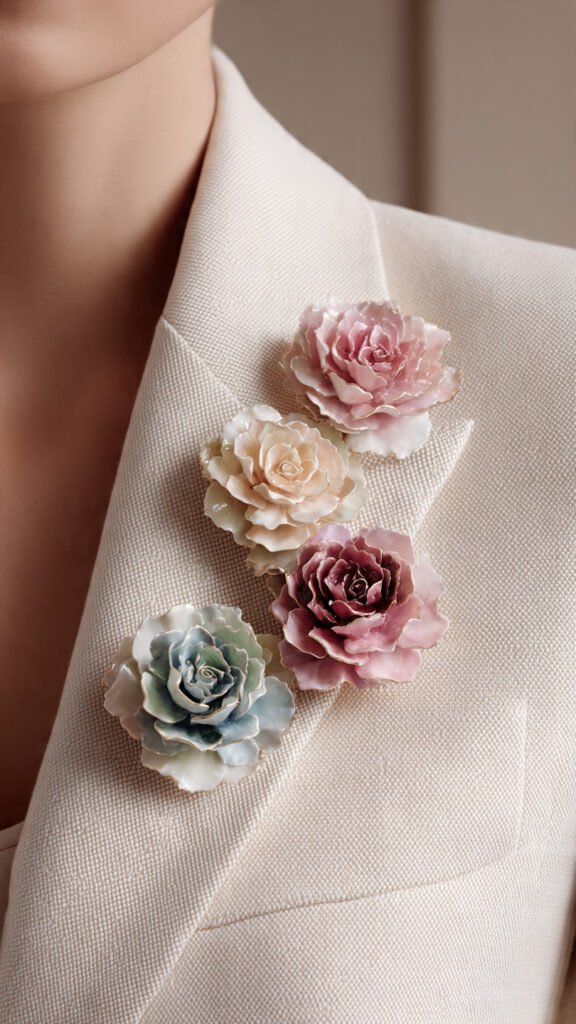
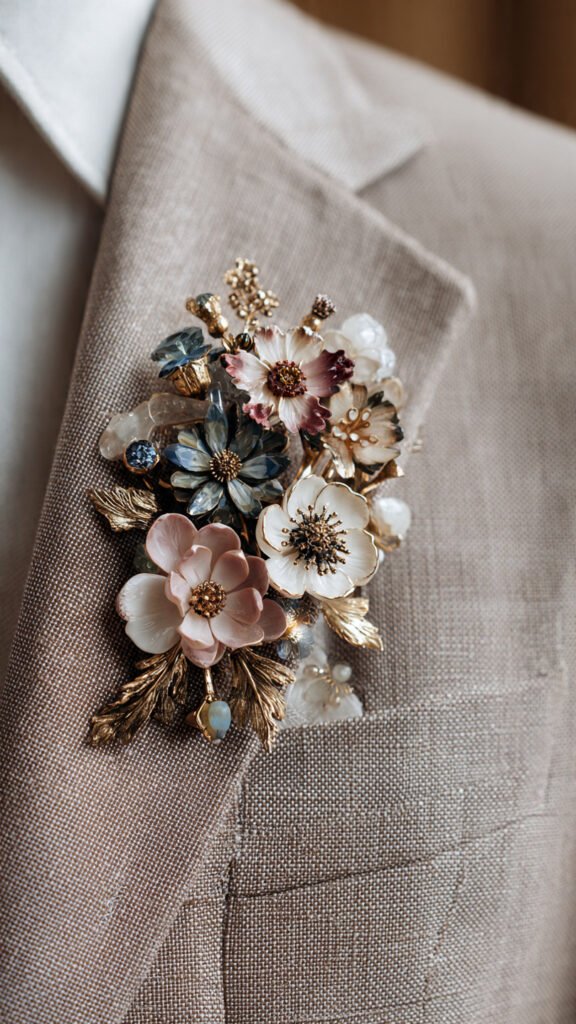
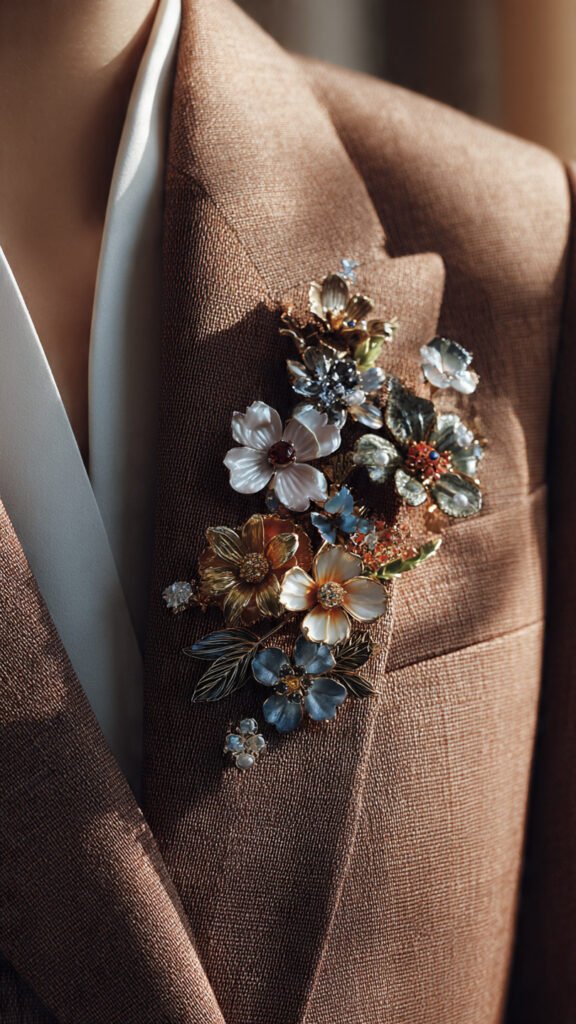
Floral cluster brooches, often designed to resemble small bouquets, bring together multiple elements into a single, cohesive composition. These pieces can range from delicate arrangements of small stones to more elaborate designs featuring varied materials and textures.
Their visual density requires careful styling. Because they inherently draw attention, they are best paired with garments that offer simplicity in both color and structure. A monochrome blazer or coat allows the brooch to function as a central point of interest, anchoring the overall look.
These brooches are particularly effective in formal settings, where their complexity can be fully appreciated. Positioned near the upper torso, they create a sense of completeness, acting almost as a finishing detail that ties the entire outfit together.
Vine and Organic Form Brooches
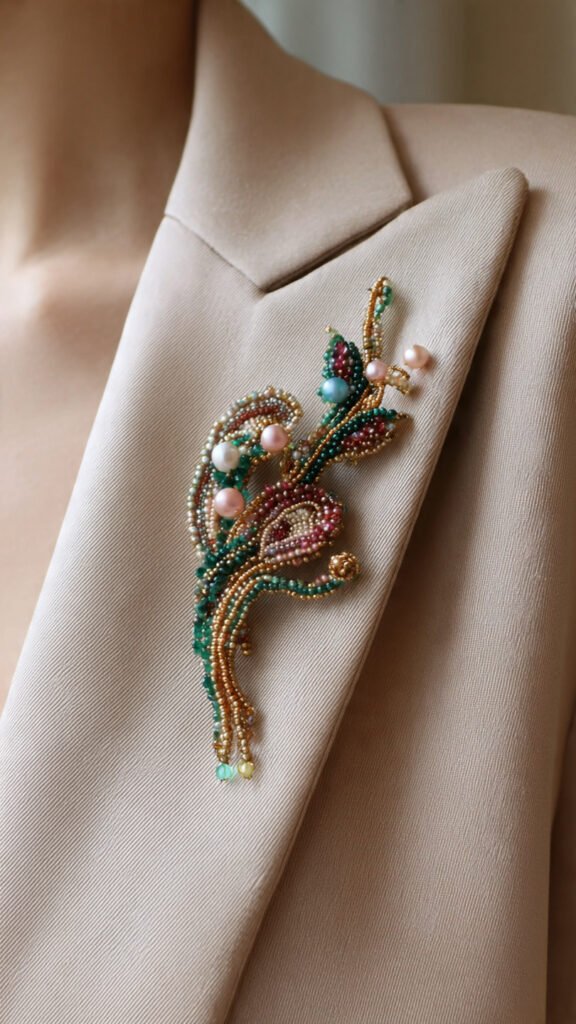
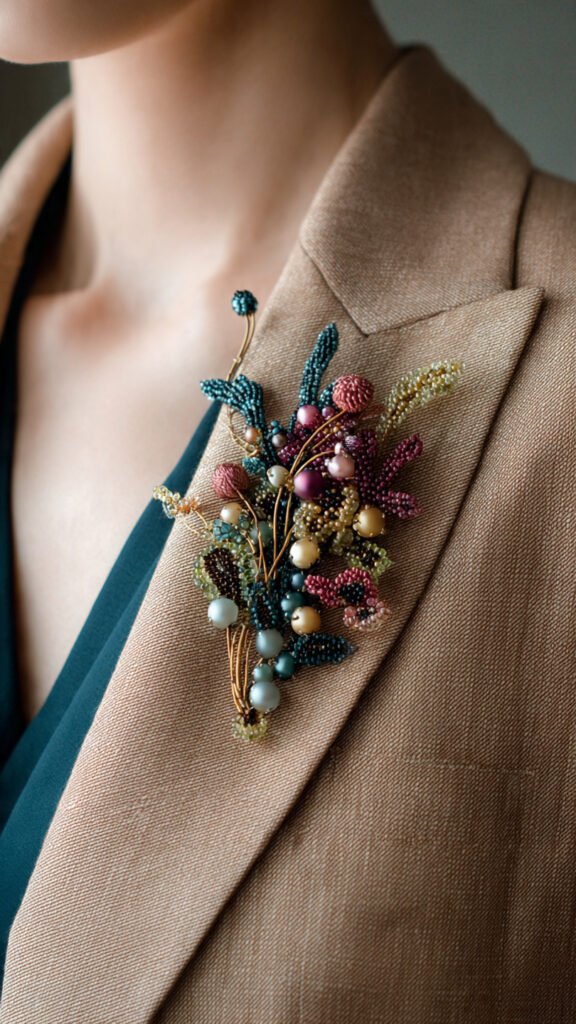
Vine and organic form brooches move away from literal representation, instead capturing the fluidity and movement found in nature. These designs often feature elongated, curving lines that follow the natural contours of the body or garment.
Styling these brooches is as much about placement as it is about pairing. Unlike more static designs, vine brooches can be used to guide the eye across an outfit. Placing them along the natural lines of a blazer or dress enhances the sense of movement, creating a dynamic yet cohesive visual effect.
They work particularly well with garments that have clean lines and minimal detailing. This allows the brooch to introduce complexity without competing with other elements. The result is a refined, modern interpretation of nature-inspired design that feels both intentional and understated.
Closing Perspective
Floral and nature brooches offer a nuanced approach to accessorizing, one that balances decoration with meaning. Their enduring appeal lies in their ability to adapt—shifting between softness and structure, subtlety and statement, depending on how they are styled.
When approached with consideration, these pieces become more than ornamental additions. They serve as compositional elements within an outfit, guiding the eye, introducing texture, and creating a sense of harmony between natural forms and tailored design. The key is not simply in selecting the right brooch, but in understanding how it interacts with the garment, the silhouette, and the overall aesthetic direction.